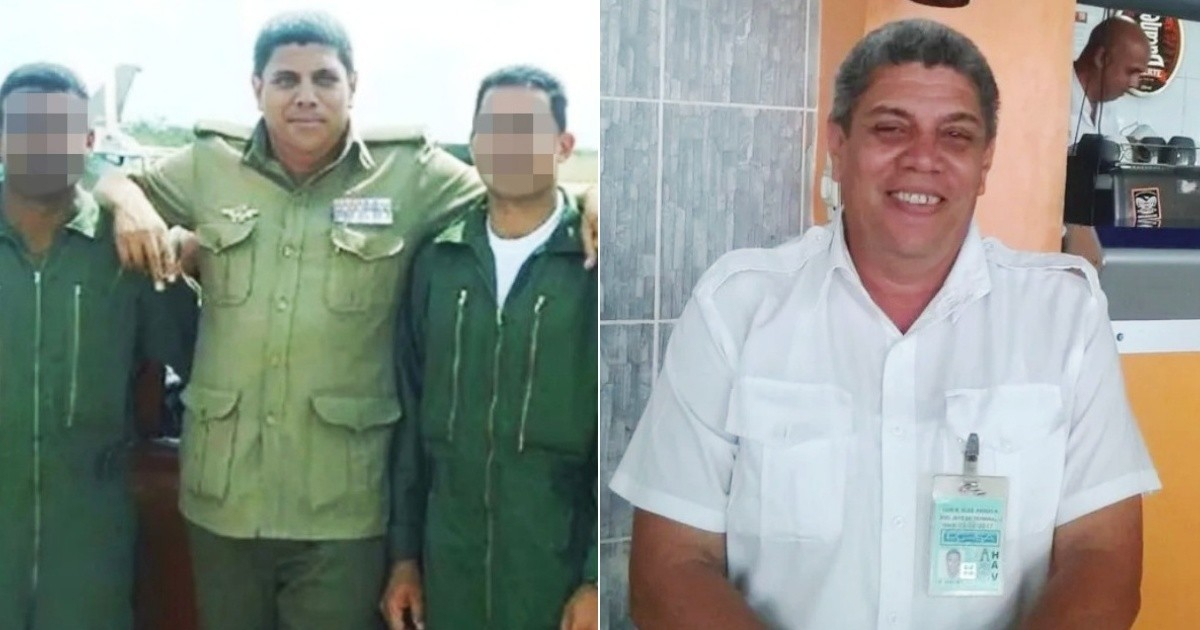
Luis Raúl González-Pardo Rodríguez, former lieutenant colonel and former pilot of the Cuban Air Force, appeared this Wednesday before the Federal Court for the Southern District of Florida in Miami, in a new hearing related to the downing of two planes from Hermanos al Rescate in 1996, according to a report from the courtroom by journalist Alexis Boentes of Telemundo 51.
The most relevant information of the day was shared by Boentes: “The most important aspect of this hearing is that the Prosecutor's Office, as stated before the judge, will not seek the death penalty against him.”
That doesn't mean that González-Pardo is free from a severe sentence.
The charge he faces — conspiracy to murder United States citizens — could result in life imprisonment and a fine of up to $250,000.
The defendant, 65 years old, appeared before federal judge Darrin P. Gayles handcuffed and shackled, dressed in prison garb.
The journalist from Univision, Javier Díaz, who also covered the hearing, described that “he seemed quite calm” and that he maintains his position of declaring himself innocent.
No trial date due to classified evidence
The hearing on Wednesday was not the start of the trial, but rather a status conference scheduled following the postponement of the process, originally set for August 24.
One of the main obstacles is the nature of the evidence.
According to Boentes, “much of the evidence in this case is classified information and, as the lawyers stated, they have not yet been able to access that information, although they have already been interviewed by the FBI.”
The file also includes materials stored on obsolete media and physical evidence from three decades ago that was not digitized.
As a result, the case “will continue without a trial date, only with follow-up hearings approximately every 60 days.”
The role of González-Pardo in the demolition
According to the federal indictment, González-Pardo piloted the MiG-29A identified as "Code 22" during the operation on February 24, 1996, when Cuban aircraft destroyed two civilian Cessna 337 planes over international waters of the Florida Strait.
González-Pardo was not the one who fired the missiles, but the Prosecutor's Office maintains that this circumstance does not exempt him from responsibility in the alleged conspiracy. As Boentes explained while informing about the prosecutors' position, “the fact that he did not fire does not mean that he is not responsible for a conspiracy to kill American citizens.”
According to the accusation, their specific role was to pursue a third aircraft, on which Silvia Iriondo, a former member of the movement, was traveling and managed to escape.
In that operation, Armando Alejandre Jr., Carlos Costa, Mario de la Peña, and Pablo Morales were killed.
Three were U.S. citizens and Morales was a permanent resident. Their bodies were never recovered.
The only defendant in U.S. custody
González-Pardo is the only one of the six defendants in the federal indictment who is in custody in the United States. The other five — including former Cuban leader Raúl Castro — are considered fugitives.
Castro and Lorenzo Alberto Pérez-Pérez face, in addition to the conspiracy charge, four counts of murder—one for each victim—and charges related to the destruction of the aircraft.
The Prosecutor's Office asserts that Castro, who was then the minister of the Armed Forces, personally authorized the use of lethal force against civilian aircraft.
Three decades to reach the courts
González-Pardo's journey to federal court began on November 12, 2025, when the FBI arrested him in Jacksonville for immigration fraud: he had concealed nearly three decades of service in the Cuban Air Force when applying for humanitarian parole in 2024.
He was sentenced to seven months in prison for that crime in May 2026, a sentence he had practically completed when he was transferred to Miami to face the charges related to the shootdown.
The next follow-up hearing is scheduled for approximately 60 days from now, with no specific date set yet for the start of the trial.
Related videos:
Filed under: