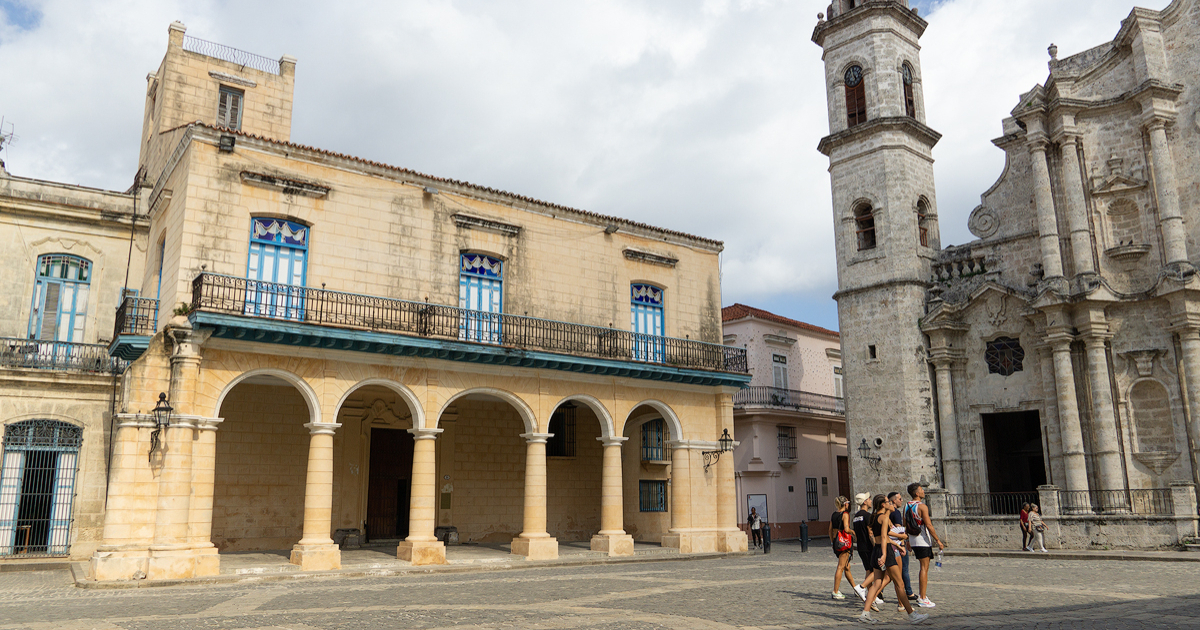
International tourism in Cuba has recorded its worst decline in decades, with the reception of only 419,863 foreign visitors between January and July 2026.
According to data from the National Office of Statistics and Information (ONEI) published this Tuesday, the island welcomed 419,863 foreign visitors in the first seven months of the year, a figure that represents 37.2% of those recorded in the same period of 2025, which means almost 709,000 fewer foreign tourists.
The report from the state agency also counts the total travelers —which includes Cubans residing abroad— and shows 794,492 people, only half of those recorded in the same period of 2025, with 787,773 fewer travelers.
The market that declined the most was the Canadian market, with 350,737 fewer visitors compared to the same period last year.
The Cuban community residing abroad was next, with 52,021 fewer travelers, followed by those from the United States, with 39,944 fewer. There was also a significant decline in flows from Russia, Mexico, Argentina, Spain, China, Colombia, and France.
The decline is not a one-time phenomenon but a trend that has worsened month by month throughout the year. In January, the decrease was 9%; by the end of June, it had reached 60.7%, with only 387,591 international visitors compared to 985,606 in the same period of 2025. May was the worst individual month in years: only 30,883 tourists arrived on the island.
Behind the collapse lies an accumulation of structural factors. The most noticeable has been the mass exit of international hotel chains pressured by U.S. sanctions against the military conglomerate GAESA, which controls a significant portion of the Cuban tourism sector.
In total, seven chains ceased operations on the island during 2026, affecting 46% of the rooms managed under that model.
Blue Diamond Resorts abandoned 62 hotels and more than 12,900 rooms at the end of May. Iberostar ceased operations at 12 of its 18 establishments since June and completely withdrew in July. Meliá Hotels International completed its exit on July 24, stopping the management of its 34 hotels on the island.
The result is that 73% of the hotel facilities in the country remain closed, with around 25,000 workers in a state of availability, as acknowledged by Prime Minister Manuel Marrero Cruz at the end of July. Hotel occupancy fell to 21.5% in the first quarter of the year, and some reports place it below 10% in the months of May and June.
The flight of international operators is compounded by other factors that worsen the situation: fuel shortages lead to flight cancellations and hinder internal transportation; chronic power outages deteriorate the experience for visitors; and Cuban hotels have been removed from booking platforms like Booking.com, Expedia, and Trivago, in addition to being blocked from global distribution systems like Galileo, Worldspan, and Sabre.
The regime attributes the crisis to the U.S. embargo and the sanctions from the Office of Foreign Assets Control (OFAC), as well as Cuba's inclusion on the list of state sponsors of terrorism. However, the collapse of the sector is also a result of decades of centralized management, deteriorated infrastructure, and dependence on a hotel model controlled by the Armed Forces.
To gauge the extent of the decline: in 2018, a record year, Cuba welcomed 4.71 million international visitors. In 2025, it concluded with only 1.81 million —its worst figure since 2002, according to Infobae— and the current trend in 2026 suggests even lower numbers by the end of the year.
Related videos:
Filed under: