Solidarity did not arise with ten million members. It did not begin in a parliament, nor with great resources, nor with leaders shielded from repression. It started among workers who discovered something fundamental and powerful: when an injustice against one ceases to be just that—a problem for one—and becomes a problem for all, history begins to change.
Poland had been under a communist dictatorship for decades. There was censorship, political police, prisons, religious persecution, and unions controlled by the Communist Party. The workers' protests of 1956, 1970, and 1976 had ended in deaths, beatings, layoffs, and imprisonments. However, each defeat provided valuable experience.
In 1976, after the repression against the workers of Radom and Ursus, intellectuals like Jacek Kuroń and Adam Michnik helped establish the Workers' Defense Committee, KOR. This was decisive: intellectuals and workers began to realize that separately they could be crushed; together they could build a civil society capable of resisting.
Then August 1980 arrived. Anna Walentynowicz, a crane operator at the Lenin Shipyard in Gdansk, was fired just months before her retirement due to her independent union activities. Her colleagues did something seemingly simple: they stopped working. They wanted Anna to be reinstated.
But that strike began to grow. When the shipyard management accepted some demands and it seemed like everything would come to an end, Walentynowicz, Alina Pienkowska, and other activists insisted that they could not abandon the factories that had started to protest in solidarity with them.
That moment encapsulates the meaning of Solidarity. It was no longer about "my problem." It was about "our problem." The demands grew to become the famous 21 demands of Gdansk. The first demanded something intolerable for a communist dictatorship: free and independent trade unions outside of the Party. They also called for the right to strike, freedom of expression, access to independent information, the release of political prisoners, and improvements in labor conditions.
The regime had to negotiate. On August 31, 1980, Solidaridad was legally established. Within a few months, it gathered approximately ten million members. Workers from shipyards and mines, railway workers, technicians, engineers, teachers, professionals, and public employees rallied around an independent organization. Students created their own associations. Intellectuals contributed analyses, publications, and advice. Priests and parishes offered spaces for meetings, organizing aid, and maintaining communication.
It was much more than a union. It was a society learning once again how to be a society. Solidaridad held assemblies, chose delegates, and elected leaders. Lech Wałęsa was not proclaimed lifelong leader: he had to present himself before the delegates and compete against other candidates. In the national congress of 1981, he received the majority of the votes.
The democracy that the State denied began to be practiced within the movement itself. This terrified the regime. On December 13, 1981, General Wojciech Jaruzelski declared martial law. Tanks occupied the streets, and thousands of people were detained. Wałęsa, other leaders, and activists ended up imprisoned. Strikes were suppressed. At the Wujek mine, security forces opened fire on the workers, killing nine.
Other Poles were pushed into exile, mainly to West Germany, France, Sweden, Great Britain, the United States, Canada, and other Western countries. It seemed like the end, but it was not.
Solidarity went underground. Secretly printed newspapers circulated, and networks were established to assist the families of prisoners. Parishes served as shelters for cultural and social activities. Intellectuals wrote, and workers organized new protests. Exiles provided support from outside.
Adam Michnik spent years in prison. He could have chosen more comfortable paths. He did not. From prison, he continued to write and defend the idea that no free society could be built on hatred and revenge. Lech Wałęsa also stood firm.
The priest Jerzy Popiełuszko preached in defense of human dignity and workers until he was kidnapped and murdered by agents of the political police in 1984. Repression could imprison people, but it could not stop an idea, a longing, that had already learned to reproduce and strengthen itself.
When the circumstances changed, Solidaridad was still there. They persevered and continued fighting. In 1989, the Round Table discussions began, followed by the partially free elections on June 4. The candidates linked to Solidaridad achieved an extraordinary victory.
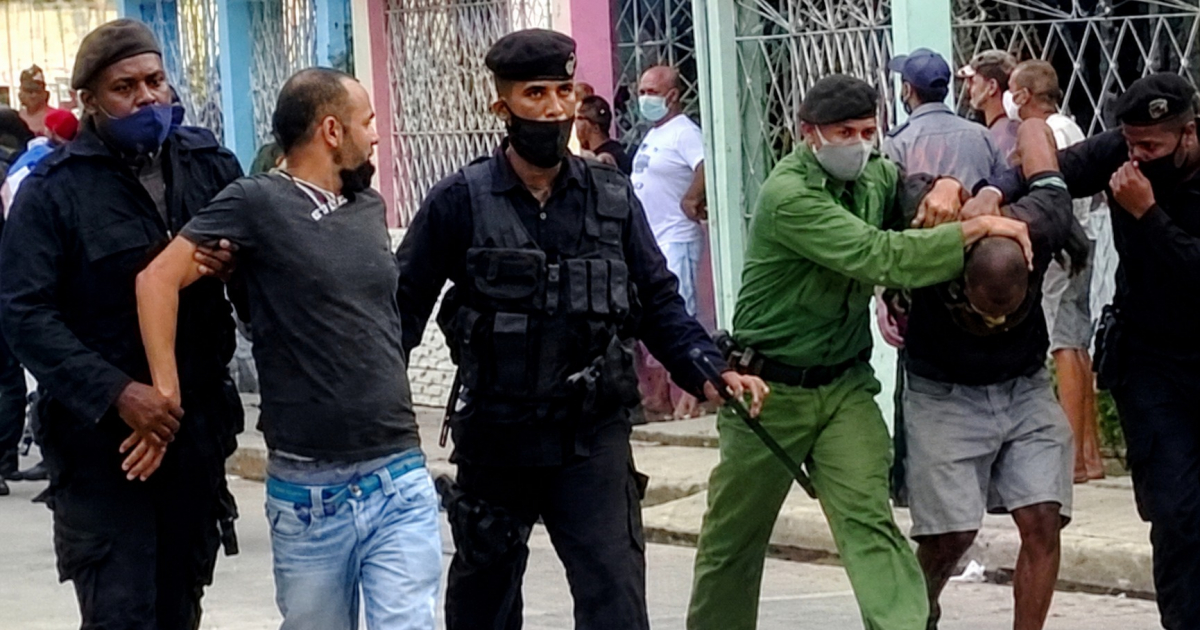
The system that seemed invincible began to crumble. The Polish experience inevitably offers reasons for reflection for Cubans. Cuba has also had and continues to have citizens willing to pay enormous prices to defend freedom and fundamental rights.
The Ladies in White transformed the pain of wives, mothers, and families of political prisoners into public presence and peaceful protest. Berta Soler has upheld that tradition for years in the face of arrests and harassment.
Oswaldo Payá demonstrated with the Varela Project that a civic initiative could place the advocacy for rights within the national debate. Félix Navarro has known prison on three occasions and remains steadfast without abandoning his convictions.
We also have hundreds of political prisoners and thousands of citizens who, both inside and outside of Cuba, have kept alive for decades the struggle for freedom, human dignity, and pluralism.
Great transformations begin when one person decides not to abandon another, when the worker understands the intellectual and the intellectual listens to the worker, when faith accompanies the persecuted, when families defend political prisoners, when those who live outside do not forget those who fight within, when today's defeat is not seen as the end of tomorrow.
The Polish communists had an army, political police, prisons, censorship, and the backing of the Soviet Union. Solidarity began with something seemingly much smaller: citizens able to trust one another. But in the end, that proved to be more powerful.
That is why Poland continues to provide an education that deserves to be studied well beyond its borders: no political system is eternally unchangeable, and no society is forever doomed to live without rights and under strict oppression.
The Polish history demonstrates how perseverance, civic organization, plurality, human solidarity, discipline, and long-term commitment can transform a nation.
If the Poles could do it, we Cubans must be able to as well.
Related videos:
Filed under:
Opinion piece: Las declaraciones y opiniones expresadas en este artículo son de exclusiva responsabilidad de su autor y no representan necesariamente el punto de vista de CiberCuba.