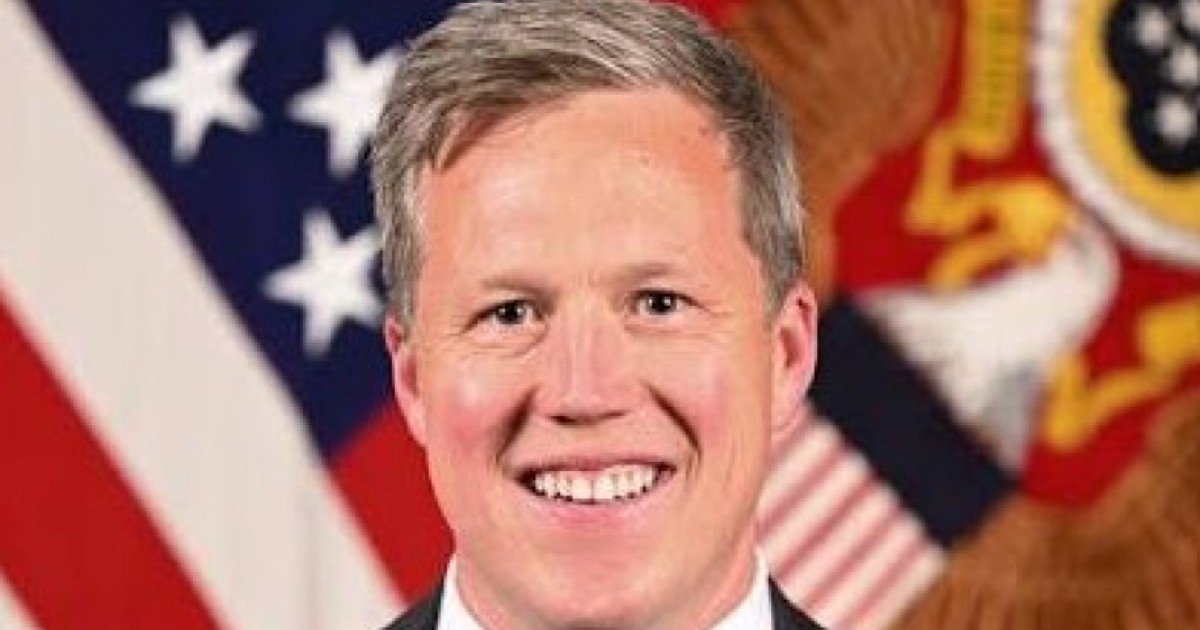
Dan Driscoll, Secretary of the Army of the United States and the highest civilian leader of that institution, submitted his resignation to President Donald Trump on Monday, following months of friction with Secretary of War, Pete Hegseth, reported The Wall Street Journal.
The newspaper revealed that Driscoll will be leaving the Pentagon "in the coming days" and pointed out that, with his departure, the Army will have no confirmed civilian or military leaders by the Senate.
Driscoll met in person with Trump to submit his resignation and discuss the situation facing the military, according to officials who spoke on condition of anonymity to The New York Times. During that meeting, the outgoing secretary expressed his frustration over the dismissal of numerous seasoned military leaders and the blockage of promotions for colonels who had worked with individuals not favored by Hegseth.
Among the military personnel removed by Hegseth is General Randy George, who was dismissed as Chief of Staff of the Army in April, without any public explanation. Sources indicate that Hegseth may have forced the departure of at least 24 generals and senior commanders since Trump's return to the White House.
Driscoll's departure leaves the Army in an unprecedented situation: without a Chief of Staff since April and without a Senate-confirmed civilian secretary, during a time of significant operational activity for the force, amid the war against Iran, whose drones and missiles have attacked U.S. bases in the Middle East.
The White House spokesperson, Anna Kelly, praised Driscoll for his work on "historic military operations," his "emphasis on preparedness and lethality," and his role in the negotiations between Russia and Ukraine, without providing an explanation for the reasons behind the resignation or confirming whether Trump had formally accepted it.
Driscoll, 40, was the youngest person to hold the position of Secretary of the Army. Until recently, he was seen as a potential candidate to replace Hegseth himself if he fell out of favor with Trump, and many lawmakers viewed him as one of the few Pentagon officials capable of working with both Republicans and Democrats.
Simultaneously, the interim Deputy Secretary of the Army, Dave Fitzgerald -who had been focused on attracting private investment to modernize Defense technology- also announced that he will be leaving his position this week.
With the midterm elections approaching, the confirmation of a successor by the Senate could prove particularly challenging, prolonging the uncertainty surrounding the leadership of the United States Army.
Related videos:
Filed under: