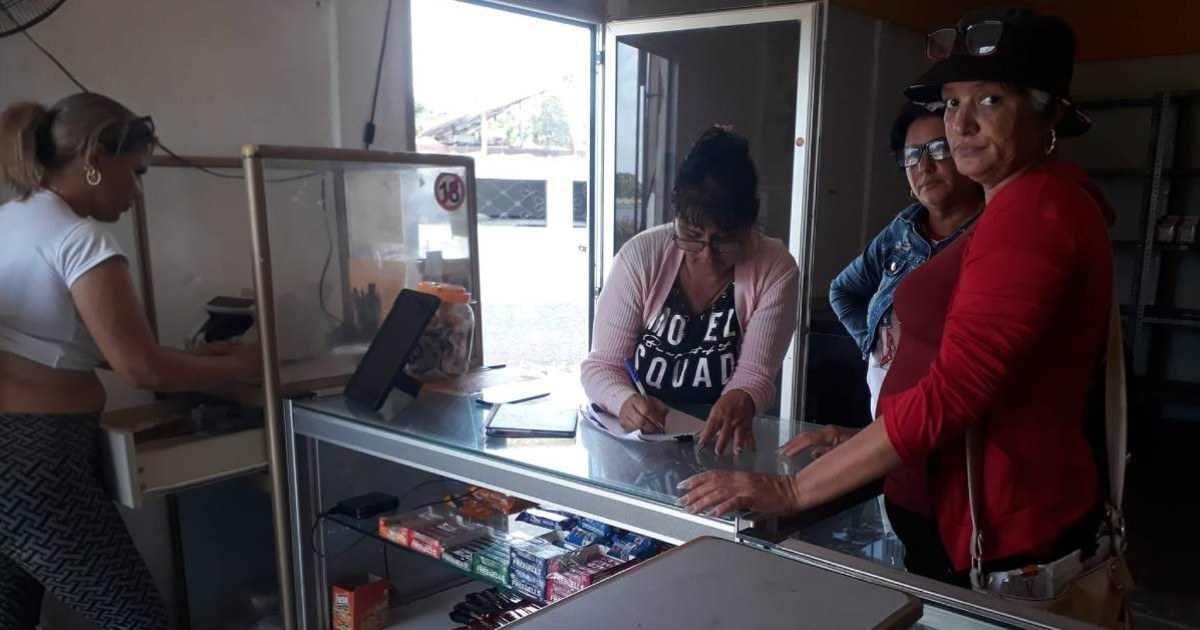
A Cuban state broadcaster had to publicly apologize to a private company after publishing incorrect information about its closure without proper verification.
Radio Sandino, the municipal station of Pinar del Río, acknowledged that it acted without investigating prior to reporting the closure of mipyme Lamas Loto.
On August 18, the broadcaster posted on its Facebook profile that the business had been closed because its clients were unable to use the electronic payment gateways Transfermóvil and EnZona, which would have constituted a violation of the current regulations. However, a subsequent analysis conducted at the local government headquarters reached a different conclusion.
It was verified that "Lamas Loto did not incur any violations of the established guidelines regarding customer access to electronic payment options, as the use of the QR code was not possible due to connectivity issues, so direct transfer to the tax account was used instead."
That alternative —the direct transfer to the tax account— is a valid mechanism allowed by Cuban regulations. The business, in other words, had acted correctly in the face of a connectivity failure, a structural and chronic problem in Cuba.
Radio Sandino then admitted that "there was a lack of research before proceeding with the publication of the closure of the entity" and added: "For this reason, we apologize to mipyme Lamas Loto for any harm that the information published by our station may have caused."
That a Cuban state media outlet publicly corrects itself and apologizes to a private company is an unusual occurrence in the island's media ecosystem, where official press rarely acknowledges its own mistakes or admits to having harmed the non-state sector.
The case occurred during the regime's ongoing crackdown on private businesses and small and medium-sized enterprises in August 2026, focusing on the mandatory compliance with electronic payments.
In that context, the authorities closed 15 establishments in Centro Habana in a single day after inspecting 232 economic actors.
In Bayamo, five businesses were shut down for not accepting payment by transfer. In Las Tunas, an inspection campaign resulted in the closure of 22 establishments, the revocation of eight licenses, and fines exceeding 1.2 million pesos in just one week.
In Sancti Spíritus, there were reported more than 200 fines and at least five closures for violations related to prices and payment gateways.
The regulatory framework supporting these actions includes Resolution 93/2023 from the Ministry of Domestic Trade, which mandates the activation of payment gateways such as Transfermóvil or EnZona, and Decree-Law 91/2024, which imposes fines ranging from 200 to 60,000 pesos and penalties that may lead to the permanent closure of the business.
Related videos:
Filed under: