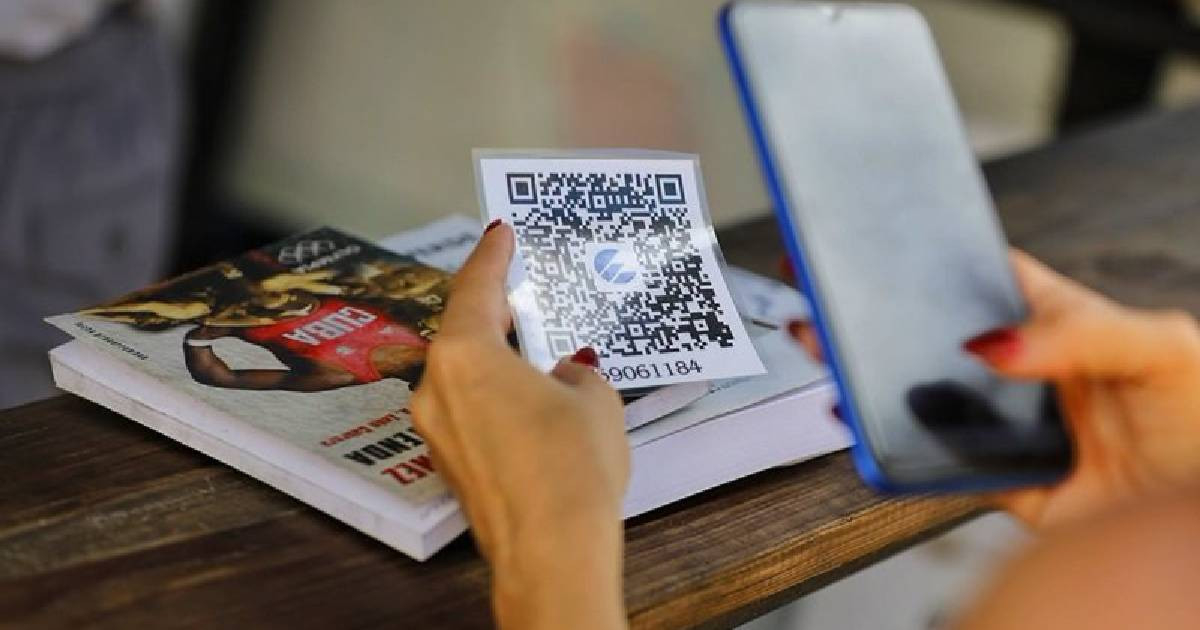
A regulatory operation targeting economic actors that began on August 10 in Sancti Spíritus has resulted in over 6.3 million pesos being returned to the banking system of the province, according to authorities.
The intervention involved municipal and provincial inspectors, the National Office of Tax Administration, the Communist Party, the Prosecutor's Office, the Comptroller's Office, and the banking system, in an effort aimed at increasing cash deposits and electronic payments among SMEs and self-employed workers, reported this Saturday the broadcaster Radio Sancti Spíritus.
José Couso Villarreal, head of the Business Banking Department at the provincial office of the Popular Savings Bank, reported that 29 small and medium-sized enterprises that previously did not make deposits have begun to do so, with an increase of slightly over three million pesos, equivalent to a growth of 63%.
"We have increased the growth rate, but we still believe it can be much higher, meaning there is more potential," acknowledged the official.
Among self-employed workers, 220 new contributors started making systematic deposits, resulting in an increase of another 3,272,500 pesos and a growth of 122%.
However, Couso admitted that this result "is still far from the potential."
Online payments also increased by 47%, with an increase of 6,650,000 pesos. The official highlighted that this method is the most requested by the population, particularly due to the difficulties in obtaining cash from banking institutions.
Couso justified the pressure on private economic actors by pointing out that the deposited money allows the banking system to have resources to pay pensions and salaries to workers from various entities.
"It is essential that the money returns to the bank in order to cover all these needs," he stated.
A previous supervisory exercise in that same province resulted in over 200 fines and the closure of at least five establishments for price violations and non-compliance with payment gateways.
The background situation is critical. In May, a survey revealed that less than 10% of private businesses in the province regularly accepted transfers, and some even charged surcharges of up to 40% when the customer chose to pay using that method.
On a national level, less than four percent of transactions are digital, despite the Central Bank implementing mandatory banking in August 2023 through Resolution 111/2023.
In light of the notable failure of this measure, the National Assembly approved Agreement X-171 in July, which orders the government and the Central Bank to adopt new corrective measures and present a report to the Council of State, with an evaluation of results scheduled for the upcoming December.
Related videos:
Filed under: