The State Council of Cuba published the updated and agreed version of the , which establishes who can engage in this activity, under what conditions, and which body oversees it. The regulation appeared in the , published on Sunday.
This special edition is the direct result of what was ordered by the , issued by the Council of State on August 19th and published in the on September 2nd, which modified Decree-Laws 88, 89, and 90 and mandated the publication of their consolidated texts within a period of 30 working days.
The Gaceta No. 12 Special Edition of 2026 brings together the three regulations governing the non-state sector in Cuba: Decree-Law 88, concerning micro, small, and medium-sized enterprises and private companies with more than 100 employees; Decree-Law 89, regarding non-agricultural cooperatives; and Decree-Law 90, on self-employment.
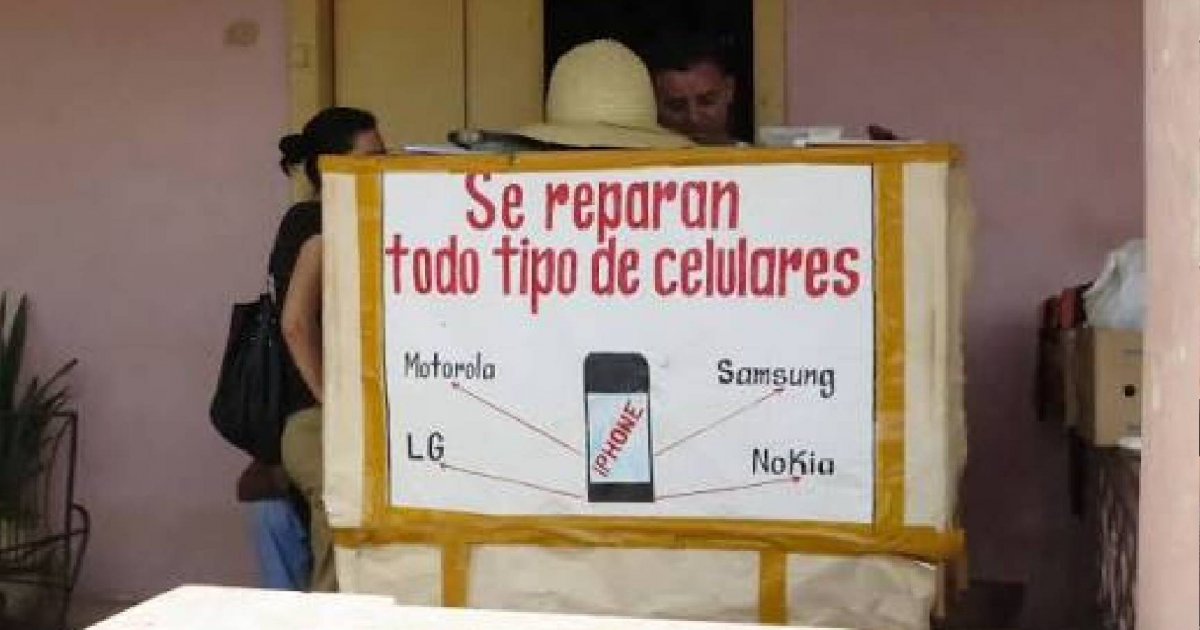
Regarding Decree-Law 90, the updated regulation specifies that “the National Institute of Non-State Economic Actors directs and controls the State's policy for the development and operation of self-employed workers.”
This body, subordinate to the Council of Ministers and formally established in August 2024, is responsible for managing the authorizations and the organization and control system of the sector.
Regarding who can take advantage of this provision, the regulation states that "Cuban citizens residing in the national territory and foreign permanent residents may engage in self-employment."
Regarding the capacity for hiring, the decree states that "self-employment can be carried out autonomously or involve hiring up to a limit of three people as employees."
The regulatory framework of 2026 also introduced substantial changes compared to the original version from 2024. Among these changes is the recognition of street vendors as a legitimate modality within self-employment, accompanied by a simplified authorization procedure.
Another significant change is the removal of the concept of "scope" from the activity: according to the Ministry of Finance and Prices, "from now on, the scope is determined based on the work project submitted by the interested party," which provides greater flexibility to the applicant.
The tax system was also modified: the fixed quota system was replaced by a quarterly payment scheme based on income, with the possibility of deducting the exempt minimum.
The , in effect since August 4, 2026, had previously redefined the list of permitted, conditional, and prohibited activities for non-state economic actors, including self-employed workers, thus completing the new regulatory framework for the sector.
Related videos:
Filed under: