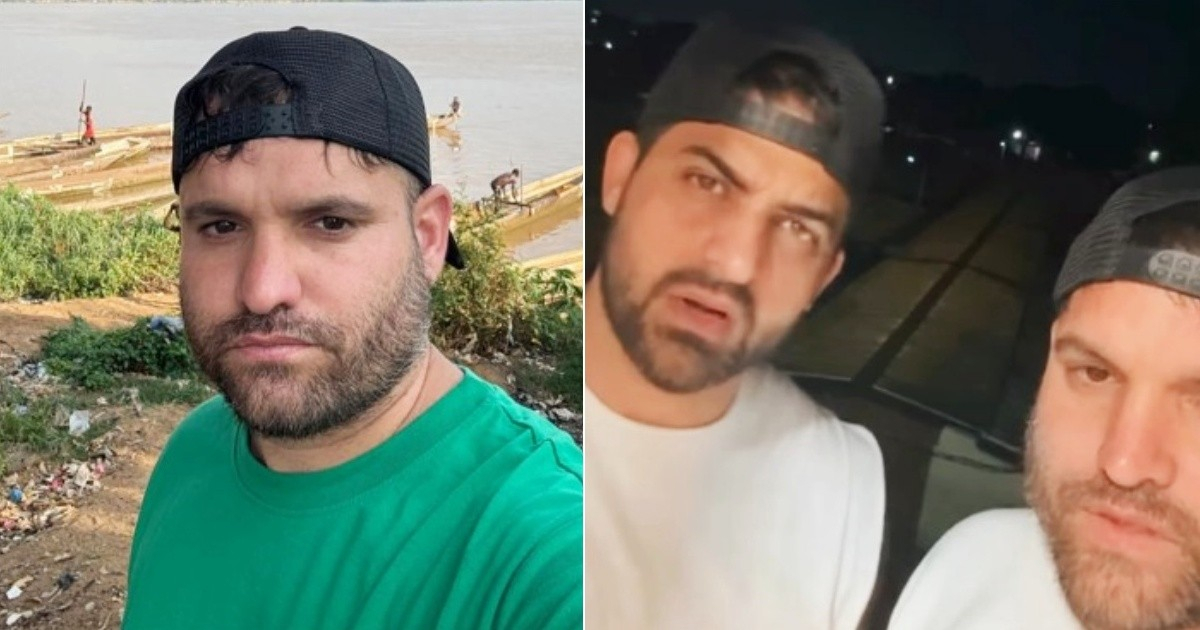
Several Cubans deported by the United States to African countries reported months of detention, untreated illnesses, significant weight loss, separation from their families, and deep uncertainty about their immigration status.
The testimonies were collected by Telemundo 51 during a virtual forum organized by The Workers Circle, where migrants sent to countries like Eswatini and the Central African Republic participated.
One of them was Roberto Mosquera del Peral, a Cuban who resides in Eswatini and claimed to have arrived in the African country on a U.S. military plane.
According to his testimony, he has been imprisoned for about 14 months.
Mosquera reported that he went on a hunger strike for 30 days to protest his situation, which ultimately led to his transfer to a hospital.
He also explained that he only recently managed to access a phone to communicate with family and activists.
Her situation had been a cause for concern for months.
In October 2025, his lawyer reported that he was on a hunger strike in a maximum-security prison in Eswatini, having been held for more than three months without formal charges or access to legal assistance.
Mosquera also recounted that he arrived in the United States during the Mariel boatlift in the 1980s and acknowledged having committed a crime when he was young, though he stated that he completed his sentence years ago.
He has four daughters and stated that he couldn't say goodbye to them before being sent to Africa.
Another testimony was that of Arístides Fernández García, 37 years old, who ended up in the Central African Republic after entering the United States through the border with Mexico in 2021 and receiving an I-220A form while awaiting a decision on his immigration process.
Fernández stated that he requested asylum due to political persecution related to his family's history in Cuba and emphasized that he has no criminal record.
According to his account, in January 2026 he attended a migration hearing believing that his case was progressing favorably, but he was detained and ended up going through several detention centers, including the one known as «Alligator Alcatraz», where he claimed to have stayed for 96 days.
"I fell ill with bronchitis and had no medication," Fernández said, who also stated that he lost approximately 60 pounds during his detention.
Fernández, who had previously described his experience as "a kidnapping", reported upon arriving in Bangui that he remained without documents, without the freedom to leave the place where he was staying, and without clarity about his legal status.
The Cuban had lived in the United States for several years, held a work permit valid until 2030, and had his asylum application pending.
Before being sent to Africa, he claimed to have been transferred several times between different detention centers.
The third case presented was that of Yasmany Moreno, who arrived in the United States in 2016 and was arrested by ICE in Palm Beach in May 2025.
Moreno explained that during his process, authorities questioned a supposed illegal entry into the United States in 2011, something he denied, and stated that he provided documentation to support his version.
Finally, his asylum application was rejected, and he ended up being deported to the Central African Republic.
His case had also previously come to light: he reported from Bangui that he was without documents and unable to leave freely.
He then assured that he had no criminal record and that he was unaware he would be sent to the Central African Republic until the flight was already nearing its destination.
During this week's forum, however, Moreno revealed a development regarding his situation: officials informed him that his case contained errors and that it will be returned to the United States.
According to his testimony, the return could occur within the next 30 to 60 days, although he stated that he is still unaware of the details of the process.
The situation of Moreno and Fernández had shown signs of change days prior, when both announced that their cases had been reopened by judges and that their lawyers had communicated encouraging news regarding their respective proceedings.
During the forum, the lack of regular communication with other Cubans sent to African countries was also reported.
Among the names mentioned are Enrique Vargas, José Manuel Rodríguez Quiñónez, and Leonardo Sánchez, who are reported to have been deported to Sudan and Equatorial Guinea.
Deportations to third countries have expanded to various African nations.
In August, it was also confirmed the presence of Cubans in the first group of migrants deported by the United States to Liberia, as part of an agreement for that country to accept migrants who are not Liberian citizens.
Related videos:
Filed under: