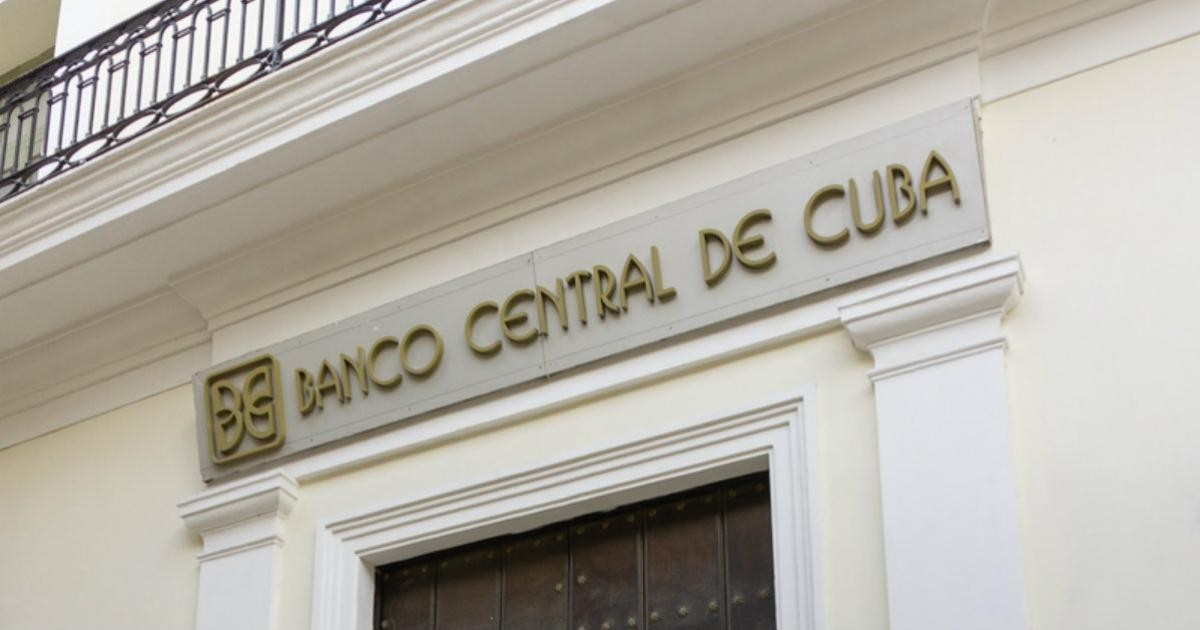
The Cuban regime published this Thursday in the Official Gazette two resolutions that expand access to foreign currency bank accounts for individuals and legal entities, both within Cuba and abroad, removing the prior authorization from the Central Bank of Cuba (BCC) as a requirement to open these accounts.
The regulations —the and the — are published in Official Gazette No. 76 Ordinary and repeal their predecessors from December 2025, updating the exchange framework that the government has been reforming since late that year.
The most significant change in Resolution 102/2026 is captured in its fourth article: "The opening of foreign currency accounts in banks by individuals and legal entities is conducted without prior authorization from the Central Bank of Cuba."
The measure applies to non-state economic actors—small and medium enterprises (SMEs), cooperatives, self-employed workers, artists, and agricultural producers—as well as religious institutions, fraternal associations, and foreign clients, in addition to Cubans residing abroad, who must present a valid consular passport with visa to access the benefit.
The resolution also expressly authorizes private businesses to receive cash payments in foreign currency —including dollars and euros— and to deposit that money directly into their foreign currency accounts, without mandatory conversion to Cuban pesos.
From those accounts, holders will be able to make payments abroad for imports, transfers, cash withdrawals in foreign currency, and currency sales in the exchange market.
The Resolution 102/2026 will come into effect around September 17, seven days after its publication. The regulation warns that banks will apply "due diligence" in the areas of anti-money laundering, counter-terrorism financing, and the proliferation of weapons of mass destruction.
For its part, Resolution 103/2026 from the Ministry of Economy and Planning, signed on August 31 by Minister Joaquín Alonso Vázquez, establishes the currency retention scheme and came into effect on the same day it was published.
According to this regulation, economic actors without an approved retention coefficient will keep 80% of their foreign currency income from exports, e-commerce, and sales to the Special Development Zone of Mariel, among other sources; the remaining 20% will be contributed to the central fund and credited in national currency at the current exchange rate.
However, for income from foreign financing, donations, international cooperation funds, and contributions from foreign investors, the withholding will be 100%.
The resolution explicitly acknowledges the "partial dollarization" of the Cuban economy and allows inter-business and wholesale commercial transactions to be carried out in the national currency or in foreign currencies, as agreed upon by the parties involved.
These measures are the most recent link in a chain of currency reforms that began in late 2025. In January of this year, the Banco Metropolitano enabled the purchase of foreign currency for small and medium-sized enterprises and cooperatives under Segment III of the currency market. In March, the Deputy Prime Minister Óscar Pérez-Oliva Fraga announced that Cuban emigrants could open foreign currency accounts in banks on the island to invest in the national economy.
In June, Prime Minister Manuel Marrero Cruz presented to the National Assembly a package of 176 economic and social measures that included the expansion of partial dollarization, the establishment of a digital currency market, and the authorization of private exchange houses.
All of this takes place amid a deep economic crisis: the Cuban GDP contracted by approximately 5% in 2025, accumulating a decline of more than 15% since 2020, with an official inflation rate of 14.07% and informal market dollar exchange rates exceeding 472 Cuban pesos per unit in October 2025.
Related videos:
Filed under: