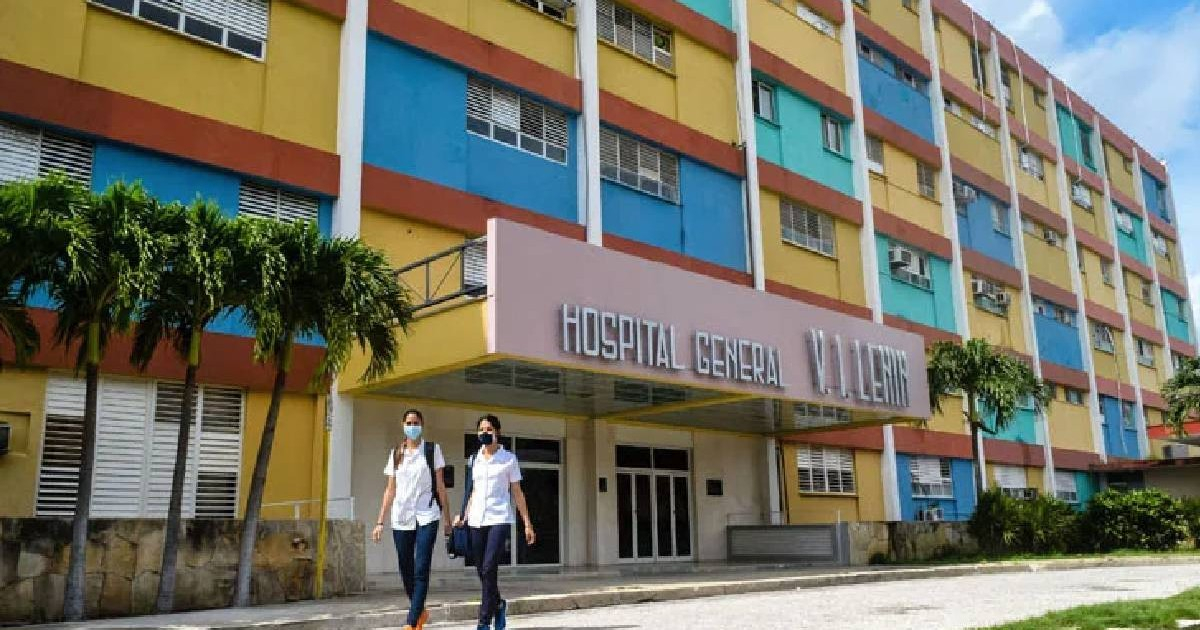
The Lucía Íñiguez Landín Clinical Surgical Hospital, the main institution of its kind in the eastern province of Holguín, does not have drinking water for its patients, according to a complaint published this Thursday on Facebook by Reynier H. González, a resident of the municipality of Báguano.
In a video recorded in front of the center, González demonstrated the distance that the companions of the patients must travel to obtain water: nearly a kilometer to a private well. The doctors at the hospital, according to his testimony, acknowledge that the water available through the pipes is not suitable for patient consumption.
"In the surgical clinic, there is no drinking water, and the patient's aides have to come to this distance to fetch water from a point where there is a well with potable water," González described in the video.
The well owners, while charging the neighborhood residents, do not demand payment from the families of those hospitalized, a gesture of solidarity that the whistleblower highlighted as "the good" in a situation they described as neglect.
González was emphatic in not holding the healthcare staff responsible. "I can't reiterate enough that we do not blame the medical personnel for this. This is the responsibility of another administrative sector. Doctors and nurses have a specific role that is not related to this," he wrote in his post.
He reserved his harshest words for the leadership: "We all know who the true culprits are behind the mismanagement and neglect we are experiencing. Meanwhile, the leaders' homes lack neither water nor a hearty meal."
The complaint comes amid a structural water crisis affecting Holguín since 2025, exacerbated by a combination of severe drought, prolonged blackouts, and the deterioration of pumping infrastructure.
In May 2025, more than 370,000 people in the province were experiencing supply issues; in some areas, the distribution cycles exceeded 107 days.
In 2026, the situation did not improve. More than 229,000 people in the city of Holguín faced supply cycles exceeding seven days, with a deficit of 309 liters per second compared to the necessary flow, according to data from the local press.
The that more than 80% of pumping equipment in Cuba relies on electricity, making each blackout a direct cut to the water supply, including hospitals.
At the national level, around 2.7 million Cubans lack regular access to drinking water, and the hydraulic system operates with only 37% of the necessary fuel.
The Holguín Surgical Clinical Center is not the only health facility affected. The Lenin Hospital in the same city reported similar complaints about restrooms without water and murky water in August 2025, and the Arnaldo Milián Castro Hospital in Villa Clara went over 72 hours without water in June of this year due to the failure of pumping system turbines.
In February 2026, the Health Directorate of Holguín suspended all elective surgery in the province due to the energy crisis, only maintaining urgent and emergency interventions.
González announced that the complaint from this Thursday is not the last one: "Wait for tomorrow because I will bring you a situation that is much more difficult that we are experiencing in the cubicle."
Related videos:
Filed under: