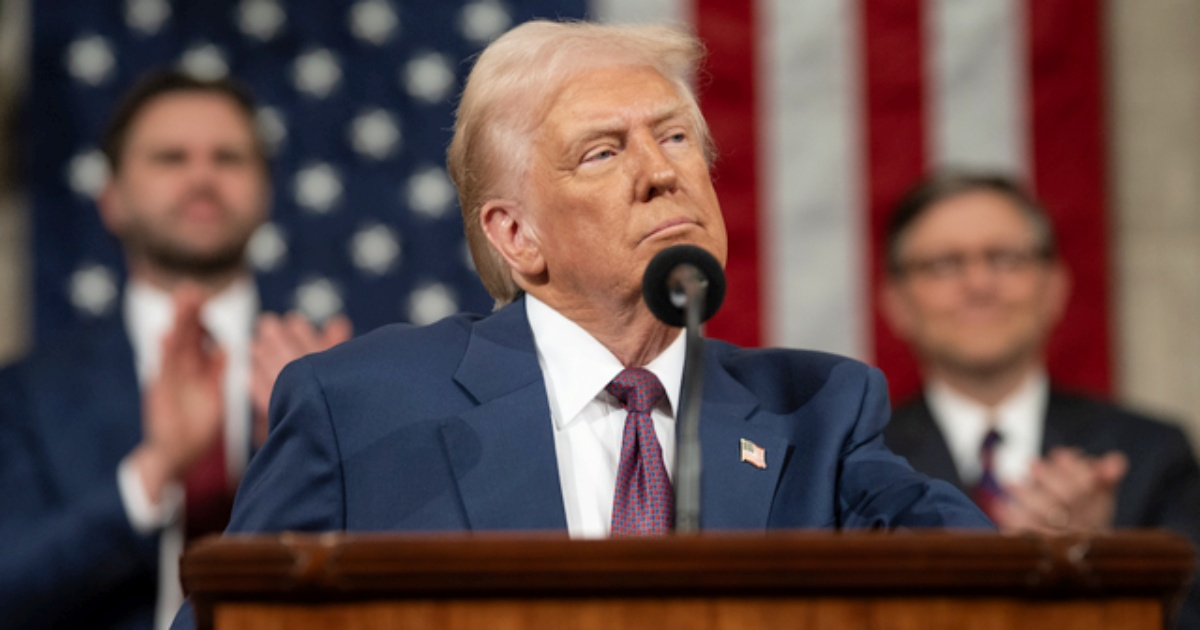
The president Donald Trump announced this Thursday that the federal government will send refund checks of $500 to nearly a million Americans enrolled in the Obamacare insurance marketplace, in what the White House referred to as "Working Families Obamacare Refunds".
According to the government itself, the checks will be sent to affiliates in 30 states utilizing the federal exchange HealthCare.gov, and distribution will begin in October 2026.
The White House justified the measure by claiming that the Biden administration accumulated a significant surplus of funds from the "user fees" that insurers pay to operate in the federal exchange, costs that were passed on to consumers in the form of higher premiums without that extra money benefiting them.
The total estimated amount of refunds is approximately $500 million.
Who qualifies to receive the check?
Not everyone enrolled in Obamacare will receive the money. To be eligible, the member must meet two conditions: have purchased their insurance through HealthCare.gov and not have received subsidies or advance tax credits for premium payments.
This means that the group benefiting consists primarily of individuals with incomes exceeding 400% of the federal poverty level, who bore the full cost of their premiums without government assistance.
In Florida, for example, more than 4.7 million people are enrolled in the ACA marketplace, but 97% receive some type of premium discount, which would significantly reduce the number of Floridians eligible for this refund.
The 30 included states
The states whose residents might receive the check are: Alabama, Alaska, Arizona, Arkansas, Delaware, Florida, Hawaii, Indiana, Iowa, Kansas, Louisiana, Michigan, Mississippi, Missouri, Montana, Nebraska, New Hampshire, North Carolina, North Dakota, Ohio, Oklahoma, Oregon, South Carolina, South Dakota, Tennessee, Texas, Utah, West Virginia, Wisconsin, and Wyoming.
States that manage their own insurance markets, such as California, New York, or Massachusetts, are excluded.
Controversy and questions
The announcement was not without criticism, according to AP. Republican officials and lawmakers in Congress questioned whether the Centers for Medicare and Medicaid Services have the legal authority to redirect those funds without Congressional approval, given that the user fees were specifically designed to finance the operations of the federal exchange.
Critics and advocacy groups labeled the checks as a symbolic gesture or a political maneuver, arguing that $500 represents a minimal fraction compared to the premium increases that many enrollees have faced, especially following the expiration of the enhanced pandemic-era subsidies at the end of 2025.
Some analysts have also questioned whether the surplus of funds exclusively stems from the Biden administration, suggesting that it may date back to Trump's first term.
Cynthia Cox, vice president and director of the Affordable Care Act Program (ACA), stated that it is very likely that the promised funds will come from the fees collected during Trump’s first term.
Brad Woodhouse, a Democratic strategist and executive director of the advocacy group Protect Our Care, argued that the plan was "a complete joke" in a statement.
The announcement is part of a series of health measures promoted by the Trump administration since 2025, which include executive orders on hospital price transparency and medication pricing, as well as the so-called Great Health Plan introduced in January 2026, the final approval of which still depends on Congress.
This week, in addition, Trump announced that he will send a payment of $5,000 to every adult American if the Republican Party maintains control of the House of Representatives and the Senate in the upcoming midterm elections on November 3.
The announcement was made during a party convention in Dallas, Texas. "If the Republicans win, you win with us and receive $5,000," Trump declared. "It will be called the 'Trump Dividend'."
The proposal would cost $1.35 trillion to cover nearly 270 million adults in the country. This amount exceeds the revenue generated by tariffs, which would be the funding source that Trump vaguely mentioned he would use. Furthermore, by using that money, the president would worsen an annual budget deficit that is already around $1.8 trillion.
Related videos:
Filed under: