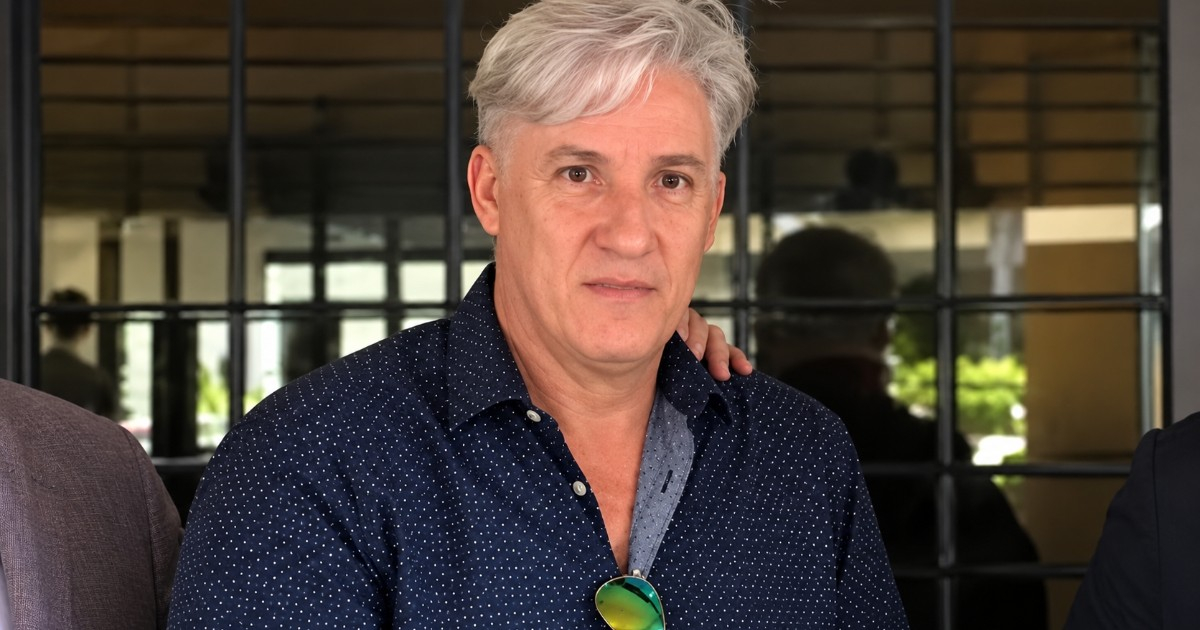
The United States Immigration and Customs Enforcement (ICE) confirmed this Sunday, via its official account on X, the deportation of Fernando Armando Valdés Pérez, a 61-year-old Cuban-born individual and Guatemalan citizen identified as an active member of the Cuban regime's intelligence, who resided in Kendall, Florida.
According to the official statement from ICE, Valdés Pérez "infiltrated and reported on the Cuban exile community and dissident groups in Latin America and the United States since at least the mid-1990s."
The agency determined that it deliberately concealed its affiliation with the regime while fraudulently applying for and obtaining its legal immigration status in the country.
"Valdés earned the trust and closeness of the late anticommunist dissident Luis Posada Carriles and maintained a close relationship with other well-known Cuban and Cuban-American figures in South Florida until his arrest on July 10 by ICE in Miami, the FBI, and U.S. Customs and Border Protection," the statement notes.
The arrest took place at Miami International Airport during a joint operation. Weeks later, on August 7, he was deported to Guatemala. The action was of a migratory nature —based on immigration fraud— and did not involve criminal charges for espionage.
Este caso forma parte de una serie de acciones migratorias de alto perfil que ICE ha llevado a cabo recientemente. Sigue todos los detalles en nuestra sección de
One of the most revealing elements of the case is the closeness that Valdés Pérez managed to establish with prominent figures from the Cuban exile community. For years, he made campaign donations to Republican congress members María Elvira Salazar and Mario Díaz-Balart. Additionally, he repeatedly visited Posada Carriles during his detention in Panama from 2000 to 2004.
The case in the context of Cuban espionage in the U.S.
The case adds to a long history of Cuban intelligence operations in South Florida. The most well-documented precedent is the Wasp Network, which was dismantled by the FBI in 1998 and infiltrated anti-Castro organizations and military facilities in Miami for years.
In July 2026, the State Department published a report on the active network of Cuban spies on U.S. territory, noting that the Intelligence Directorate of Havana continues to carry out active operations within the country.
The Secretary of State Marco Rubio was more direct last August when he stated that "Cuba is the only country that has systematically planted and concealed spies within the U.S. system," citing the cases of Ana Belén Montes —a Defense Intelligence Agency analyst who spied for Cuba for 16 years— and Víctor Manuel Rocha, a former ambassador and advisor to the Pentagon who also worked for Cuban intelligence.
The new details of the Valdés Pérez case reveal how the Cuban regime used an agent with dual citizenship to penetrate the closest circles of the exile community for decades, without raising formal suspicions until years later.
Friends of Posada Carriles who had suspected Valdés Pérez for years are believed to have been instrumental in prompting the FBI to open the investigation that led to his arrest and subsequent expulsion from the country.
Related videos:
Filed under: