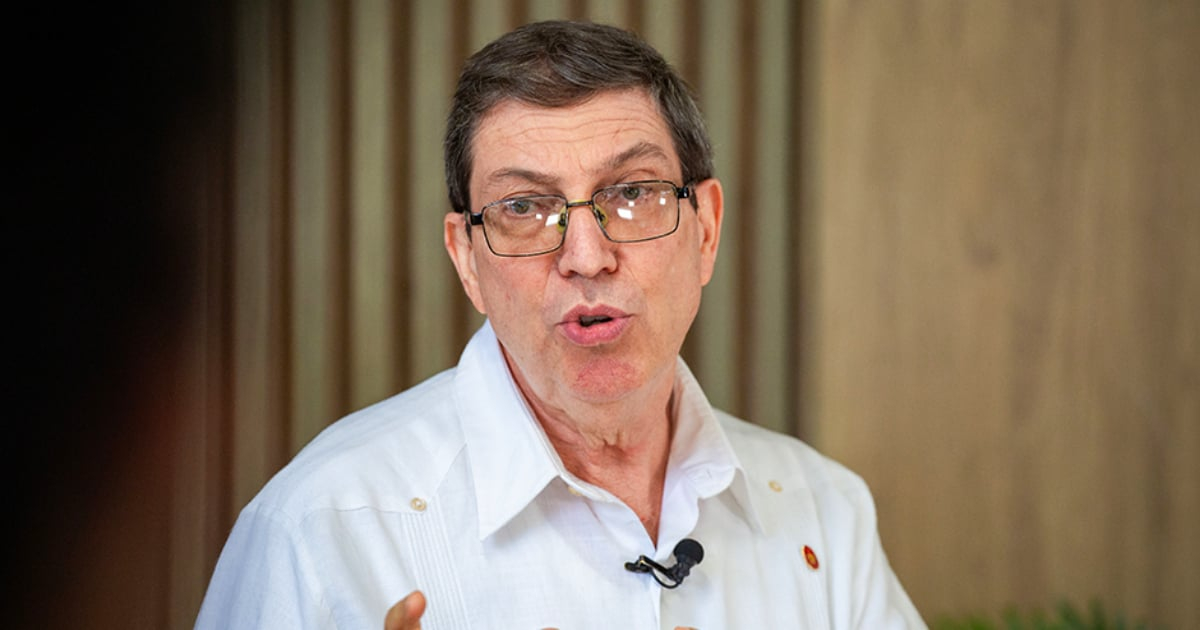
The Cuban regime's Foreign Minister Bruno Rodríguez Parrilla assured this Monday that 7,000 containers with goods destined for Cuba are being held at ports in various countries around the world due to the pressures that Washington exerts on international shipping companies.
In a message posted on his X account, the Minister of Foreign Affairs stated that these shipments were “previously contracted and paid for in accordance with international trade standards” and that the majority contains food, medicine, and medical devices.
"To the energy blockade that is causing devastating humanitarian consequences, the U.S. government adds threats, pressures, and blackmail to international shipping companies to limit and disrupt Cuba's foreign trade," Rodríguez wrote, describing the withholding as a part of the "collective punishment that the U.S. government is imposing on the Cuban people."
The Cuban regime consistently blames Washington for the widespread crisis affecting the island.
At the end of July, Deputy Prime Minister Óscar Pérez-Oliva Fraga had already presented the same figure of over 7,000 containers held in Caribbean and other regional ports before the National Assembly. Days earlier, the state entity MediCuba had reported the specific retention of medications in Jamaica and Colombia, including nephrology materials, blood bags, and sodium valproate in Cartagena.
The immediate backdrop is Executive Order 14404, signed by Donald Trump on May 1, 2026, which expanded secondary sanctions against foreign entities operating with Cuba, particularly against the military-business conglomerate GAESA. As a direct consequence, shipping companies CMA CGM and Hapag-Lloyd suspended all their bookings to and from the island, citing compliance risks, as confirmed by Reuters.
In June, the Office of Foreign Assets Control (OFAC) set a deadline for foreign companies to sever ties with GAESA. In July, Washington directly sanctioned Mariel Container Terminal S.A. and Coral Marítima S.A., accusing them of having transferred control of the port to evade previous restrictions. In August, eight Cuban state-owned companies and the Ministry of Construction were added to the list of sanctioned entities.
On September 4, Rodríguez himself had already railed against the new sanctions on the Cuban Foreign Bank and on entities in the energy and mining sectors, using the same term of "collective punishment."
The reiteration of the figure of 7,000 containers by the chancellor comes a week after Cuba presented a report to the UN estimating the cost of the US embargo at a record 8,083.3 million dollars between March 2025 and February 2026, which is a 7% increase compared to the previous period, according to the EFE agency. The historical accumulated cost that the regime attributes to the embargo amounts, according to the same report, to 178,700.5 million dollars at current prices, figures that the Cuban government presents without independent verification and as part of its diplomatic campaign before international organizations.
The Cuban regime blames the embargo for the supply crisis affecting the population, although over sixty years of economic mismanagement under dictatorship is the structural cause of the decline impacting the daily lives of Cubans.
Related videos:
Filed under: