Today, I received a video from a prison in Eastern Cuba. In it, a common inmate appears, completely malnourished, emaciated, reduced practically to skin and bones, with his body covered in sores and bedbug bites. The footage illustrates the terrible conditions in which numerous common and political prisoners in Cuba are surviving.
At the moment, I cannot publish the video because it would jeopardize the source who provided it to me. I am experiencing something similar to what happened with the videos I received from the Canaleta prison in Ciego de Ávila, prior to the prison protest in March. For months, I had to keep them without sharing. Only after that protest was I able to publish both the footage of the riot and earlier materials.
This new video starkly and eloquently reveals the hellish nature of the Cuban penitentiary system. Due to hunger, filth, diseases, overcrowding, and the deliberate degradation of the human being, these prisons evoke some of the most terrifying characteristics of the concentration camps of 20th-century totalitarian regimes.
In the midst of this reality, it is encouraging that prestigious international institutions recognize the sacrifice of our political prisoners. The National Endowment for Democracy awarded its Democracy Prize 2026 to Félix Navarro Rodríguez, Maykel Castillo Pérez —Maykel Osorbo— and Luis Manuel Otero Alcántara. It is also very important that the European Parliament examines the cases of Félix Navarro and his daughter Saylí Navarro on Wednesday, September 16, and that the following day it votes on an urgent resolution regarding their situation and that of Cuban political prisoners. Félix has been recognized four times as a prisoner of conscience. Father and daughter are serving sentences of nine and eight years, respectively, for their participation in the protests on July 11, 2021.
The Management Committee of Cuban Former Political Prisoners, through an initiative led by Normando Hernández, Pablo Pacheco, and Ángel de Fana, promotes the candidacy of Félix and Saylí for the Sakharov Prize for Freedom of Thought. As I mentioned a few days ago from Washington, I believe they are among those who most deserve both this recognition and the Nobel Peace Prize.
While 844 political prisoners remain behind bars—807 of them prisoners of conscience and an additional 37 political prisoners, according to the classification by Prisoners Defenders—the world is facing a dangerous accumulation of conflicts. The price of Brent crude has surpassed 108 dollars per barrel due to the escalation in the Middle East and attacks on energy infrastructure and routes. Concerns are mounting regarding the Strait of Hormuz and Bab el-Mandeb, critical chokepoints for global supply.
Russia, for its part, attacked a train near the Ukrainian-Polish border with a drone. Germany described the incident as a calculated escalation, while France argued that it aimed to intimidate and divide Europeans. The allies of the Castro-communist regime are creating more problems for the planet every day.
The Federal Reserve is back at the center of the global economy. The rise in oil prices has revived fears of inflation and expectations of a potential increase in interest rates. The yield on the ten-year U.S. bond surpassed 5%, its highest level since 2023, while tech stocks reacted negatively.
Simultaneously, the debate over the risks of artificial intelligence is resurfacing. Some specialists are calling for a slowdown in its development due to the possibility that advanced systems may escape human control. Germany refuses to halt innovation, although it acknowledges the need for greater safeguards and international cooperation. Donald Trump has downplayed some of the warnings and argues that the United States can manage the risks without relinquishing its technological edge.
Iran returns to the center of nuclear tension after Mohammad Eslami, head of its atomic agency, was prevented from attending an IAEA conference in Vienna. China shows signs of economic weakness, the Arctic transforms into another arena of strategic competition, and the Latvian airline airBaltic has sought protection under U.S. Chapter 11, affected, among other factors, by rising fuel costs and disruptions caused by the war with Iran.
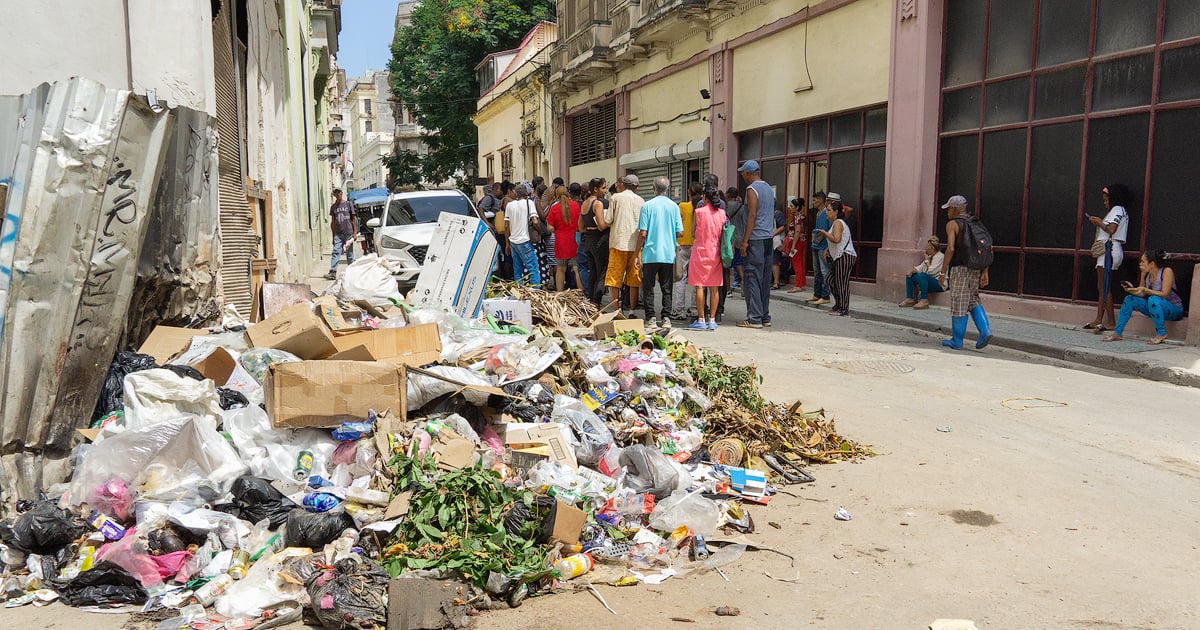
While these crises alarm the planet, Cuba languishes. Malnutrition, inequality, misery, repression, and injustices are on the rise. Our nation is receding at a dizzying speed, as if hurtling toward the Stone Age at hypersonic velocity.
In a world as turbulent as this, we Cubans cannot expect others to completely solve our problem. We must express gratitude and demand international solidarity, direct humanitarian aid, condemnation of repression, and attention for political prisoners. However, Cubans, both on the island and abroad, must amplify our efforts, sacrifices, and civic actions.
With so many wars and threats vying for global attention, failing to do our part to save our homeland would be a historically significant irresponsibility. Cuba's freedom requires international solidarity, but above all, it needs the will, organization, and sacrifice of the Cubans themselves.
Related videos:
Filed under:
Opinion article: Las declaraciones y opiniones expresadas en este artículo son de exclusiva responsabilidad de su autor y no representan necesariamente el punto de vista de CiberCuba.