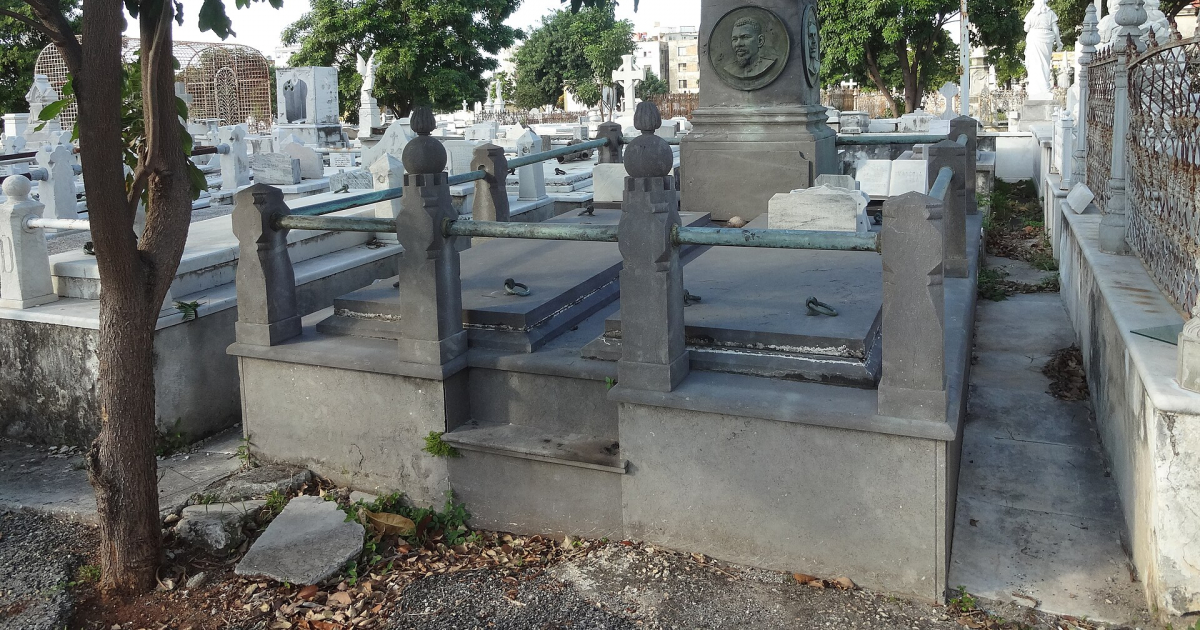
Quintín Banderas Betancourt was born in Santiago de Cuba on October 30, 1834. Black, poor, and without formal education, he became one of the bravest and most respected fighters in the Cuban wars of independence.
His life was tied to the struggle for Cuba. He participated in the three major independence wars of the 19th century: the Ten Years' War, the Little War, and the War of 1895. His school was the wilderness, and his military rise was a result of his courage and abilities as a fighter.
In the Ten Years' War, his extraordinary journey began. After the Pact of Zanjón, he did not abandon the independence cause. He participated in the Little War and endured imprisonment and deportation to Spain. He returned to Cuba and continued to conspire until, in 1895, he took up arms again. He was already over sixty years old.
During the War of Independence in 1895, he played a prominent role in the Liberation Army and participated in the Invasion from East to West under the command of Antonio Maceo. He attained the rank of division general and became one of the most well-known military figures of the revolution.
José Martí left a significant impression about Banderas in his Campaign Diary. Martí saw in that veteran of previous wars a man hardened by struggle, marked by the years, and, at the same time, endowed with extraordinary moral strength.
But Banderas' career was also marked by conflicts.
The Court Martial
His strong character and some issues with discipline and command ultimately led to conflicts with other military leaders. In 1897, he was subjected to a court-martial and removed from active service.
This episode has been used later to fuel a real black legend surrounding his figure, especially through references to his private life and alleged relationships with women.
We must not deny his mistakes or portray him as a perfect hero. However, it is also not legitimate to reduce a lifetime of sacrifices to the most controversial aspects of his existence.
There is also a matter that historiography must take seriously.
Banderas was black, poor, and practically uneducated in a society deeply marked by racial and social inequalities. There are not enough reasons to claim that all the difficulties he faced were a direct consequence of racism, but the context in which he lived cannot be ignored.
His story is part of the immense contribution of Black Cubans to the wars of independence.
A tragic death
After independence, Quintín Banderas did not receive a reward consistent with his sacrifices. He ended up living in very precarious economic conditions.
In 1906, when the so-called August War broke out against the government of Tomás Estrada Palma, the old general took up arms once again. He was over seventy years old.
On August 22, 1906, he was ambushed by government forces in the Arroyo Arenas area of Havana. He attempted to escape but was caught and killed.
The death of Quintín Banderas had a particularly tragic dimension. The man who had fought against Spain for decades ended up dying at the hands of other Cubans.
His life was not perfect. He made mistakes, faced conflicts, and had contradictions. However, none of those circumstances can erase what is fundamental. Quintín Banderas fought in three wars for Cuba, achieved the rank of general, and devoted practically his entire existence to the cause of independence.
He died poor, pursued, and forgotten by many of those he had helped to achieve a free homeland. Remembering him does not mean creating a hero. It means doing justice to history.
Three wars, a general, and a life that no prejudice could erase.
Related videos:
Filed under:
Opinion article: Las declaraciones y opiniones expresadas en este artículo son de exclusiva responsabilidad de su autor y no representan necesariamente el punto de vista de CiberCuba.