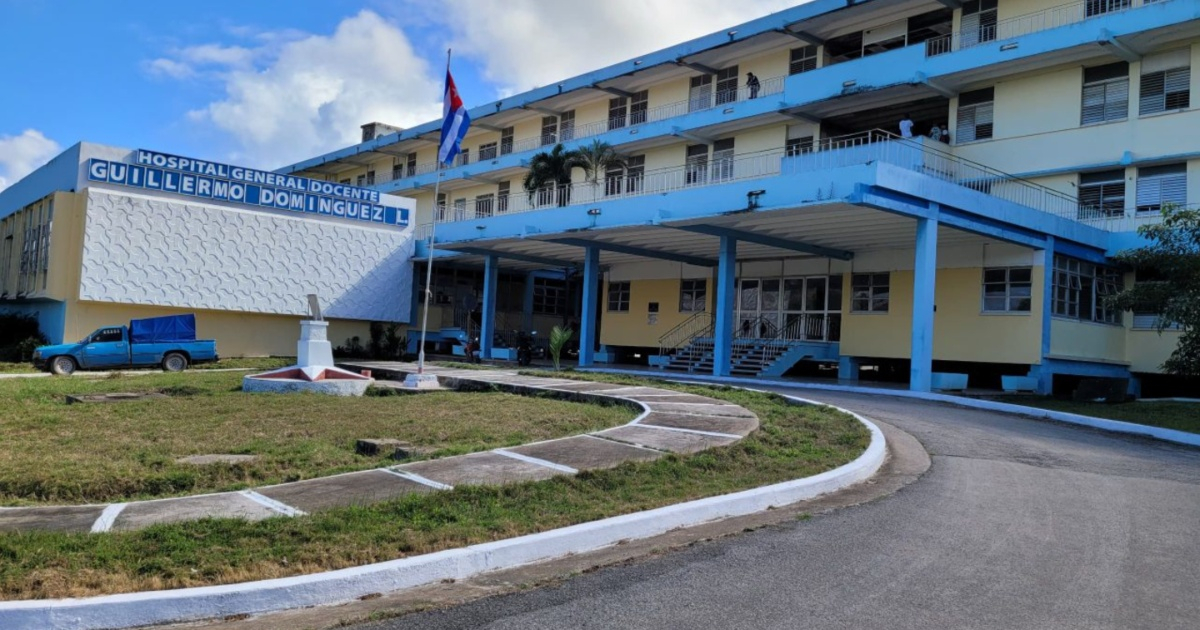
The Guillermo Domínguez López General Teaching Hospital, located in Puerto Padre, Las Tunas, reported the reappearance of bedbugs in its psychiatric ward, after an infestation detected in July forced the area to be quarantined, relocate patients, replace all mattresses, and conduct an intensive treatment for several days to try and eradicate the insects.
In an informative note published this Monday on its Facebook profile, the institution explained that epidemiological surveillance had detected for the first time the presence of bedbugs in that room in July.
The healthcare center, located in the municipality of Puerto Padre, stated that it activated protocols to eradicate the infestation, including intensive fumigation, quarantine of the ward, and transfer of patients to another area.
The measures also included daily changes of supplies, total renewal of the mattresses, washing with hot water, fumigation of the furniture, the use of detergents and acids, pressure washing, and an intensive treatment over seven consecutive days.
Subsequently, the hospital maintained vector surveillance and weekly fumigation. However, the problem reemerged, and notably, the healthcare center acknowledged the return of the issue following numerous complaints on social media.
"After more than a month without evidence of the insect, its presence was detected again two days ago", acknowledged the statement signed by the institution's director, Dr. Deinier Pérez Morales.
The new detection required to immediately reactivate intensive treatment under the supervision of a multidisciplinary team.
The hospital stated that during the first 48 hours, the presence of the insects had been reduced.
The management added that patients with psychiatric conditions require specialized care, a situation that, as explained, "complicates the execution of complementary actions and prolongs response times."
He also stated that all hospitalization services are being reviewed and that, so far, no bedbugs have been found in any other room.
Before explaining the outbreak, the hospital introduced its statement referencing economic limitations and fuel shortages, a situation it attributed to the policies of the current U.S. administration.
And that explanation sparked criticism among many users, who questioned the reliance on the conflict with the United States when discussing the hygienic conditions of the facility.
«Blockade... that's what happens when the salary paid to cleaning assistants for a month is the same cost as a dozen eggs. That hospital, as well as the pediatric one, is disgusting; they lack even a drop of hygiene, not to mention the bathrooms, and they continue to blame it on the blockade,» wrote one person.
Another reacted: «The same response for so many years, always blaming the United States when the true culprit of everything is the Cuban government, that's the one that has the entire country in misery.»
Other comments emphasized that hygiene deficiencies would not be limited to the affected room. One user requested a review of the geriatrics room and reported poor conditions from the entrance to the bathrooms, in addition to questioning the care some patients receive.
If it doesn't appear on social media, they won't respond, summarized another internet user.
Another person noted that the issue calls for deeper measures: "It is a shame that in our health institutions, where we should be a model for hygiene, despite all the limitations we are aware of, our institutions lack cleanliness and remain dirty."
The reactions of internet users don’t lie, and the presence of bedbugs in Cuban healthcare institutions is not an isolated incident.
In August, a nurse at the Saturnino Lora Provincial Hospital in Santiago de Cuba, resorted to using fire in an attempt to eliminate bedbugs from a chair, amidst complaints about the lack of appropriate products to combat the infestation.
Two months prior, family members and patients had reported a bedbug infestation at the Maternal Hospital of Matanzas, where complaints reached areas used by pregnant women and newborns.
The problem has specifically affected psychiatric institutions as well. In July 2025, a serious bedbug infestation at the Gustavo Machín Psychiatric Hospital in Santiago de Cuba was reported, and months later, images of patients surrounded by insects at the Santa Clara Psychiatric Hospital surfaced.
According to the document, the epidemiological surveillance of the center detected the presence of the insect for the first time in July of this year.
Immediately, protocols were activated that included intensive fumigation, quarantine of the room, transfer of patients, complete renewal of mattresses, flaming of furniture, and intensive treatment for seven consecutive days, followed by weekly vector surveillance.
However, the result was not definitive. "After more than a month without evidence of the insect, its presence was detected again two days ago, which made it necessary to immediately reactivate the intensive treatment under the supervision of a multidisciplinary team," the note acknowledges.
The hospital acknowledges that the nature of the admitted patients complicates the response: "Patients with psychiatric conditions require specialized management, which complicates the execution of complementary actions and prolongs response times."
The center assures that in just 48 hours the presence of the insect has decreased, and that the review of the rest of the hospitalization services shows no infestation in other rooms.
As is usual in Cuban institutional communications, the statement attributes the limitations of the healthcare system to the "economic worsening and fuel shortages caused by the current U.S. administration," while avoiding the internal structural responsibility of six decades of dictatorship.
The case is not isolated. The bedbug infestation in Cuban hospitals is a nationwide issue that has been documented since at least 2024. Similar outbreaks have been reported at the Hospital Ginecobstétrico de Matanzas, where the infestation affected pregnant women and newborns, and at the Hospital Provincial Lenin de Holguín, which has also been criticized for having restrooms without water and accumulations of dirt.
In April of this year, authorities from Antilla, Holguín, publicly acknowledged that Cuba had been facing a nationwide plague for at least two years without a structural solution, affecting hospitals, nursing homes, schools, and private homes.
Las Tunas, in particular, is experiencing a multidimensional health crisis. In recent months, there have been outbreaks of dengue and chikungunya, alerts for hepatitis in schools, cases of leprosy, and hospital blackouts lasting up to 20 hours a day.
At the beginning of this month, the provincial pediatric hospital promoted coconut water and homemade solutions as a substitute for oral rehydration salts, due to the shortage of basic supplies amid a rise in arboviral diseases.
The recurring outbreak in the psychiatric ward of Guillermo Domínguez is yet another example of the systemic collapse of the Cuban healthcare system, where eradication protocols fail to be sustained over time due to a lack of resources, supplies, and minimal structural conditions.
Related videos:
Filed under: