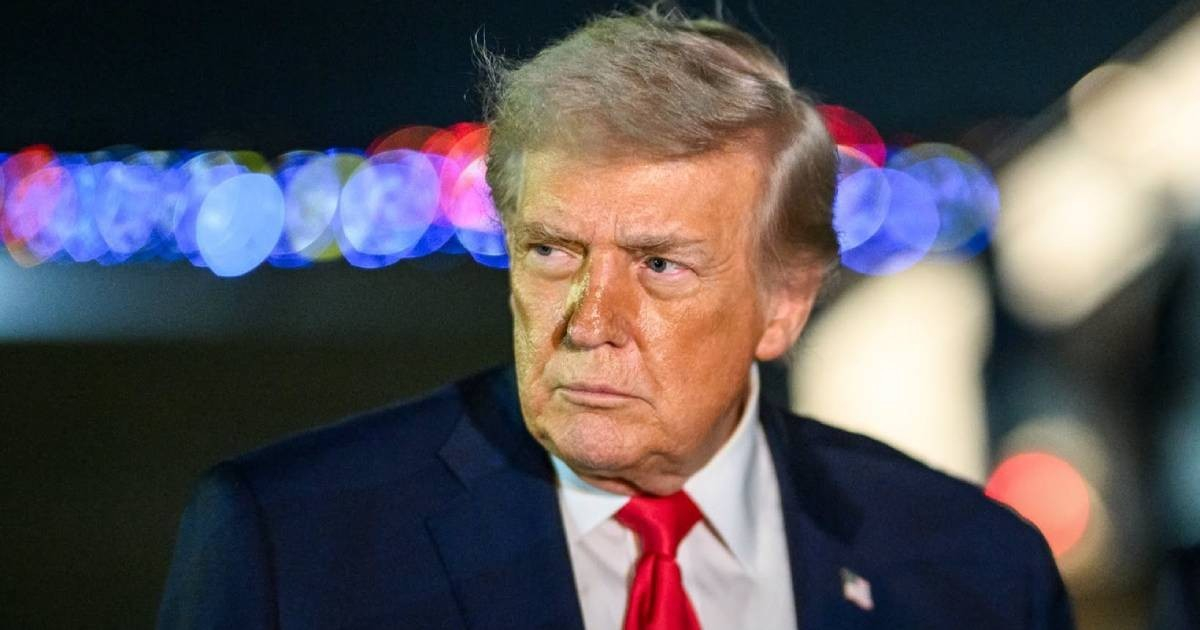
The Supreme Court of the United States blocked President Donald Trump's plan to restrict mail-in voting ahead of the midterm elections in November, in a ruling that the president described on Tuesday as "horrible" and "highly political."
But now the Supreme Court upholds a ruling from a lower court that prevents the United States Postal Service from fully implementing that Trump mandate.
In an unsigned order, the majority of the justices determined that it was "unlikely that the Government would succeed on the merits of its challenge" and reasoned that the potential harm to voters outweighed the interests of the executive.
The only dissenters were the conservative justices Samuel Alito and Clarence Thomas, who would have allowed the rules to go into effect. None of the three justices that Trump appointed during his first term—Brett Kavanaugh, Neil Gorsuch, and Amy Coney Barrett—agreed with the president's stance.
The conflict originates from an executive order signed by Trump in March, which directed the Postal Service to restrict the delivery of ballots solely to voters included in eligibility lists uploaded by states onto a federal portal, and to require tracking barcodes on the election envelopes.
Although that portal was not yet operational at the time of the ruling, several states had already begun sending envelopes that did not meet the new requirements. A whistleblower from the Postal Service alerted Congress that the verification system was assembled in a matter of weeks, was not properly tested, and that a failure in a single code could result in the rejection of entire batches of ballots.
Judge Kavanaugh wrote an opinion in which he acknowledged that the plan could be legal in the long term, but emphasized that "state and local election officials do not have enough time to reasonably implement the standard before the elections." This stance was interpreted as a sign that he might support the president in future contests.
For his part, Justice Alito, who voted in favor of Trump, argued that "the Postal Service has broad authority to regulate the mail" and that practical concerns were insufficient to reject the government's request.
A coalition of about 24 states led by Democrats and voting rights advocacy groups had challenged the measure, arguing that the Constitution grants states—not the federal government—the authority over election administration. Republican election officials also warned about the chaos that a last-minute implementation would cause.
Trump's Reaction
Trump responded this Tuesday with a barrage of criticism on Truth Social against the judges he appointed himself. "These are not the people I interviewed to serve on the Supreme Court of the United States; they are merely a shadow of what they once were," he wrote. In contrast, he referred to Samuel Alito and Clarence Thomas as "legends."
He also described mail-in voting as a "totally corrupt and out-of-control disaster" and referred to the Supreme Court ruling as "horrible" and "highly politicized."
"It's a great loss for the Republicans and for the United States itself, and it greatly facilitates electoral fraud by the radical left Democrats in mail-in ballots. Now they have a free pass to do it! The Supreme Court has truly betrayed our country!" he wrote.
The president, who has been denouncing mail-in voting as a method susceptible to fraud for years without providing evidence, used this very method to vote in the Florida Republican primaries in August.
The midterm elections are scheduled for November 3, and the ruling shuts the door on any changes to the mail-in voting rules for that contest, although Kavanaugh's concurring opinion leaves open the possibility that the debate could resume in future election cycles.
Related videos:
Filed under: