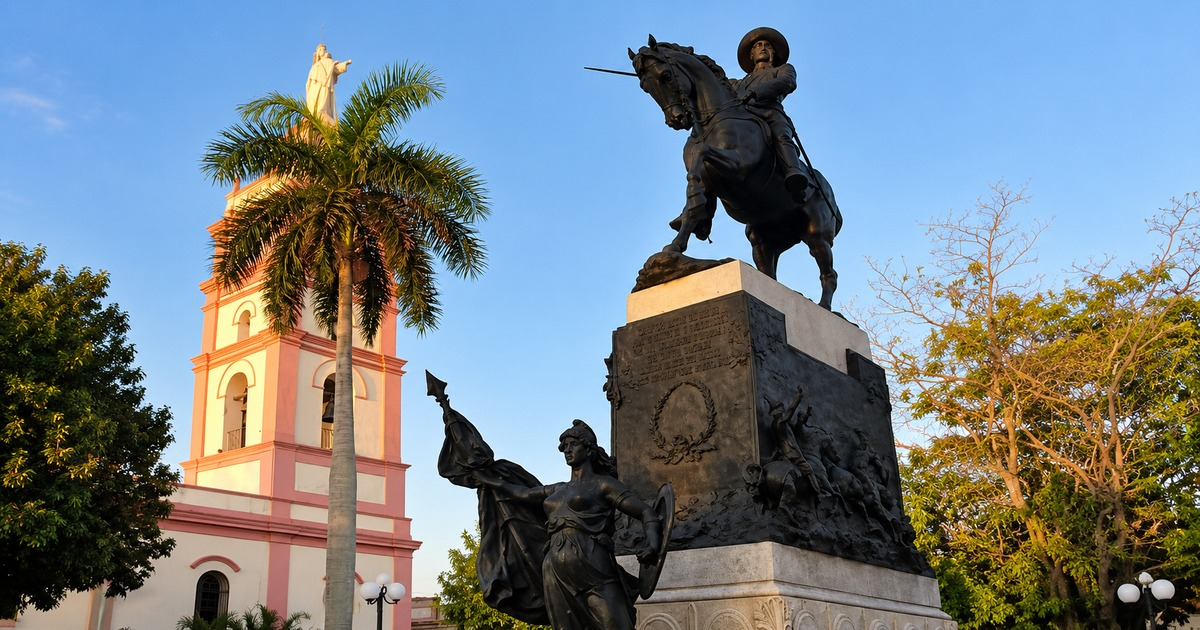
When the name of Ignacio Agramonte is mentioned, the same image often comes to mind: The Major, the extraordinary horseman, the leader of the Camagüey cavalry, the man who entered battle with a daring that ultimately turned him into a legend.
But there is another Agramonte. One that has almost always been overshadowed by the epic: the jurist, the civil lawyer, the thinker who arrived in the wilderness carrying with him a conception of freedom, of the individual, and of the Republic. And perhaps it is precisely this lesser-known Agramonte that we most need to remember.
Agramonte did not begin by thinking of war. Before taking up arms, he had studied Law and reflected on a question that would accompany him until his death: what place does the individual hold in relation to power?
In 1866, while defending his work on individual liberties, he put forth ideas that were extraordinarily advanced for his time. For him, human rights were inalienable, imprescriptible, and unrenounceable. He distinguished between thinking, speaking, and acting as fundamental dimensions of the human spirit and argued that the individual was sovereign over their own interests as long as their actions did not harm others.
That was not just a simple university lecture. It was a conception of humanity.
Here, it is important to make a historical clarification. Agramonte did not write a supposed "thesis against Marx." That would be an anachronism. His actual graduation thesis focused on the law reformed by Justinian and was graded with distinction. His well-known speech on individual liberties belongs to a different academic endeavor.
However, there is something far more interesting than a non-existent controversy. Agramonte advocated for a conception of the individual that would later clash head-on with any doctrine that subordinated personal freedom to the reason of state, a social class, or an omnipotent political power.
He said it with remarkable clarity: excessive centralization could destroy individuality and end up subjugating man in his thoughts, desires, and actions.
That young jurist understood something that many subsequent generations would forget: the danger lies not only in who governs but also in how much power they are allowed to accumulate.
When the war of 1868 began, Agramonte did not abandon those ideas to simply become a warrior. He carried them with him to the wilderness. And there arose the great tension with Carlos Manuel de Céspedes.
Céspedes understood the need for a strong executive power to lead a war. Agramonte, on the other hand, was deeply distrustful of the concentration of power. It was not a personal dispute or a struggle for prominence. Rather, it was largely a debate about what the Revolution should be and what Republic should emerge from it.
In Guáimaro, that difference took on a constitutional form.
Agramonte and Antonio Zambrana participated in the drafting of the constitutional project. The adopted structure established a separation of powers: Legislative, Executive, and Judicial. It also included explicit protections for freedoms such as those of worship, press, assembly, education, and petition.
The paradox is extraordinary. While fighting against a monarchy that concentrated power, Agramonte was concerned that the Cuban revolution would not create another form of absolute power. There lies the true civilist.
He was not a man who believed that war could do without authority. He understood perfectly that a war required command, discipline, and organization. But he also recognized that military power should be subject to a higher conception of the Republic.
That is why his thoughts are so significant. Agramonte did not merely want an independent Cuba from Spain. He envisioned a Cuba where Cubans could be free men. That distinction is enormous. Because independence without individual freedom could change the flag without altering the condition of the citizen.
And that explains why his figure transcends cavalry, military charges, and the legend of Jimaguayú. The Major was an extraordinary man of action. But before that, he had been a man of thought. And perhaps that is why we must revisit his writings.
Because Agramonte left us with a question that remains alive: what is the point of conquering power if, in the end, power ends up conquering the man?
He died on May 11, 1873, in Jimaguayú, at just thirty-one years of age. He never saw the Republic he dreamed of. But he left something more difficult to destroy than a military victory: an idea of man in the face of power. That is why Ignacio Agramonte should not remain trapped in the bronze of monuments or be reduced to the image of the horseman who challenged the Spanish army. His other dimension must be restored.
El Mayor was also the jurist. The civil lawyer. The republican. The man who understood that a free homeland is not built merely by expelling foreigners, but by placing limits on power and putting the dignity of the individual at the center of the Republic.
And perhaps that's why his thinking remains uncomfortable. Because heroes can turn into statues. Ideas, when they are genuine, continue to walk.
Related videos:
Filed under:
Opinion article: Las declaraciones y opiniones expresadas en este artículo son de exclusiva responsabilidad de su autor y no representan necesariamente el punto de vista de CiberCuba.