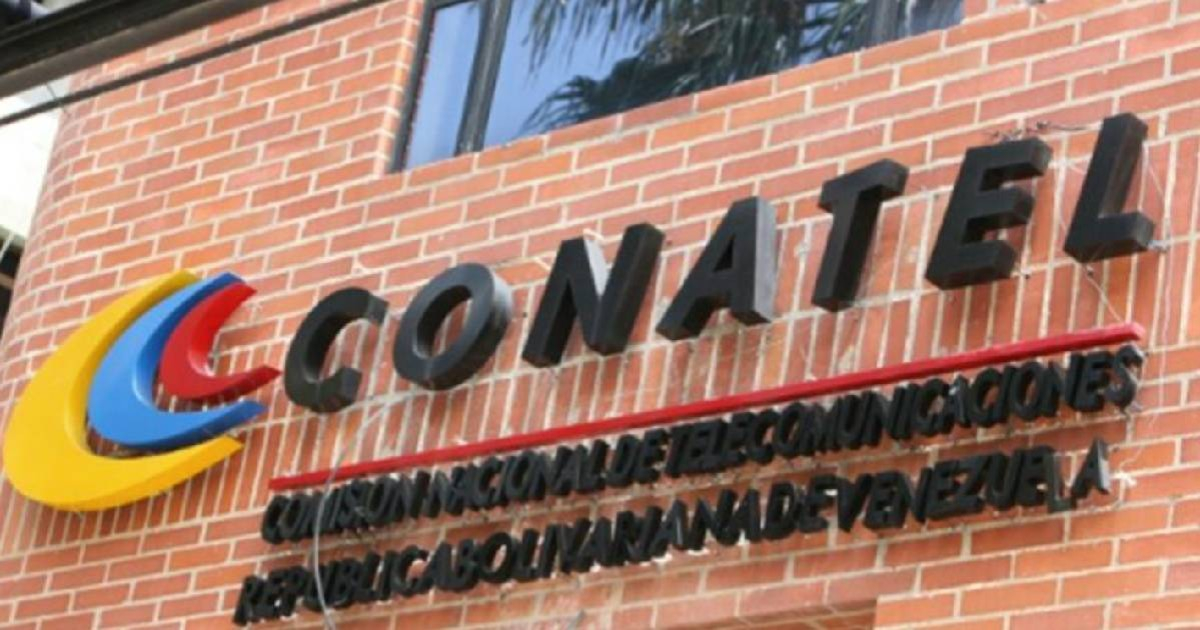
The Venezuelan chavista regime lifted the blockades on at least 10 news portals this Thursday, in a measure that the National Telecommunications Commission (Conatel) formalized through a "technical notification" to internet providers, by instruction of the acting president Delcy Rodríguez.
According to a study by the organization VE Sin Filtro, the restored sites are Alberto Rodríguez News, Caraota Digital, Crónica Uno, EFE Noticias, Efecto Cocuyo, El Estímulo, El Pitazo, Monitoreamos.com, Runrunes, and Revista Semana.
The same organization specified that Cantv began the shutdown seemingly simultaneously with the official statement from the Program for Peace and Democratic Coexistence, issued on Wednesday night; the other providers —Digitel, Inter, NetUno, and Movistar— followed suit in the subsequent hours.
The measure represents an unprecedented acknowledgment: according to VE Sin Filtro, it is the first time that the Venezuelan state has openly admitted to blocking media outlets and the impact of those restrictions on freedom of expression.
However, the same organization described the unblocking efforts as "completely insufficient," noting that 194 domains are still blocked in the country, 84 of which belong to news outlets.
The partial unlocking is a response to formal pressures from the journalism community.
On September 3rd, representatives from media outlets such as La Patilla, El Nacional, VPI TV, El Diario, and several regional media, alongside the Venezuelan Chamber of Broadcasting Industry, presented a document to the delegation of the National Assembly elected in 2015, containing five urgent demands regarding freedom of expression, including the lifting of all blockades on websites imposed by Conatel.
Dinorah Figuera, president of that National Assembly, celebrated the progress but was emphatic about its limits. "Today a window opens that many Venezuelans have been waiting for years," she wrote on her X account, while warning: "This is a first step. Many resources are still missing, and they all must return fully and permanently. Without a free press, democracy is not possible, nor is there a true dialogue among Venezuelans."
Figuera also rejected the idea that access to information should be treated as a concession from those in power: "This is a right in a full democracy, not a concession. Reporting without fear cannot continue to be a privilege; it must be the fulfillment of the law."
The National Union of Press Workers (SNTP) was more demanding in its assessment. The organization claimed that the process should encompass 100% of the affected media and organizations, across all operators and in a definitive manner, and criticized Conatel for once again remaining silent on the decisions that have upheld those restrictions for years without any administrative acts or known legal grounds.
In addition to the complete lifting of restrictions, the SNTP demanded the immediate release of six journalists who remain in judicial proceedings, the repeal of the Law Against Hate, and the urgent renewal of pending radio licenses, a situation that leaves approximately 70% of the country's broadcasters — over 800 radio stations — in legal uncertainty.
The unlocking occurs on the eve of the second in-person cycle of the dialogue process framed within the Program for Peace and Democratic Coexistence, in which the AN2015 delegation has announced that issues related to freedom of expression will be on the agenda.
The SNTP stated that it will continue to monitor the lifting of restrictions and demand guarantees to prevent any authority of the regime from imposing new arbitrary blockades.
Related videos:
Filed under: