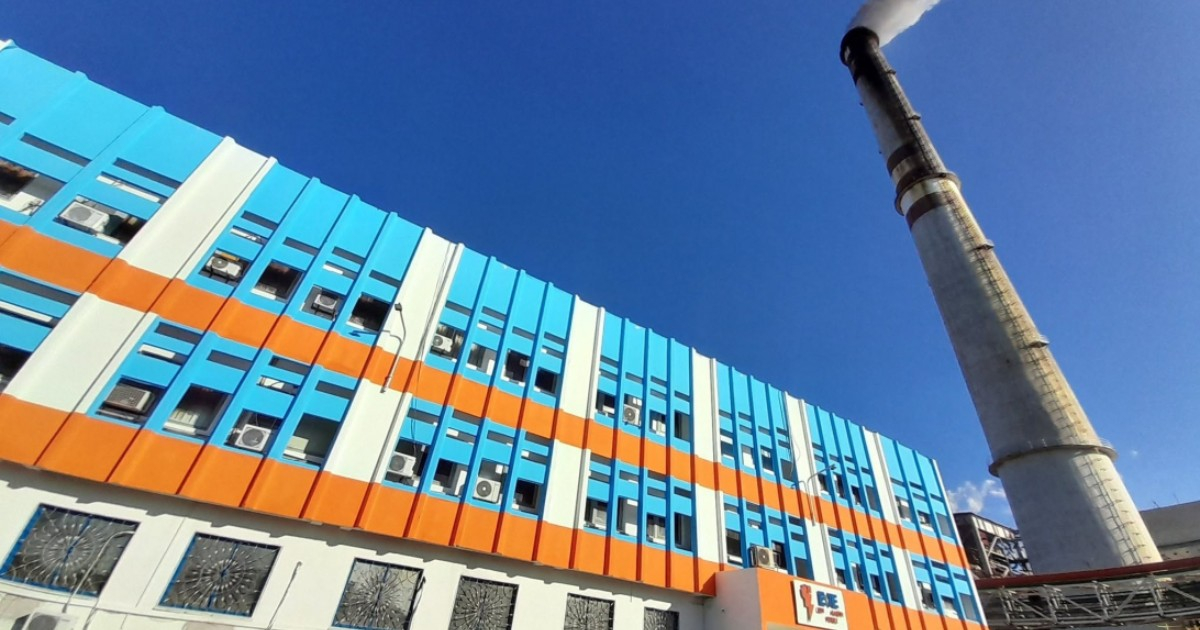
The successive firing of two high-voltage transmission lines originating from Matanzas triggered the eighth total disconnection of the National Electric System (SEN) this year, as confirmed by the Electric Union in a statement published on Facebook.
According to the state-owned company, the 220 kV line Matanzas-Cienfuegos was activated first, followed by the Matanzas-Santa Clara line.
The agency also noted unstable weather conditions in the area as a contributing factor to the collapse.
The sequence was quick: the initial failure divided the system into two blocks—the Eastern Zone and the Western Zone—and just a few minutes later, there was a complete disconnection of the SEN.
"At first, there was a division of the system into the Eastern and Western Zones, and a few minutes later, a total disconnection of the National Electric System was recorded," specified the Electric Union.
The collapse occurred when the system was already operating at its limits. The outage report for this Friday recorded only 1,113 MW of available generation against a projected demand of 3,210 MW, with a maximum forecasted impact of 2,007 MW.
Before the total collapse, Havana reported 358 MW affected and 117 circuits with interruptions, while Villa Clara noted 142 circuits out of service and a deficit of 204 MW.
The technical pattern is not new. The simultaneous firing of the Matanzas-Cienfuegos and Matanzas-Santa Clara lines on August 2 had already triggered the sixth disconnection of the year, leaving five western provinces without service.
The next day, a frequency fluctuation during the recovery caused the seventh drop, which took 17 hours and 45 minutes to resolve.
The Matanzas node consolidates the trunk lines that connect the western part with the central-eastern region of the country, making any failure at that point a risk of cascading collapse for the entire system.
The Antonio Guiteras thermoelectric plant, the largest in the country and located in Matanzas, has recorded at least 17 unplanned outages in 2026 and has not received major maintenance since 2010, as acknowledged by the state-run newspaper Granma.
After the seventh disconnection, the Minister of Energy and Mines, Vicente de la O Levy, ruled out operational responsibility: "These have not been operational errors," he stated, attributing the outages to fluctuations in the grid and fuel shortages.
The same official had admitted in May that Cuba had no reserves of fuel oil or diesel for electricity generation.
The eight total disconnections in 2026 are distributed as follows: two in March, three in July—on the sixth, tenth, and fourteenth—two in August, and the one this Friday.
The Cuban electrical crisis is a result of decades of underinvestment, thermoelectric plants that are over forty years old, and a chronic shortage of fuel that the regime has not been able to reverse.
The Electric Union did not specify in its statements how long it would take to restore the National Electric System (SEN).
Related videos:
Filed under: