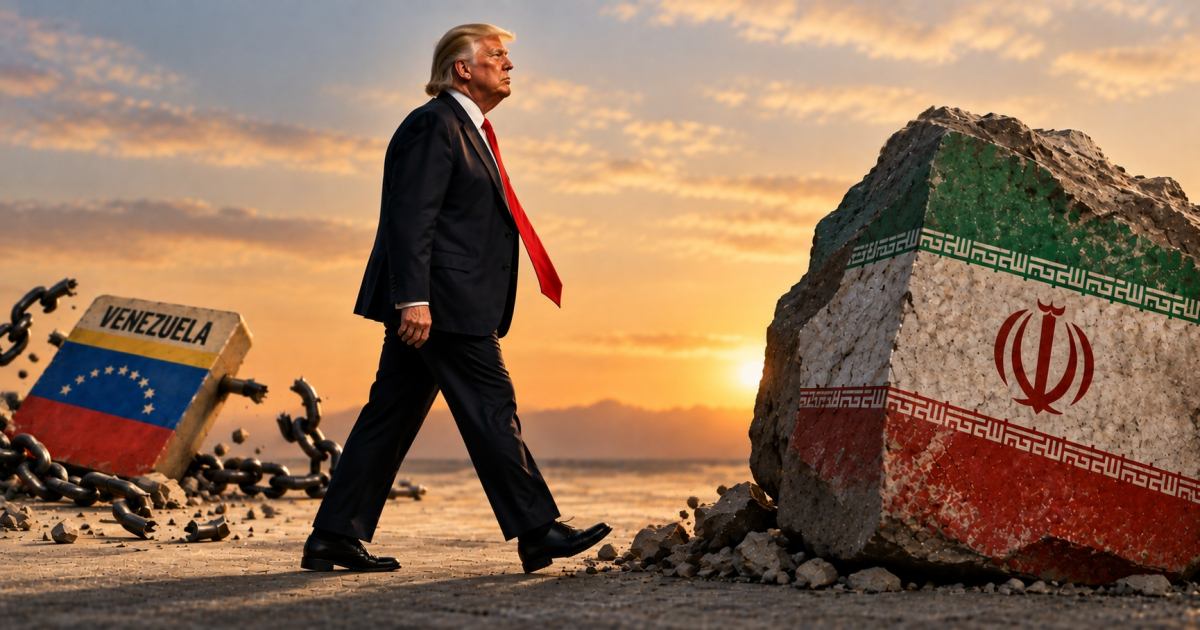
On February 28, 2026, the United States and Israel launched a military offensive against Iran that profoundly transformed the strategic landscape of the Middle East. Regardless of the assessment made of that decision, six months later, Washington is facing an unavoidable reality: ending a war can be much more complicated than starting one.
The problem is no longer about determining whether or not to attack Iran. The issue now is to establish what conditions would allow for the conclusion of the conflict, which threats would remain, and what the consequences of each alternative would be.
An inconclusive war could leave the United States facing a weakened adversary, yet still capable of attacking its bases, threatening Israel, and undermining the security of its Arab allies. An indefinite extension, on the other hand, could multiply American costs and exacerbate regional instability.
The United States holds considerable military superiority over Iran. Its air and naval forces have demonstrated the capability to conduct thousands of attacks against Iranian military facilities, command centers, air defenses, arms factories, and missile systems. However, this military advantage has not guaranteed the enemy's surrender.
The war is mainly taking place on Iranian territory and in American facilities in the Middle East. Iran does not have an equivalent conventional capacity to sustain bombing on the continental territory of the United States.
However, this superiority has not prevented Tehran from causing significant damage. The Pentagon's inspector general report, published on September 14, documents hundreds of damaged or destroyed U.S. structures at bases distributed across eight countries. It also identifies losses of aircraft, logistical challenges, and munitions resupply issues. The difference between military superiority and political victory is crucial: destroying enemy facilities does not guarantee that the adversary will accept the conditions required to end the war.
The price of six months of confrontation
The Congressional Budget Office estimates that the war had cost approximately 38 billion dollars by August 1 and could require an additional 3 billion dollars per month.
Eighteen American military personnel had lost their lives, according to the report published by Reuters on September 15. The Iranian attacks have also caused significant material losses and forced the Pentagon to reassess its weapon reserves.
Iran has endured an extensive bombing campaign against its military, industrial, and naval infrastructure, in addition to significant human losses and economic damage. There is still no independent and comprehensive accounting that allows for an accurate assessment of the total value of its losses.
The balance also includes numerous Iranian civilian casualties.
For Washington, the economic aspect has another dimension: each interceptor missile used and each aircraft destroyed represents resources that will not be immediately available for other military scenarios.
The risk to Israel and the Arab allies
One of the main strategic concerns is what would happen if Iran retained enough military capabilities to continue threatening its neighbors after a potential agreement.
Israel would have to consider the possibility of new attacks using missiles, drones, or allied forces from Tehran. Saudi Arabia, Kuwait, Qatar, Bahrain, and the United Arab Emirates would remain exposed to reprisals against military facilities, oil terminals, ports, and other infrastructure.
However, these same countries also face serious risks if the war intensifies. According to Axios, Saudi Arabia and Qatar's concerns about potential attacks on their energy infrastructure contributed to Trump's decision to postpone an expansion of bombings in August. Their security interests include both limiting Iran's offensive capabilities and avoiding a prolonged regional war. A lasting solution would need to address both concerns.
Russia, China, and the problem of American credibility
Moscow and Beijing are closely watching the developments of the conflict. There are investigations into the Russian intelligence support for Iran and documentation regarding Chinese networks linked to the regime of the Persian nation. It would be naive to think that America's main rivals are not providing maximum support to their old ally.
On September 17, Russia and China vetoed a U.S. resolution aimed at extending international sanctions against Iran. The decision represents a clear endorsement of the ayatollahs' regime.
A conflict that ends without resolving the main strategic disputes could impact the calculations of other adversaries of Washington. Russia might assess the consequences for the availability of U.S. weaponry as it continues its war against Ukraine. China could analyze the wear on arsenals and North American industrial capacity in relation to its own strategic interests in Asia.
North Korea and the regimes of Cuba and Venezuela could also interpret the outcome as favorable to their interests.
The international credibility of the United States and its allies depends on their military strength, their ability to fulfill commitments, preserve alliances, and turn military operations into sustainable political outcomes.
Trump, Congress, and a Divided Public Opinion
President Donald Trump is facing difficult decisions. In an interview published yesterday by Axios, he acknowledged that he is considering the possibility of resuming large-scale bombings. Before making a decision, he intends to consult with the leaders of six Gulf countries during the United Nations General Assembly.
Meanwhile, Congress shows important differences. On September 15, the House of Representatives approved, by a vote of 220 to 204, a resolution aimed at stopping unauthorized hostilities. All Democrats and seven Republicans backed the measure. The resolution has not yet become law.
Surveys also reveal reservations among American citizens. Reuters reported in August that support for intervention had dropped to around 31%.
The prolongation of the war, military casualties, rising energy costs, and the consequences for the economy are part of the public debate.
A termination strategy should address both external threats and constitutional obligations, along with the costs borne by the population. The United States needs a prompt and clear victory. But what does a clear victory mean?
It would consist, at the very least, of preventing Iran from producing nuclear weapons, destroying its offensive military capabilities, ensuring navigation through the Strait of Hormuz, and getting Tehran to stop attacking its neighbors.
They are different objectives, with varying costs, risks, and requirements. Demanding an unconditional surrender could necessitate much more extensive operations, with no guarantee of achieving subsequent stability. Conversely, a negotiation that is insufficiently verifiable could allow Iran to rebuild military capabilities and resume restricted activities.
Both possibilities deserve thorough examination. The history of military conflicts shows that destroying enemy forces and establishing a stable political order are different tasks.
The outcome and future security
The conflict that began on February 28 has created obligations and risks that do not simply disappear because one of the participants announces the end of operations.
The United States needs to define what outcomes it is pursuing, what verifiable conditions are necessary to achieve them, and how it would protect its forces and allies after the war.
The consequences of a potential military expansion must also be examined: more casualties, regional reprisals, energy interruptions, and additional wear on U.S. arsenals.
The possibility of future attacks against American territory deserves the attention of intelligence services. The Iranian regime will seek ways to avenge the death of Ali Khamenei.
The outcome of the conflict will have repercussions for Israel, the Arab countries, and Washington's strategic allies and adversaries.
The key issue is not only how to demonstrate military superiority, but also how to translate that superiority into victory and lasting security conditions.
What is announced is initiated, and what is initiated is completed, and Donald Trump should not forget this, whether it concerns Iran, Venezuela, or Cuba.
Related videos:
Filed under:
Opinion article: Las declaraciones y opiniones expresadas en este artículo son de exclusiva responsabilidad de su autor y no representan necesariamente el punto de vista de CiberCuba.