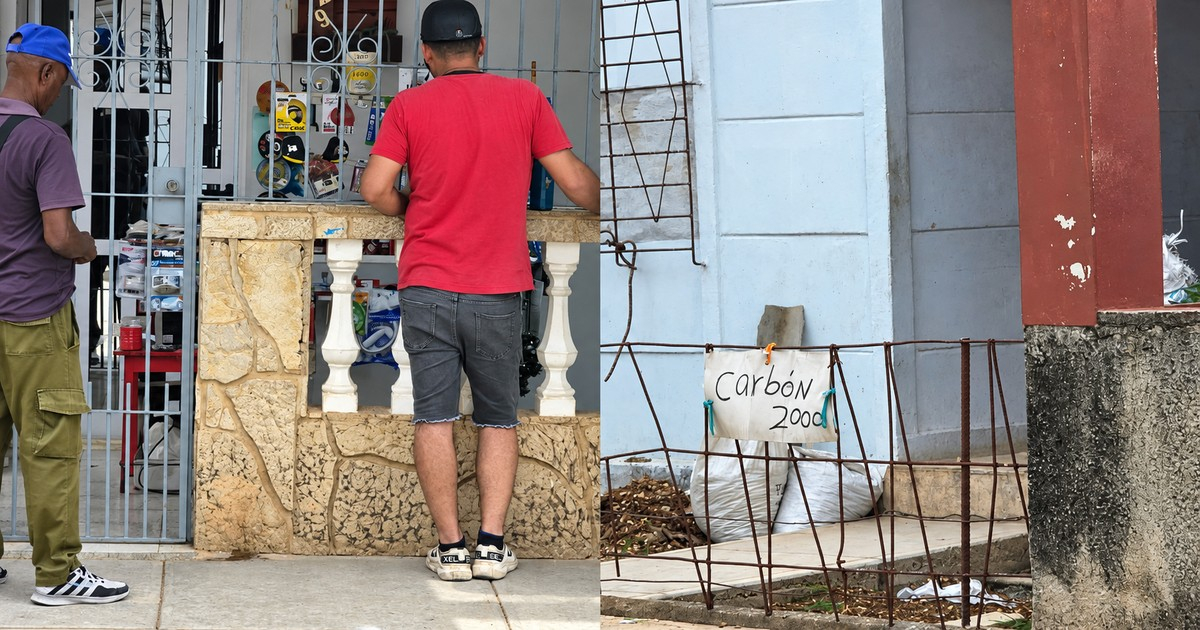
A stroll through any street in Cuba reveals an economy that thrives not only in shops, markets, or other authorized establishments but also behind a window, in a doorway, next to a gate, or in a corner of a living room. Sometimes it is announced on a sign affixed to a wall, and at other times, all it takes is for someone to ask, "Is that available?"
In Cuba, everyone sells something to survive. There is no single profile of a seller. It can be a homemaker, a retiree, an elderly person living alone, a technician, a professional, a state worker, a civil servant, or anyone else who has found reselling as a way to earn money.
Perhaps one of the most telling characteristics of the situation lies here: selling has ceased to be an activity exclusive to merchants and has become widespread across very diverse sectors of society. Food, cleaning supplies, medications, clothing, shoes, household items, tools, small equipment, accessories, toys, both new and used technological products are all sold. Everything is for sale.
The scene becomes even more striking when you observe an entire block. In urban terms, a block refers to the space between two intersecting streets, although its dimensions may vary depending on the location. On the island, it is enough to walk down one of these streets to find a house selling a product, and next to it, across the street, or just a little further, another one offering something similar or the same. Sometimes the same product is sold, either at the same prices or at different ones. Thus, the block transforms into a kind of fragmented small market. And the question is why so many people need to sell.
When a significant portion of homes starts to turn into points of sale, we are not only witnessing a transformation in commerce. We are also observing a change in the ways families secure the money to meet their most basic needs: buying daily food, medications, snacks for a child, saving for new shoes when the ones they have are already worn out, or acquiring a rechargeable fan to cope with the heat during blackouts.
In a society where many families live day to day, selling something can mean securing what is needed for today's meal. Sometimes, even essentials are sold because of more immediate needs. Mothers have ended up selling a package of milk meant for their child in order to buy a few pounds of rice or a pack of hot dogs.
And it’s not just that state centers are understocked or that products are too expensive, but there are places that may be better stocked, yet their prices in convertible currency or dollars are beyond the reach of most of the population, who receive their payment in Cuban pesos. In light of this situation, obtaining a product through a neighbor, an acquaintance, or a home that sells it in the neighborhood can be a more accessible alternative.
For decades, Cuba experienced various forms of informal trade. Goods circulated outside official channels, vendors went door to door, contacts enabled the procurement of items not available in stores, and transactions were conducted discreetly. Then came social media and groups on Facebook, WhatsApp, or Telegram, which made it possible to advertise a product, find a buyer, and finalize a deal without the seller and buyer having to know each other beforehand.
Today, part of that activity has become visible. In some streets, it is enough to look around to find what someone needs. Housing is no longer just a private space where one rests. For many families, it is also the place from where they sell, buy, exchange, and obtain what is not available in state-run centers.
And when selling stops being an exception and begins to repeat itself from one house to another, from one block to another, we are faced with more than just a sum of small vendors; we are witnessing an informal economy that has expanded to occupy spaces that once belonged to the state or the private sector.
It's not uncommon to find that some of these vendors could be a state employee, a commerce inspector, a police officer, or someone backed by a relative who takes the risk, all in an effort to make ends meet.
That’s why, in today’s Cuba, "everyone sells" is not just a phrase; it is also an expression of how far the need to seek independently has come, given what the regime's economy can no longer guarantee.
Related videos:
Filed under:
Opinion article: Las declaraciones y opiniones expresadas en este artículo son de exclusiva responsabilidad de su autor y no representan necesariamente el punto de vista de CiberCuba.