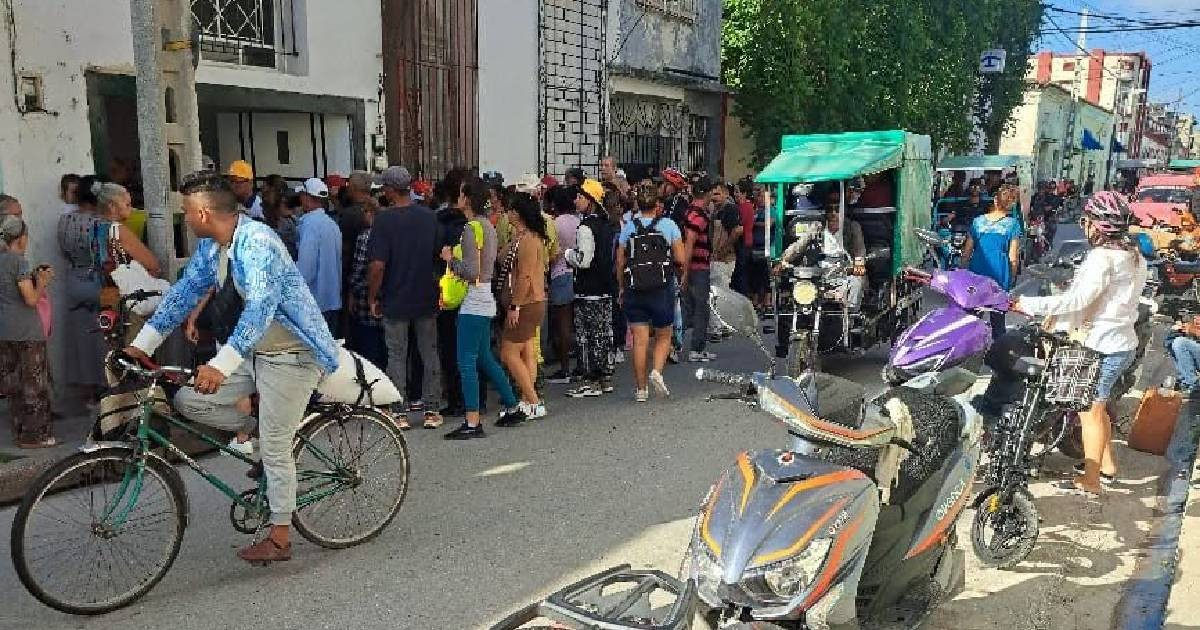
An image circulating this Tuesday on Facebook shows a line of more than 50 people on a street in Holguín waiting to buy powdered soda in 1.5-liter packets, a product that, according to the author of the post, is only available at that single point of sale.
«This is to buy soda in 1.5-liter packets in Holguin right now; it's the only place that has it, what a sadness, my God,» wrote Odalgis Rojas Parra while sharing the photograph on his profile.
The scene shows electric motorcycles parked along the sidewalk, a green bicycle, colonial buildings with chipped walls, and a crowd stretching along the block in front of what appears to be a commercial establishment, a sight that has become common in the province.
Holguín is experiencing several factors that worsen the crisis: power outages of up to 15 hours a day, a shortage of fuel, and a logistical collapse that prevents the regular distribution of basic goods. In August, faced with the lack of oil, many residents turned to pig fat as a substitute, but that item also began to run low, forcing people to line up from early morning.
The powdered beverage, which became a popular alternative due to the decline in bottled drink production, is also facing shortages. The state company Los Portales acknowledged in 2023 the lack of raw materials —sugar, cans, and plastic preforms— which reduced its offer to just three flavors and particularly affected the one-and-a-half-liter presentations.
The problem arises at a particularly sensitive moment: the start of the 2026-2027 school year on September 1 highlighted that even the refreshments for school snacks could not be guaranteed to be in good condition, as reported by Cuban mothers just days before the start of classes.
In Holguín, a basic snack of bread, guava paste, and soda exceeded 500 Cuban pesos at the beginning of September, in a context where the average monthly salary reported by the National Office of Statistics and Information for April 2026 was only 7,074 pesos.
The shortage is not limited to soft drinks. The Minister of Food Industry, Alberto López Díaz, admitted on June 6 that the rationed basket has not been able to distribute oil, chicken, or yogurt so far this year, and that only one round of coffee has been delivered in Havana.
The figures from the Food Monitor Program place the impact of the crisis in even starker terms: 96.91% of the Cuban population lacks adequate access to food, and 33.9% of the surveyed households had at least one member who went to bed hungry in the 30 days prior to the survey.
Cuba imports about 80% of the food it consumes, making it extremely vulnerable to the lack of foreign currency and internal logistical collapse, a combination that by 2026 has led to shortages at levels that the government itself cannot hide.
Related videos:
Filed under: