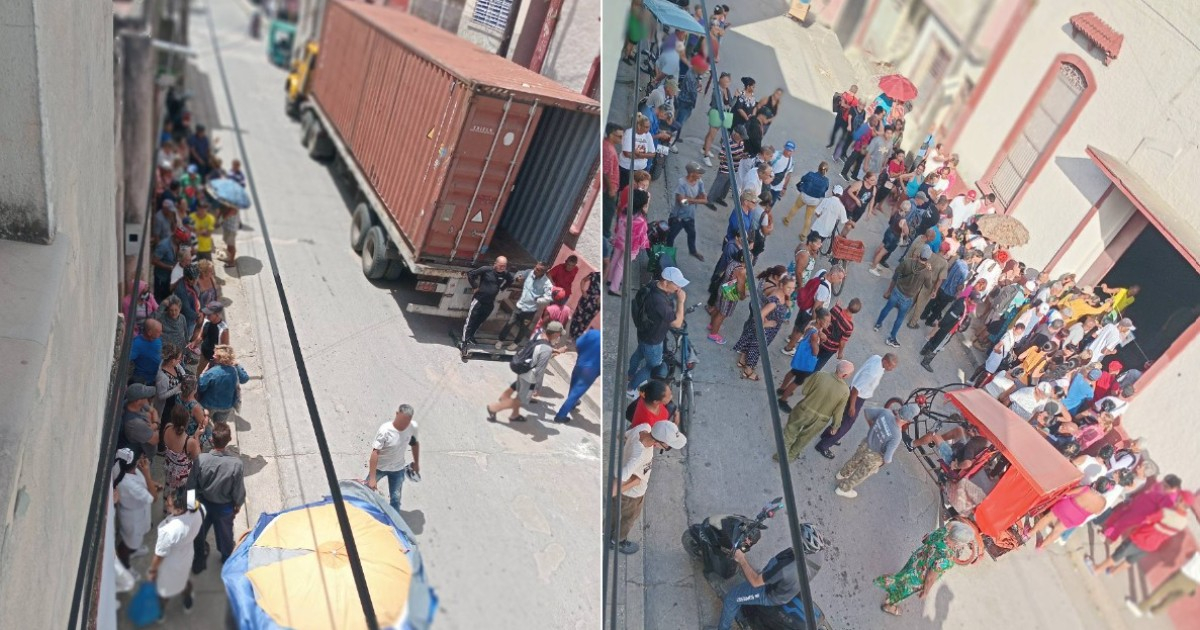
A resident in Holguín shared on photos of dozens of Cubans queuing in front of a small business to buy oil for 2,200 pesos per liter.
Manuel García Verdecia, the author of the publication, noted that there was a line of people waiting to make purchases since the day before, in a crowd that did not disperse.
"Since yesterday, the tide hasn't gone down to buy oil at the mipyme of Ángel Guerra and Mártires, at 2,200 per liter. At least this way they'll grease their problems," he wrote sarcastically.
Despite the high price, beyond the reach of much of the population, 2,200 CUP per liter is not one of the highest prices reported in the current Cuban market.
In mid-August, a self-employed worker from Las Tunas started selling vegetable oil for 2,250 pesos per bottle, in what the local media Tiempo21Cuba described as a sale without speculation following the removal of price caps.
The price surge occurred following the Resolution 150/2026 of the Ministry of Finance and Prices, published on June 20, 2026, which lifted the official cap of 990 pesos per liter that was in place for imported edible oils, arguing that the measure would encourage private imports. The outcome was the opposite: prices skyrocketed uncontrollably.
The measure triggered an uncontrolled escalation throughout the country: the price of oil reached 2,500 pesos in Havana at the end of July, exceeded 3,000 pesos in some markets at the beginning of August, and climbed to as high as 7,000 pesos in extreme cases.
Amid social pressure, municipal governments began to establish their own limits. Guantánamo set the price at 2,200 pesos and threatened sanctions for offenders. Pinar del Río and Matanzas also capped the price of oil, setting it at 2,150 and 2,500 pesos, respectively.
The regulated basket has gone months without distributing oil, a situation that regime officials themselves admitted to in June. The small and medium-sized enterprises have become the only points of sale with stock, but at prices that most of the population cannot afford.
The accumulated desperation has already led to episodes of violence. On September 4th, dozens of people looted a truck loaded with oil in La Lisa, in Havana, while it was being guarded by police who were unable to prevent it.
Related videos:
Filed under: