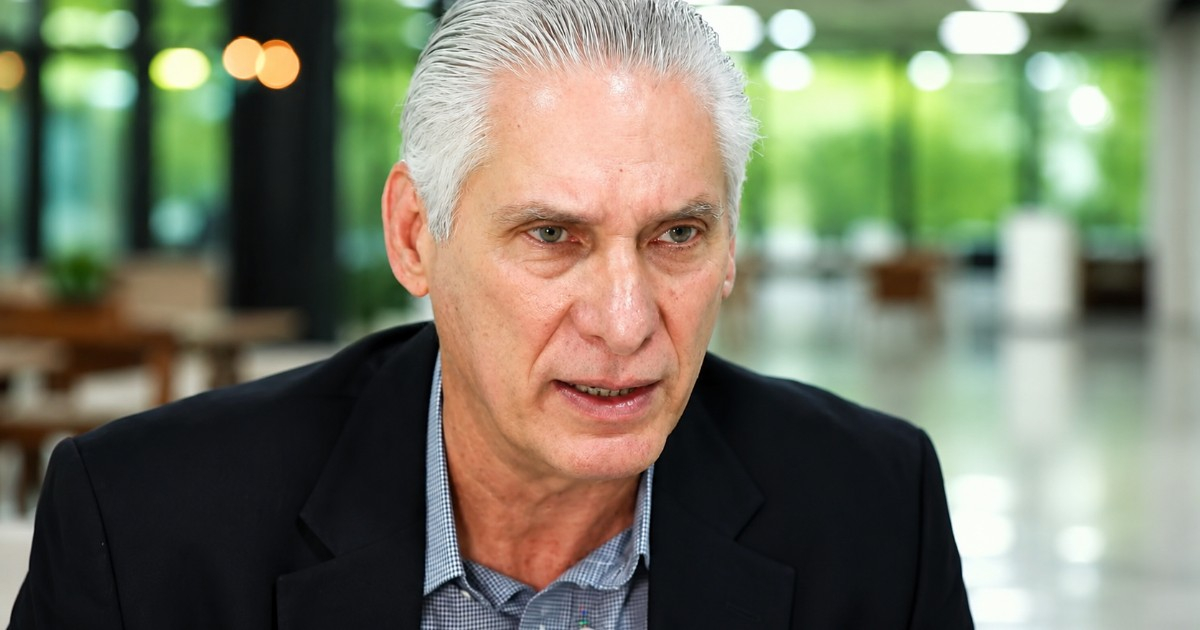
The Cuban leader, Miguel Díaz-Canel, took to his X account this Saturday to publicly thank Democratic Congresswoman Maxine Waters for her passionate remarks to U.S. Treasury Secretary Scott Bessent, in which she questioned the Trump administration's sanctions policy against Cuba.
The Cuban leader shared a video of Waters' intervention and wrote: "With the dignity that sets her apart, Democratic representative Maxine Waters has called out the Secretary of the Treasury for the criminal policy of #Blockade. Thank you, Maxine, as you rightly say, history will not forgive them. And it will recognize the dignified Americans who denounce this crime."
The statements that prompted that message took place on September 15 during a hearing of the House Financial Services Committee, where Waters directly confronted Bessent over the energy restrictions imposed on the island.
"They have cut off all the oil to Cuba. They are starving families, they are starving children. They have no electricity, they cannot get food. What are you doing, Mr. Secretary? Why are you so cruel?" the legislator exclaimed, according to the transcript of the video shared by Díaz-Canel himself.
Waters also urged Bessent to act with independence of judgment: "I know we have a cruel president, but does he have to be a puppet? Does he have to do everything he wants?"
The congresswoman, at 88 years old and representing California's 43rd district since 1991, concluded her speech with a warning: "History will not be kind to you or this administration. Let the oil flow. Allow them to have electricity. Permit them to trade and feed themselves."
Díaz-Canel's message comes at a time of sustained escalation of U.S. sanctions against Cuba. Just two days earlier, on September 17, Washington announced measures against 11 entities and individuals linked to the Cuban military and mining sector, as reported by Reuters.
At the beginning of the month, Secretary of State Marco Rubio announced new sanctions on the energy, financial, and mining sectors, including Comercial CUPET S.A. and ABAPET.
That accumulated pressure arises as Cuba experiences its worst energy crisis in decades. The electricity generation deficit has exceeded 2,400 MW in 2026, with blackouts affecting up to 70% of national demand.
In May, the Minister of Energy and Mines, Vicente de la O Levy, acknowledged that the island had no reserves of fuel oil or diesel for electricity generation.
The Cuban regime attributes the crisis to the U.S. embargo, although analysts also point to internal structural causes such as chronic underinvestment, poor management, and the deterioration of the electrical infrastructure.
This is not the first time Díaz-Canel has sought support from Democratic legislators. In April, he welcomed Congress members Pramila Jayapal and Jonathan Jackson in Havana, and in July he met with four other Democratic legislators to discuss the effects of the embargo.
Waters, for her part, has a history of critical positions towards those sanctions dating back to 1999, when she chaired the first delegation of the Congressional Black Caucus that visited the island.
Related videos:
Filed under: