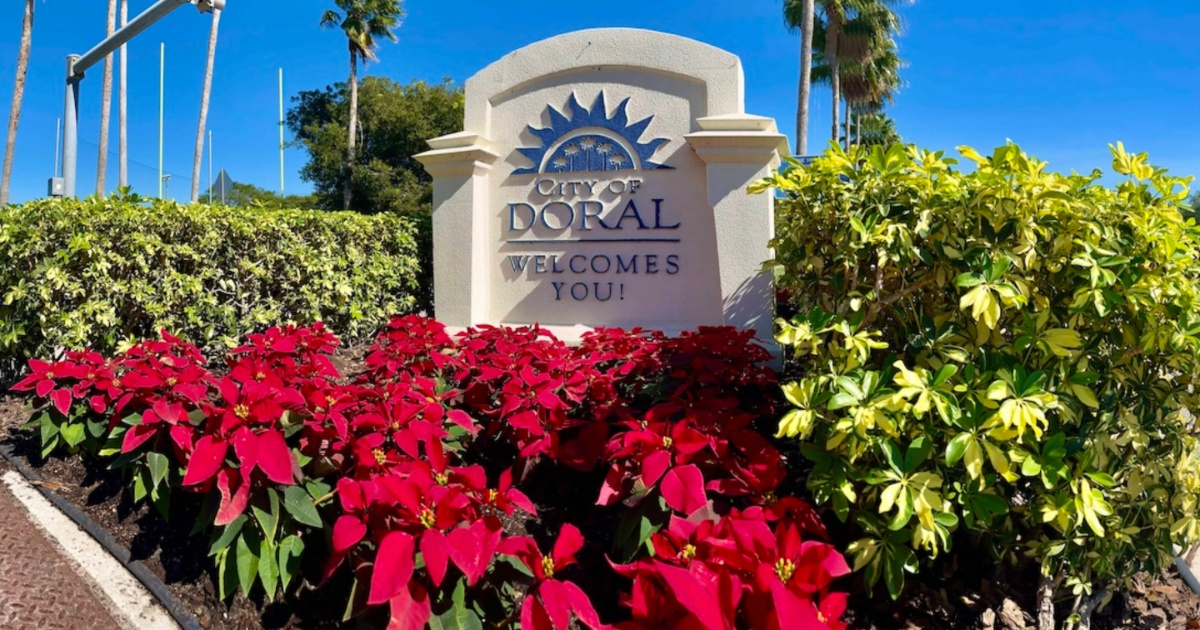
The mayor of Doral, Christi Fraga, publicly acknowledged that the immigration operations by ICE and the Border Patrol are creating a climate of fear that directly impacts the local economy, with business owners reporting declines in sales and employees resigning out of fear of being detained.
"It's no secret and it's not a lie that right now there are many people living in fear in Doral," stated Fraga in the podcast by journalist Enrique Santos, published on September 14.
The mayor described an unequal reality depending on the establishment: "On Friday, I went to eat at a well-known place in Doral, and there was a one-hour wait to be seated. And there are other places we've been to, where we know it's always very crowded, that looked quite empty."
In the conversation, the official expressed her concern for the future of individuals who are being detained and deported when they had hoped to receive protection in the United States, as they were fleeing oppressive systems.
"I can't understand how someone from Haiti, who is genuinely afraid and has requested political asylum and TPS, can be sent back to Haiti after their TPS has been canceled, considering the gangs and violence there. How can a person be sent back to Cuba? Even Cuba is not accepting some returnees, and they are ending up in Africa. What is happening?" he said.
However, he acknowledged that there have been irregularities and abuses in the asylum process, which is why stricter measures have been implemented.
"They have abused the system or lied during the asylum process. We know that there are also many spies from Cuba, Venezuela, and other countries who want to harm us. The country has the right and the duty to protect us from the bad people who wish to do us harm. All of that is understood. The border is also a relief," he emphasized.
The economic impact has specific names and figures
A report by Univision highlighted that Katia Rios, owner of the restaurant Pipo Burgers, stated that her sales plummeted by 70%.
Miguel Ángel Flores, owner of a food stall in the city, reported a similar decrease since enforcement operations intensified on the streets. A karate school lost approximately half of its enrollments in just three weeks.
The impact is not limited to sales: several businesses have also reported sudden resignations from workers with work permits and ongoing immigration processes, who chose to leave their jobs rather than risk an encounter with federal agents.
In the interview for Santos, Fraga was clear about the limits of municipal government: local governments do not have the authority to prevent federal agents from carrying out their operations, and the city also does not receive advance notice about when the raids will occur.
It also clarified that Doral does not share its residents' data with ICE and that the local police do not direct or participate in raids, although in January 2026 the council approved a 287(g) agreement with ICE that allows for certain collaboration under the Task Force model.
Fear extends beyond businesses
Entire families have chosen to keep their children in virtual classes. Venezuelan host Lisbeth Lovo explained to Telemundo 51 that she transports about six children to school every day "because their parents are afraid to drive."
Doral is home to approximately 27,000 residents of Venezuelan origin within a total population of around 76,490, making it the largest concentration of Venezuelans outside of Venezuela.
The city voted around 60% for Donald Trump in 2024, largely due to his stance against chavism.
The border czar Tom Homan responded to criticism on September 11, defending the operations: "Those who supported President Trump voted for him to enforce immigration laws and secure the border."
The councilman Rafael Piñeyro, more critical than the mayor, sent letters to federal legislators in South Florida with a clear message: "Let them complete their immigration process. It should be the immigration court and the immigration agents, in their respective cases, who make that decision."
According to figures from the research center TRAC, approximately 74% of those detained in ICE facilities have no criminal convictions, a statistic that contradicts the official narrative that the operations target only dangerous criminals.
ICE arrests in Doral escalated from three in December 2025 to 17 in July 2026, according to data from the Miami Herald, while nationally ICE recorded 49,571 arrests in July, the monthly record during Trump’s second term.
Los operativos de ICE siguen transformando la vida cotidiana de comunidades como Doral. Sigue toda la actualidad sobre para estar informado sobre cómo estas políticas afectan a residentes y negocios.
Related videos:
Filed under: