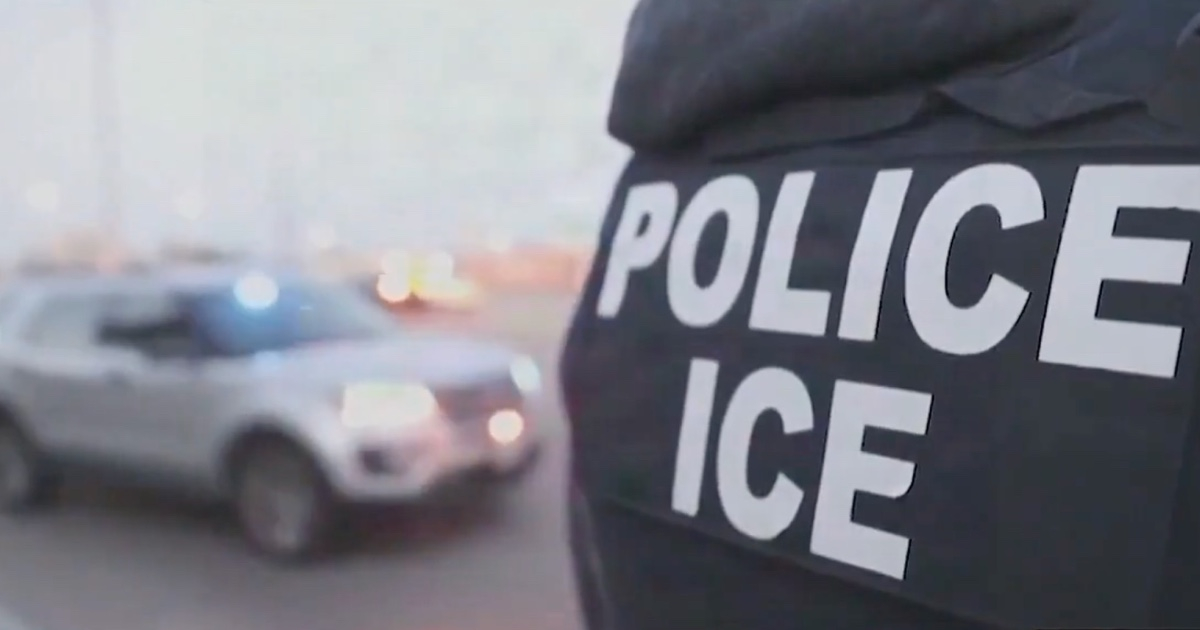
ICE agents and police officers can access various data related to a vehicle and its owner by checking a license plate in Florida, a query that may reveal more information than many drivers are aware of.
What information is revealed when checking a license plate? Can the driver's immigration status be determined? What details are shown on a driver's license or state identification?
Dariel Fernández, tax collector for Miami-Dade, explained in an interview with Telemundo 51 what information is associated with these documents and what authorities can verify during a check.
The office led by Fernández manages both vehicle registrations and driver’s license and identification services in Miami-Dade, allowing him to explain firsthand how these processes work and what information is associated with them.
The license, immigration status, and the information revealed by a license plate
When an agent queries a vehicle's license plate through systems such as Nlets or via automatic license plate readers (ALPR), they can obtain the registered owner's name, date of birth, address, driver's license information, and vehicle registration history.
You can determine if the license plate is expired, whether it corresponds to that vehicle or not, which aids in the decision-making process regarding whether to investigate that vehicle and its driver.
ALPR systems go further: they record the vehicle's location history with photos, GPS coordinates, and timestamps for each capture, creating a trail of movements that can be accessed by authorities.
If the agent also accesses the records of the Department of Motor Vehicles (DMV), they can obtain physical descriptors, a facial photo, and additional information about the car owner.
The records associated with the vehicle can provide authorities with information about the owner and their driver's license, but it is possible that it is not that person who is driving the car at the moment when ICE or the police are conducting the operation.
Este caso ilustra cómo la información vinculada a placas y licencias puede tener consecuencias migratorias. Sigue todos los detalles sobre operativos, derechos y procedimientos en nuestra sección de
"There is a law in Florida that will be enacted in the coming months. The driver's license will indicate your immigration status. It will state whether you are a resident or a citizen. Each time you renew the document, the updates will be available," Fernández stated.
Currently, licenses issued to non-immigrant individuals are valid only until the expiration date of their immigration documents provided by the U.S. Citizenship and Immigration Services (USCIS), not exceeding one year.
This means that when reviewing a license, an agent can immediately determine whether the driver's immigration documents are valid or expired. The records linked to the license may contain information derived from the documents used to verify identity and legal presence in the United States, depending on the applicant's category.
Federal law requires that permanent residents carry proof of their immigration status at all times. Failing to carry the green card can lead to ICE questioning the individual, and not having a driver's license is a violation in Florida, which provides agents with an additional reason to pressure drivers to identify themselves.
The case of the Cuban detained in the Keys
At the end of August, the Cuban Osvaldo Oliva (@osvaldooliva76), a legal permanent resident, recorded his brief detention by an ICE agent while driving in Key West.
Oliva questioned the arrest procedure: "Is this a legal stop? A legal stop for what? To check my immigration status? You are not a police officer or anything like that."
The agent replied, "You're going to be detained for now. Sue me or do whatever you want," and warned, "If you don't have your license, I'm taking you with me; it's a crime not to have your license."
Oliva was detained because there was something in the vehicle's license plate that caught ICE's attention. This detail was never revealed in the video, but the Cuban was released when he provided his documents and demonstrated his status.
After the incident, Oliva warned her community: "Thank God I am a permanent resident, but I am alerting you in case you can avoid passing through here. If it's not necessary, please don't come through, my people."
The episode occurred in the context of intensified operations in the Florida Keys following the reinstatement of the 287(g) cooperation agreement between the Key West police and ICE in July 2025, which allows local agents to perform immigration functions.
The data from the Department of Homeland Security indicates that the detentions of Cuban migrants increased by 463% between October 2024 and January 2026, and the ICE office in Miami recorded over 41,000 detentions since January 2025. License plate and driver's license checks have been tools used in these operations.
Related videos:
Filed under: