Virgilio Paz Romero, the Cuban exile convicted for his involvement in the attack that killed former Chilean ambassador Orlando Letelier in Washington in 1976, could be deported in the coming weeks to a third country while he remains detained by ICE in Miami.
The situation of the Cuban, born in Santa Clara and currently in his seventies, was revealed by The Washington Post coinciding with the 50th anniversary of the attack, which occurred on September 21, 1976.
Paz has been at the Krome immigration detention center since January, after the Trump administration identified him among the non-citizen immigrants convicted of serious crimes that it seeks to deport from the country.
On August 28, Federal Judge Darrin P. Gayles rejected a petition for release filed by his defense, which argued that the Cuban was suffering from "serious medical issues" and that there was "no significant likelihood of deportation in the foreseeable future."
The magistrate then gave the government 30 days to deport him to a third country or release him under supervised conditions.
ICE assured the court that it was "actively managing" his transfer and that the State Department was in negotiations with a third country willing to accept him. However, Paz remained detained in Krome when the investigation was published.
His case carries half a century of history and is connected to one of the most notorious political attacks that occurred in the U.S. capital.
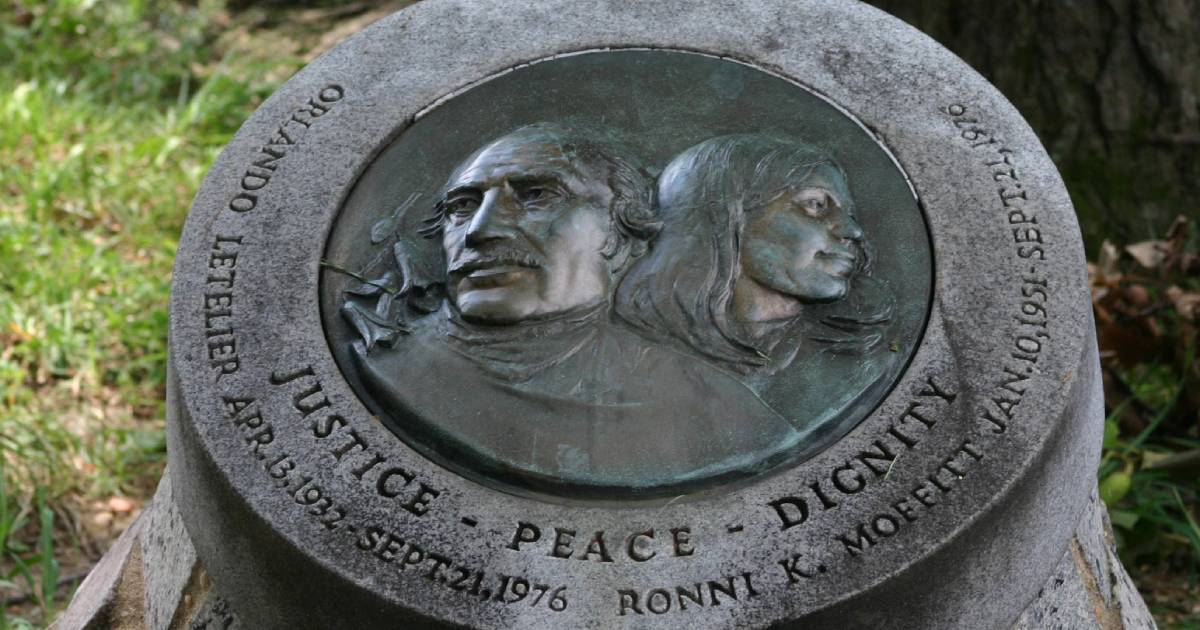
On September 21, 1976, a bomb placed under the driver's seat of Letelier's car exploded while the vehicle was traveling through Sheridan Circle in the diplomatic area of Washington. The attack killed the Chilean ex-ambassador and American Ronni Karpen Moffitt.
Subsequent investigations linked the crime to the secret police of the Chilean dictatorship, the DINA, and to anti-Castro Cuban exiles. The CIA concluded years later that dictator Augusto Pinochet had ordered the assassination.
Paz was identified as the person who allegedly activated the remote detonator of the bomb. He managed to evade U.S. authorities for 15 years while living on the outskirts of Miami under the name Frank Báez and running a landscaping business.
His escape ended in 1991, after a photograph of him appeared on the television show "America's Most Wanted" and neighbors recognized him.
Paz pleaded guilty to a misdemeanor charge of murder and served seven years of a 12-year sentence. Upon his release from prison, he remained under immigration custody for another three years, but in 2001, the United States ultimately released him due to the impossibility of deporting him to Cuba.
"In retrospect, I think it was a serious human error," he said at the time about his involvement in the attack, which he attributed to "my youth."
Twenty-five years later, he/she is facing deportation again.
Although Cuba currently receives deportation flights from the United States, Paz has said for years that he does not want to return to the island, from which he left as a teenager. According to The Washington Post, he never applied for U.S. citizenship because he had intended to return to Cuba one day.
A spokesperson for the Department of Homeland Security defended the government's actions and stated that the Trump administration is using "all legal options" to carry out its deportation campaign. He also claimed that when a person refuses to return to their country of origin, authorities look for another nation that may accept them.
The possible expulsion of Paz, however, comes amid a significant legal dispute regarding deportations to third countries.
The First Circuit Court of Appeals rejected the procedure used by the Trump administration last Friday, determining that it undermines due process when migrants do not receive adequate notice or an effective opportunity to assert that they could face persecution or torture in the country to which they are to be sent.
That ruling could impact Paz's immediate future, although it is still unclear which third country Washington is negotiating with to receive him.
The uncertainty about their fate coincides with the commemorative events held this Monday at Sheridan Circle, where a monument honors the spot where Letelier and Moffitt died exactly fifty years ago.
Related videos:
Filed under: