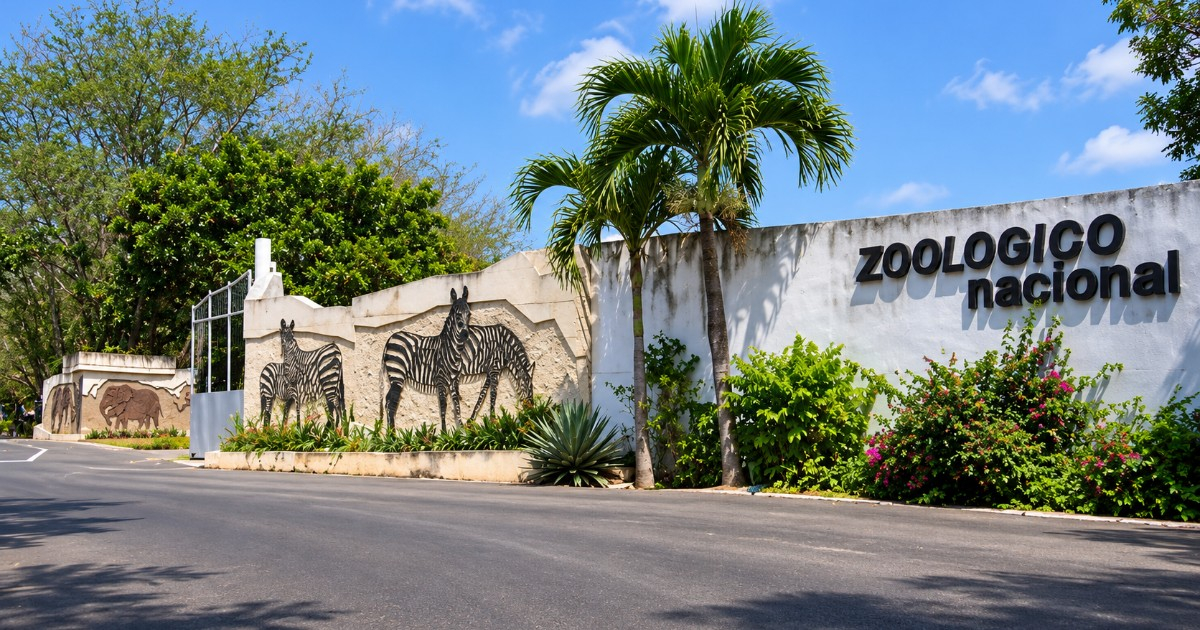
The economic and energy crisis in Cuba is forcing the National Zoo in Havana to ration food, increasingly rely on private donations, and limit its breeding programs in order to support nearly 1,000 animals, including vulnerable or endangered species.
The situation was documented by the agency AFP during a recent visit to the park, where workers and veterinarians described the difficulties in obtaining meat, medications, fuel, and water amidst the prolonged crisis affecting the island.
One of the most delicate effects of the scarcity affects species breeding programs, one of the essential functions of zoos, which have had to be scaled back because each new birth entails increased needs for food, medicine, and staff.
The zoo is home to the only breeding group of black rhinos outside of Africa, a significant population of white rhinos, the largest herd of Grant's zebras in America, and several hippos that breed regularly.
«We cannot continue increasing the number of animals,» explained Yoel Machado, the animal welfare officer, who noted that the priority is to ensure that the existing population receives the best possible care.
Despite these limitations, in recent months, tigers, hyenas, jackals, and a black dromedary named Esperanza have been born in the park, marking the first specimen of its kind born in Cuba in three decades.
Food is another major challenge, especially when it comes to large felines.
Ángel Cordero, the veterinarian in charge of these animals, explained that he has had to ration the food to prevent it from running out.
"It is of no use to give them a lot if it only lasts three days," Cordero pointed out to AFP.
An adult big cat needs about seven kilograms of meat per day, but obtaining those quantities has become increasingly difficult.
Even when food is available, recurring power outages, which can last up to 30 hours, complicate its storage.
During the visit of AFP, the agency did not observe any animals that appeared to be malnourished or sick.
However, Cordero acknowledged that two Bengal tiger cubs, one of which is white, "could be in better condition".
The park, located about 20 kilometers from downtown Havana and spanning approximately 345 hectares, is home to populations of black and white rhinoceroses, hippos, jaguars, zebras, and other species of high conservation value.
The shortage has also forced the zoo to rely on private assistance.
Every Monday, Ana Fernández, a Cuban-American born in Tennessee and a resident of Cuba for the past nine years, donates meat for the animals.
Animals should not have to suffer, the woman stated, although she acknowledged that some days it is not enough for everyone.
The difficulties go far beyond food.
According to AFP, the zoo recently had to cope with 23 days without electricity, which also left the facility without running water.
The park director, Juan Carlos Corella, stated that the workers sought alternatives, including the transfer of water via trucks and the almost daily search for food, although he admitted that keeping the facility operational has become "very difficult."
The lack of fuel also affects the staff. Machado explained that many workers arrive at the zoo by bicycle, scooter, or electric motorcycle to ensure that the animals receive water and food daily.
This situation is compounded by the loss of specialized personnel. More than a third of the veterinarians have left the zoo in search of better-paying jobs, primarily in the private sector.
Some have ended up working in cafés, while others are in private veterinary clinics.
The situation contrasts with what the institution itself communicated just a few days earlier.
On September 10, the National Zoo announced its indefinite closure due to a lack of electricity and water, a measure that raised concerns about the well-being of the animals.
Three days later, the institution announced its reopening and assured that its animals were "in perfect condition" and under the constant care of its workers.
Related videos:
Filed under: