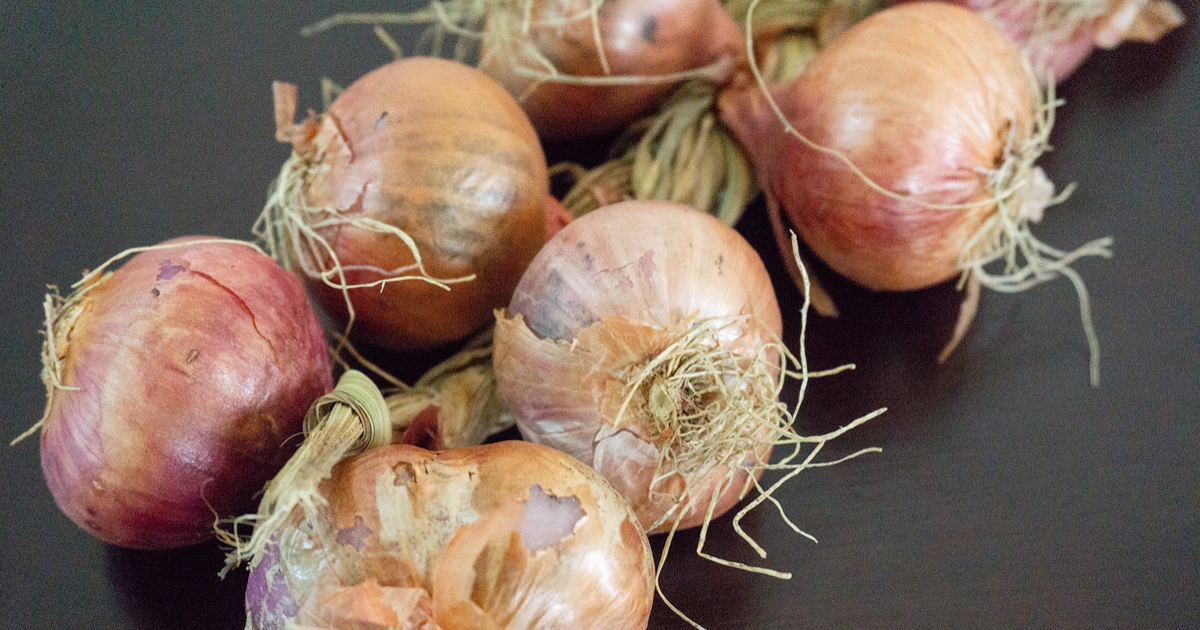
A photograph of an onion held in the palm of a hand, accompanied by the question "Does this come from the earth or from Saturn?", sparked outrage among hundreds of Cubans in the Facebook group "Cuba Denuncia Now," where the post garnered 274 reactions and a string of comments pointing to the agricultural collapse and the regime's inability to control prices.
The question is not rhetorical: at the agricultural fair of Línea and L, in Havana, a vendor asked for 910 Cuban pesos for a single onion —a figure that the musician Dagoberto Pedraja reported on September 12— when the officially approved price by the Provincial Delegation of Agriculture of Havana is 180 CUP per pound.
In other parts of the capital, the same product was priced between 1,500 and 1,800 CUP per pound.
The phenomenon is not new. In April 2026, prices had already reached up to 900 CUP per unit in informal markets and street vendors, and in September 2025, the price exceeded 1,000 CUP per pound in several provinces.
To understand the magnitude of the problem, it is enough to compare these prices with actual incomes: the minimum wage effective since July 2026 is 3,210 CUP per month, and the official average salary closed 2025 at 6,930 CUP. Just one onion can account for between 13% and 28% of what a worker earns in an entire month.
Economists estimate that a Cuban family needs about 96,000 CUP per month to cover basic needs, of which 70,070 CUP is allocated solely for food—more than ten times the minimum wage.
The official year-on-year inflation rate reached 25.19% in August 2026, with food and non-alcoholic beverages accounting for 63.18% of the total increase in the consumer price index.
The comments on the viral post articulate two complementary diagnoses.
The first points to the regime's ineffectiveness. "The first shameless ones are the leaders who meet every day to control prices, and it's all in vain. Moreover, they keep raising salaries, and the more they increase, the higher the prices go," wrote Carlos Leonel Quesada.
Ivis Leyva Díaz was more straightforward: “It doesn’t come from Saturn… It is grown on Cuban soil. The problem is that we have a government that has disconnected from the people. In addition to being incompetent, it is incapable of even regulating prices.”
The second diagnosis highlights the structural collapse of Cuban agriculture. Grissel Rodríguez Valle summed up decades of failure with a striking image: "A Land Reform that ultimately left all the fields filled with marabú, where ineffective plans, protocols, and procedures were created, a Ministry that had more offices than acres planted across the entire country, which is why now an onion is like a diamond from Queen Elizabeth II of the United Kingdom."
The numbers support that description: the marabou covers between 1.1 and 1.7 million hectares of previously productive land, and Cuba imports between 70% and 80% of the food it consumes, at a cost nearing 2 billion dollars annually.
The Ministry of Agriculture itself acknowledged in 2024 that the sector was receiving only 10% of the necessary fuel and that barely 7% of the agricultural land had irrigation.
Meanwhile, the regime issued this week 10,000 and 20,000 peso notes —a reflection of the rapid depreciation of the Cuban peso—, and the dollar on the informal market was around 700 CUP by mid-September.
Related videos:
Filed under: