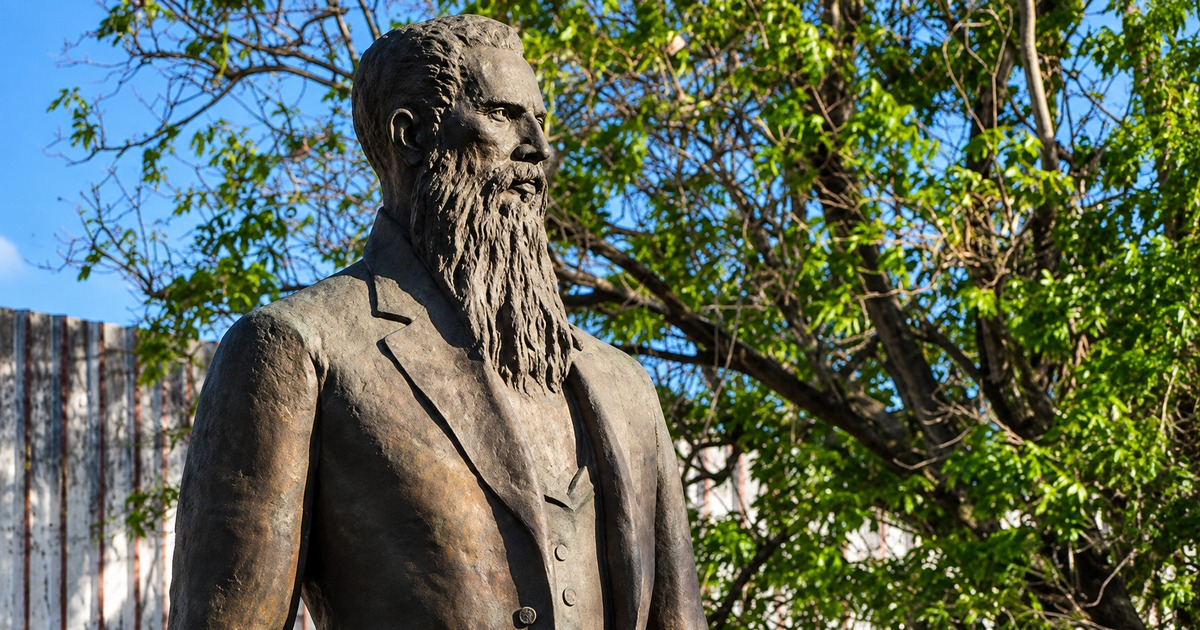
Born in Bayamo on June 23, 1821, Francisco Vicente Aguilera belonged to one of the wealthiest families in the East. However, his economic status did not distance him from the independence cause. From 1851, he was involved in conspiracies against Spanish rule, and in 1867, he presided over the Revolutionary Committee of Bayamo alongside Pedro Figueredo and Francisco Maceo Osorio.
When 1868 arrived, Aguilera did not seek personal prominence. Céspedes took the initiative on October 10 in La Demajagua and Aguilera, although he initially considered that uprising to be premature, decided to support it. This decision speaks volumes about the man: he prioritized the cause over his own authority.
And then came one of the episodes that best summarize his character. When the patriots decided to set fire to Bayamo to prevent the city from falling intact into Spanish hands, Aguilera knew that among the properties that would be destroyed were his own. However, he accepted the sacrifice.
According to the testimony transmitted by historiography, he said: “If that is the will of the people of Bayamo, let everything be destroyed by fire. I renounce my own, for I have nothing as long as I do not have a homeland.”
It was not a rhetorical phrase. The flames also consumed their own possessions. That moment explains Aguilera better than any title.
He was Vice President of the Republic in Arms, Secretary of War, Major General, and Chief of the Eastern Army. Later, he was sent abroad to seek resources and organize expeditions aimed at sustaining the war.
Their relationship with Carlos Manuel de Céspedes deserves to be remembered without simplifications. Both were essential figures in the independence movement, although they represented different personalities and political perspectives. Aguilera had great prestige and had early led the eastern revolutionary organization; Céspedes was the one who took the decisive step on October 10. Aguilera ultimately acknowledged his leadership and worked alongside him for the common cause.
There lies another of his greatness: he could have claimed the first place for himself, but he chose not to.
José Martí, who profoundly understood the moral value of the men from the Ten Years' War, referred to him in Patria, in 1892, as "the heroic millionaire, the impeccable gentleman, the father of the republic." And by placing his name alongside Céspedes, he wrote that Aguilera "loved so much."
But perhaps the extent of that sacrifice is best understood at the end of his life. The man who had once possessed a vast fortune spent his last days in New York in poverty. Ill with laryngeal cancer, he died on February 22, 1877, far from Cuba and without having witnessed the independence for which he had given up his fortune, his peace, and ultimately his life.
His remains would return to Cuba in 1910. But his true legacy is not in a mausoleum. It lies in that phrase uttered when everything was burning: “I have nothing as long as I do not have my homeland.” That is Francisco Vicente Aguilera. A man who had much and died with almost nothing.
And yet, he left behind something that no wealth could buy: the example of having put Cuba above himself.
Related videos:
Filed under:
Opinion article: Las declaraciones y opiniones expresadas en este artículo son de exclusiva responsabilidad de su autor y no representan necesariamente el punto de vista de CiberCuba.