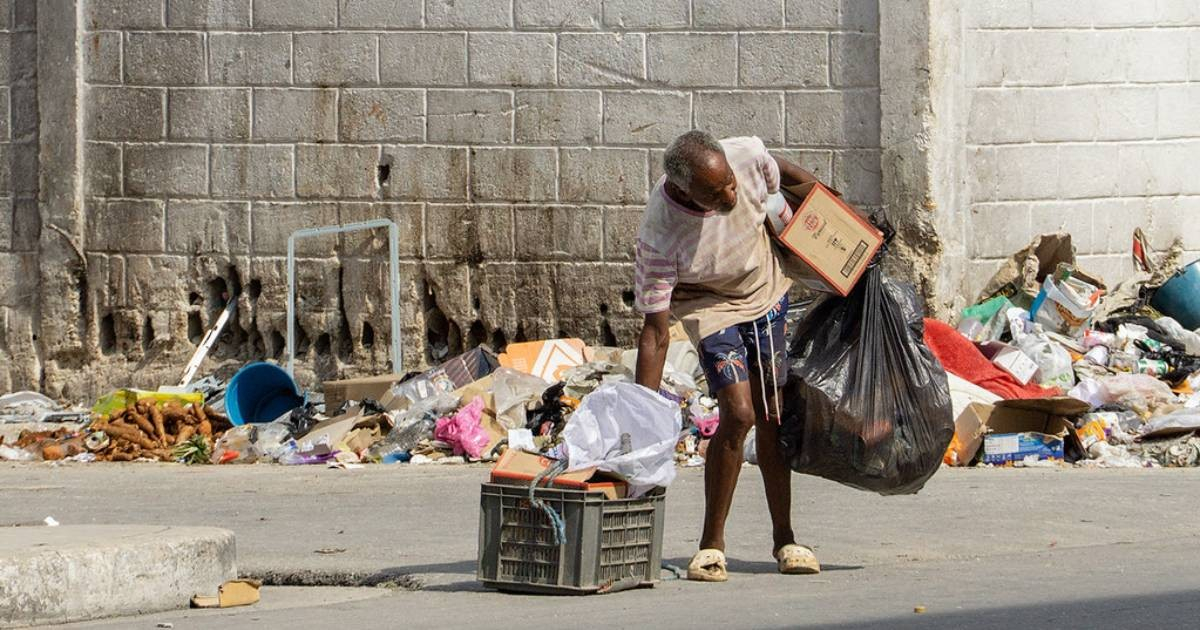
The Cuban scientist Raúl González Hernández denounced on Facebook the food crisis that Cuba is experiencing, characterized by widespread hunger, severe nutritional deficiencies, and a poor diet that affects the majority of the population.
According to the expert, at least 80% of the Cuban population faces a "significant deficit and often a lack of proteins, carbohydrates, fats, minerals, and vitamins."
These "extremely low" levels compromise "health status, work and study capacity, which is reflected in a generalized weakening and impoverishment of the physical state in the population. Most importantly, it jeopardizes the future of the upcoming generations, as nutrient deficiencies cause irreversible damage to intellectual capacity," he emphasized.
It notes that "the most serious issue has been the almost eliminated basic basket, a historical responsibility undertaken by the State towards the people, and that for the past two years there have been delays in delivery times and in the quantity of products."
According to the national survey "There is Hunger in Cuba 2025," conducted by the Food Monitor Program (FMP) and Cuido60 with 2,513 valid responses from the 16 provinces, 96.91% of the Cuban population lacks adequate access to food.
33.9% of the surveyed households reported that at least one member went to bed hungry in the 30 days prior to the survey, a figure that has increased from the 24.6% recorded in 2024.
The Cuban Observatory of Human Rights highlighted that 80% of the population skips at least one meal a day due to shortages and low income, while more than 80% of households spend more than they earn on food.
The collapse of the regulated basic basket is a fact that the regime itself has acknowledged. In June of this year, the Minister of Food Industry, Alberto López Díaz, publicly admitted: «This year we have not been able to provide oil, chicken, or yogurt».
The FMP describes the situation with a phrase that summarizes the systemic disaster: "The chain is broken," referring to the simultaneous collapse of production, importation, preservation, transportation, and distribution of food on the island.
National agricultural production has collapsed between 2018 and 2023: pig farming fell by 95%, rice by 87%, beans by 70%, and milk by 58%.
Cuba imports approximately 80% of the food it consumes, according to the UN World Food Programme, making the country extremely vulnerable to any restrictions on foreign currency or external credit.
The cost of feeding oneself has become unattainable for the vast majority. The FMP calculated that two adults in Havana need 41,735 pesos per month —almost 20 minimum wages— for barely sufficient food. Economists estimate that in September 2026, covering basic needs will require about 96,000 pesos monthly, far exceeding the official average salary.
The FMP identified critical levels of food insecurity in five provinces: Havana, Matanzas, Cienfuegos, Guantánamo, and Santiago de Cuba.
Related videos:
Filed under: