
Related videos:
Accessing basic food in Cuba has become a challenge that exceeds the capabilities of most families, and eating with dignity costs more than what many earn in an entire month.
This is revealed by a study from the Food Monitor Program (FMP), which calculated the approximate cost of a basic food basket (CBA) for two Cuban adults: 41,735 pesos in Havana and 39,595 pesos in Cienfuegos, which is equivalent to more than six average salaries in the country.
The report is based on the premise that there are no minimum conditions in Cuba to establish a CBA like the one that operates in most countries: a technical reference that allows for the establishment of salary policies, poverty lines, and subsidies.
In contrast, the Cuban system is characterized by a fragmented, unequal, and volatile food network, where the gradual disappearance of the rationed distribution system has left households relying on the informal market, small and medium-sized enterprises, and dollarized private networks.
With national production declining and purchasing power increasingly limited, families are facing a structural crisis of access to food.
The FMP study openly criticizes the government's lack of transparency and methodology in calculating the real cost of the basic basket.
Official figures have fallen far short of reality: while in 2021 the CBA was reported at 1,528 pesos, the FMP estimate for 2025 indicates that a couple will need up to 24,351 pesos per month per person to cover a minimum healthy diet.
In its analysis, the report also debunks the myth of the ration booklet as a guarantee of food security.
What once was the backbone of the socialist distribution model now only offers insufficient products, of low quality, and distributed irregularly.
In fact, 96.6% of Cubans surveyed by FMP state that the products from the ration book "do not allow them to eat what they need or like."
The study details that the current diet is determined by scarcity, inflation, and exclusion, not by free choice or nutritional requirements.
The calculated CBA includes basic food items available, prioritizing those that are more accessible in state and private markets.
However, even with this limited logic, the monthly cost remains unattainable for most, who must survive on an average salary equivalent to about 17 dollars in the informal market.
The price differences between provinces, the limited variety of products in state-run stores, and the high dependence on imported food exacerbate the situation.
Essential products like milk, eggs, chicken, or fresh fruits become luxuries, and the average diet relies more on rice, bread, and ground beef than on diverse meats or vegetables.
Beyond the numbers, the report raises an ethical alarm: in a country where eating well is a privilege, the basic food basket can no longer be a state simulation or a propaganda tool.
"It should become a minimum ethical standard, visible, realistic, and dignified," proposes the FMP, which calls for rethinking food security as a systematically violated right rather than an economic or technical variable.
In the meantime, millions of Cubans continue to face the same question every month: how to eat when the salary doesn't even cover the basics?
The food crisis in Cuba has reached a point where eating with dignity has become a luxury. Beyond the high cost of the basic food basket estimated by the Food Monitor Program, the same organization has issued growing alarms about the deterioration of eating habits, indicating that many Cubans barely manage to have one meal a day due to scarcity and inflation.
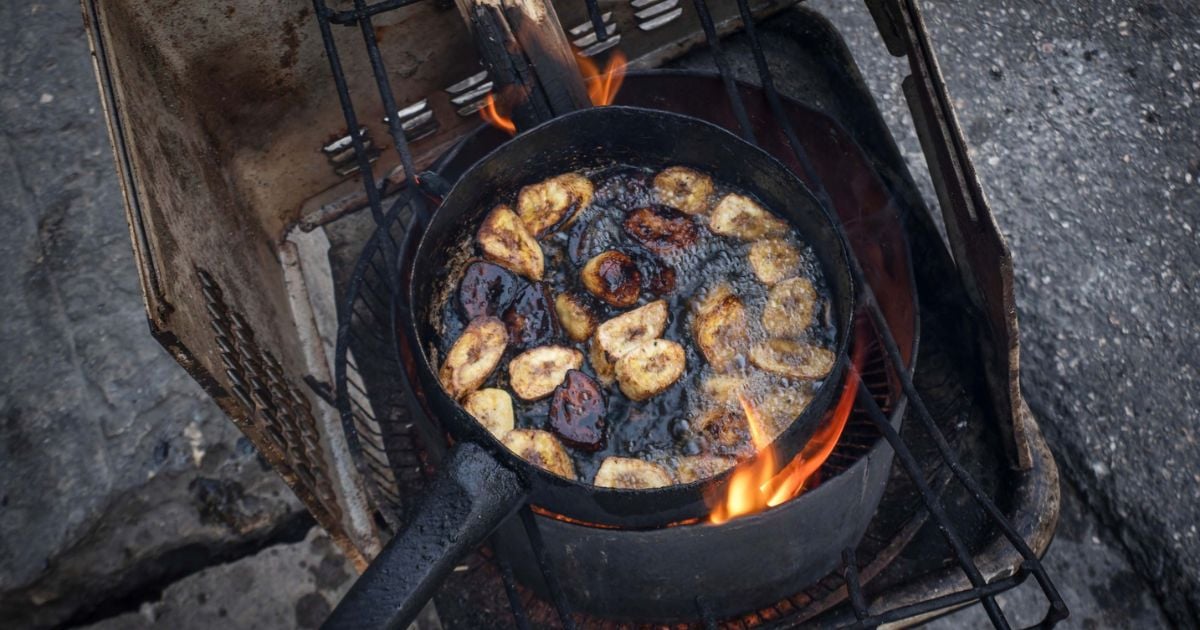
More than nine million people cook in precarious conditions, according to reports that highlight the lack of access to fuels and basic equipment.
This situation further exacerbates food insecurity, as it limits not only what can be eaten but also how food is prepared in Cuban households.
In parallel, one in four people admits to having gone to bed without dinner, in a stark display of how hunger has become normalized in the country.
The figures reveal not only poverty but also a structural food insecurity that impacts millions of families every day.
All of this occurs in a context where the economic situation is compared to the Special Period, but with fewer state guarantees, greater dependence on the informal market, and a rationing system that is virtually symbolic.
The food problem is no longer a temporary issue: it has become a constant sign of exclusion and neglect.
Frequently Asked Questions about the Food Crisis in Cuba
How much does a basic food basket for two people currently cost in Cuba?
According to the Food Monitor Program (FMP) study, the cost of the basic food basket for two adults in Havana is approximately 41,735 pesos, while in Cienfuegos it is 39,595 pesos. This represents more than six times the current average salary in the country, highlighting the unattainable economic reality for most Cubans.
What are the main causes of the food crisis in Cuba?
The food crisis in Cuba is primarily caused by a centralized and failed economic model that prioritizes the military-business apparatus (GAESA) over the people's needs. More than 80% of the consumed food is imported, and the state budget allocates significantly more resources to tourism than to agriculture. Furthermore, the gradual elimination of the rationing system has left families dependent on the informal market.
How does inflation affect food security in Cuba?
Inflation has made access to food extremely difficult for most Cubans, with prices continuously rising. According to the FMP, 96.91% of Cubans have lost access to food due to inflation and the decline in purchasing power. This has led many families to adopt unhealthy alternative diets and to reduce the number of meals they consume each day.
What role does the ration book play in the food supply of Cubans?
The ration book, which was once the backbone of the socialist distribution model in Cuba, now serves merely as a mechanism for managing scarcity. 96.6% of Cubans surveyed by FMP assert that the products from the ration book "do not help them eat what they need or like", as the offered products are insufficient and of low quality.
Filed under: