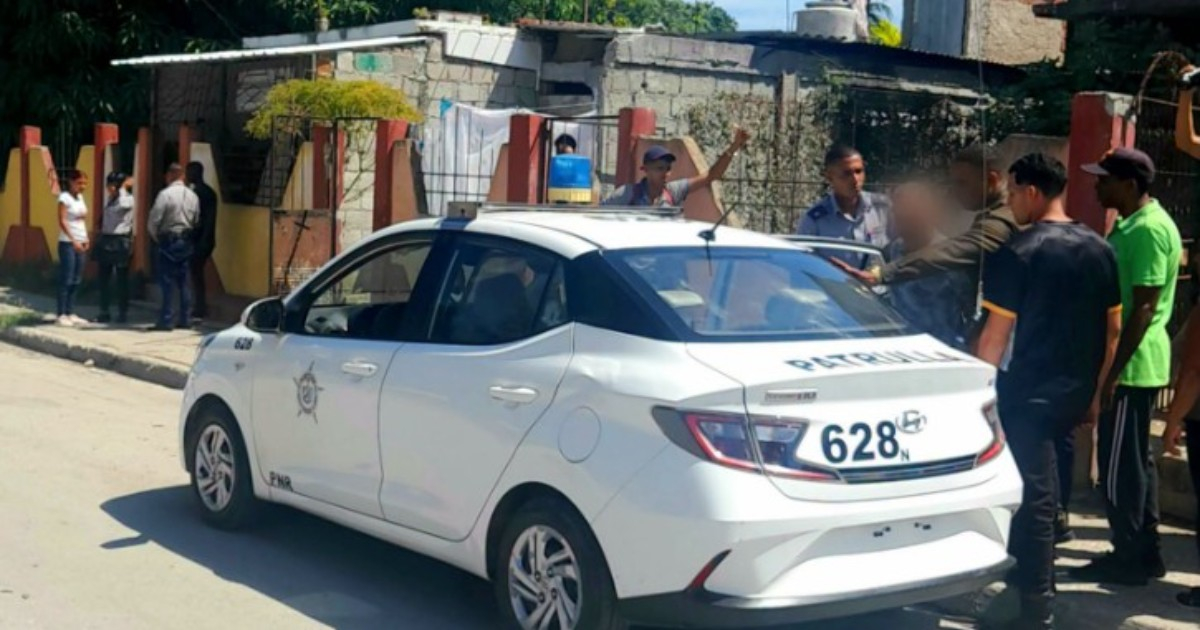
Two police operations against drug trafficking were carried out this week in various locations throughout the city of Guantánamo, resulting in several arrests and the seizure of prohibited substances, according to a report from the page Facebook "Guantánamo y su Verdad."
The first operation was carried out on Thursday morning near the intersection of Martí Street and 13 Norte, at a residence located next to the busy bus stop with routes to Reparto Obrero.
Residents of the area claimed to have previously alerted the authorities about suspicious activities at that property, and noted that the man who was arrested was known in the community for his alleged involvement in drug trafficking.
When the police arrived at the scene, the arrested man's wife tried to hide some of the substance, but the officers managed to seize it anyway: tests conducted at the site came back positive for marijuana.
A large sum of cash was also seized.
Eyewitnesses described the intervention as "quick and tense."
The second operation took place in the "Loma del Chivo" neighborhood, on Sol and Narciso López streets, where authorities intervened in a house located in an interior.
They found an individual in possession of several strips and fragments of paper that allegedly contained synthetic cannabinoids, a substance popularly known as "the chemical."
According to the information received from "Guantánamo y su Verdad", the location was allegedly used as a point of sale for that drug, an activity that the detainee reportedly carried out with his wife.
What makes this second case particularly serious is that there are minors living in the house.
The investigation to determine the individual responsibilities of each person involved is still ongoing.
The neighborhood "Loma del Chivo" has already been the scene of an anti-drug operation in March, when at least three people —two women and a man identified as a suspected leader— were arrested for possession of synthetic cannabinoids on Serafín Sánchez Street.
The "químico" is a major concern for Cuban authorities in 2026: at least 46 variants have been identified circulating in the country, it can be 50 to 100 times more potent than marijuana, and it primarily affects young people between the ages of 14 and 25.
Its presentation in strips or pieces of paper impregnated with the substance makes concealment and transport easier, complicating detection.
Nationally, recent police operations indicate that sales networks often operate from private homes, involving couples or family groups. In September, a operation in Centro Habana resulted in 13 arrests and six home searches for drug trafficking.
The penalties for trafficking synthetic cannabinoids in Cuba range from four to 15 years in prison.
Related videos:
Filed under: