
Related videos:
Cuba is facing a sustained increase in the consumption and trafficking of synthetic cannabinoids, with at least 40 variants circulating in the country, a reality that authorities acknowledge as a growing threat to public health and social security, especially among youth.
The strengthening of preventive efforts with young people has become a priority for Cuban authorities in light of the increase in drug consumption and trafficking, a phenomenon that particularly affects the province of Holguín, identified as one of the highest incidence areas nationwide, reported the official newspaper ¡Ahora!
Currently, there are 40 variants of synthetic cannabinoids circulating on the island, commonly referred to as "químico" or "papelillo," out of a total of 245 identified worldwide, officials confirmed during a recent meeting at the Frank País García International Airport in the eastern city, as part of the Tenth Operation for Drug Prevention and Combat.
These substances, low in cost and highly profitable, have become some of the most sought after and consumed by young people.
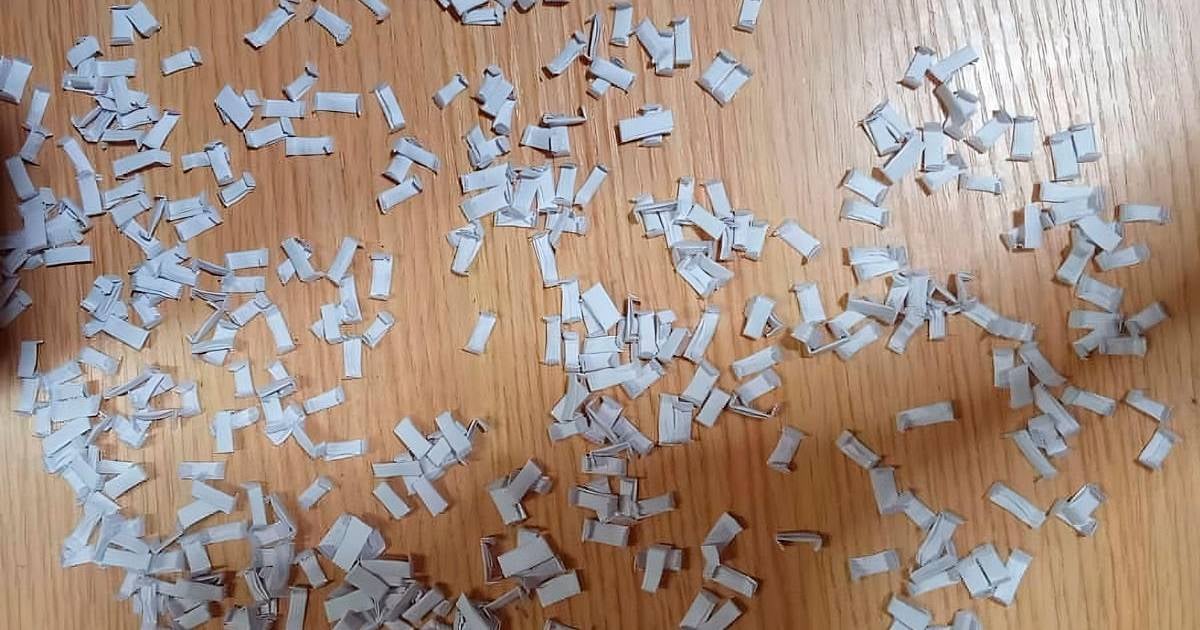
During the session, the prosecutor Fernando Sera Plana warned about the change in methods of introducing and distributing synthetic cannabinoids, which can enter the country in unconventional forms, including being infused in paper.
He specified that a dose of just 0.01 grams can be sold for up to 300 pesos and that, unlike in previous stages, the trafficking is currently moving from Havana to Holguín.
From a piece of paper the size of an ID card, they get 300 doses. They are consumed very quickly and are among the cheapest and most sought after by young people,” Sera emphasized.
The official recalled that the penalties for drug trafficking-related offenses range from four to 10 years of imprisonment in basic cases, and can reach up to 30 years, life imprisonment, or even the death penalty in aggravated circumstances, in addition to other legal figures such as bribery when public officials are involved.
From the health field, Dr. Yoiset Alcolea Montoya, head of Mental Health at the Julio Grave de Peralta polyclinic, explained that the “chemical” is a mixture of substances such as formaldehyde, acetone, marijuana, cocaine, carbamazepine, and animal anesthetics, prepared without any control, with serious physical, psychological, and social consequences, including risks to life.
On her part, Carmen Gertrudys Bejerano Tamayo, provincial director of Justice and coordinator of the subgroup for drug prevention and confrontation, explained that such meetings aim to strengthen educational strategies, enhance inter-institutional alliances, and promote a culture of rejection against consumption.
She noted that Cuba is also working on amending criminal laws and improving the structures responsible for addressing the issue.
Bejerano detailed that the provincial subgroups, created the previous year and chaired by the vice governors, include institutions such as Customs, Public Health, Education, Labor, Tourism, Commerce, the Prosecutor's Office, Courts, and specialized bodies of the Ministry of the Interior, with the aim of achieving a policy of "zero tolerance."
The authorities emphasized the role of family and community in prevention, as well as in reporting incidents of trafficking and consumption.
Meanwhile, the Customs of Holguín reported several detections throughout the year, mainly related to electronic cigarettes and controlled substances, in a context marked by the rise of new synthetic drugs in the country.
Weeks ago, authorities from the Ministry of the Interior (Minint) and stated that, despite new detection capabilities, vulnerabilities continue to exist that fuel trafficking and consumption in the country.
From 2024 until early December 2025, 72 operations related to marijuana, cocaine, methamphetamine, and synthetic cannabinoids have been prevented, originating from 11 different sources, noted Colonel Juan Carlos Poey Guerra, head of the Specialized Anti-Drug Combat Body of Minint.
During a press conference held in Havana on December 4, the authorities denied any relationship with drug trafficking, aiming to mitigate the political impact of the explosive revelations made by the former head of Intelligence of Nicolás Maduro, Hugo “El Pollo” Carvajal, who directly linked Havana to the strategy of the Cartel of the Suns.
The official narrative maintains that Cuba upholds a policy of "zero tolerance" towards the production, possession, and trafficking of drugs, although the authorities themselves acknowledge that the situation has become more complex and that the impact of "the chemical" continues to grow within the national territory.
As a result, authorities have intensified police operations and increased penalties to combat the trafficking of synthetic drugs.
Actions have been implemented such as strengthening the detection of new psychoactive drugs, international cooperation in drug enforcement, and the use of canine techniques.
In addition, criminal penalties have been increased for those who possess or distribute these substances, reflecting a more punitive approach in their strategy.
Filed under: