To understand the anxiety and skepticism that permeate the streets of Havana, Miami, and anywhere there is a Cuban, one must first look at the clock with the coldness of statistics. The surgical operation that extracted Nicolás Maduro from Caracas on January 3, 2026 was not an impulsive act by Washington; it was the culmination of a process that took 5 years, 9 months, and 8 days from the moment the Southern District of New York's Department of Justice filed criminal charges for narco-terrorism on March 26, 2020.
That numerical calculation, of 2,109 days of diplomatic suffocation, intelligence, and legal preparation, is the key to dismantling the message that many repeat, which conveniently serves the official propaganda that "there is no oil in Cuba, and that's why the United States does not intervene." Those who uphold this argument confuse the geopolitics of the 21st century with a commercial transaction of hydrocarbons, ignoring that the true variable for the White House regarding the Cuban regime is not measured in barrels, but in terms of national security, hemispheric containment, and regional stability.
Just 90 miles from the Florida coast, that security assessment took on new urgency, following intelligence reports that emerged in May 2026 revealing that Havana had acquired more than 300 Russian and Iranian drones, along with news of potential attacks on strategic targets such as the Guantanamo Naval Base or military facilities in Key West. This is compounded by Cuba's relationships with these two countries and China, as well as Moscow's express support for the Cuban regime in light of statements and sanctions from the United States.
Donald Trump's recent statement that "Marco Rubio wanted to know more about Cuba, but in fact, he already knew everything," confirms that Washington has a complete and detailed understanding of the military leadership and knows exactly where the real command resides. It is in this security framework that the substantial differences are defined.
While Maduro was prosecuted as the leader of a transnational organized crime network (the Cartel of the Suns), the accusation against Raúl Castro for conspiracy to assassinate American citizens due to the downing of the Hermanos al Rescate aircraft in 1996, presented in May 2026, directly strikes at the foundation of the regime. By bringing charges against him, the United States dismantled the narrative that Cuban dictators leave without paying for their crimes, even as rumors persist about the nonagenarian dictator's death.
But beyond the 1996 case, the strategic reality is unmistakable: even if such a precedent did not exist, the central target of U.S. justice would always be Raúl and not the decorative figure of Miguel Díaz-Canel. Washington knows that the true pillar of the tyranny and the one responsible for decades of crimes against humanity against the Cuban people is the elderly general.
Cuba is experiencing a model of structural suffocation by clamp, a concept that geopolitical analysts have coined to define the systematic strangulation of the dictatorship. This suffocation translates into a series of sanctions coordinated by the Secretary of State, Marco Rubio, aimed at choking off financial flows to the military conglomerate Gaesa, blocking international banking transactions with the island, and targeting key sectors such as nickel, even forcing the withdrawal of foreign multinationals.
The sui generis bilateral negotiations, which the dictatorship first categorically denied, later acknowledged, and ultimately declared broken, accusing the U.S. of fabricating pretexts, demonstrate that Castroism does not want the same as its counterpart and that the talks are running out. Unlike the Venezuelan dictatorship, which still had some means to manage its economy, the regime in Havana lacks a continuous lifeline to finance its inefficiency or its repressive apparatus, despite having allies.
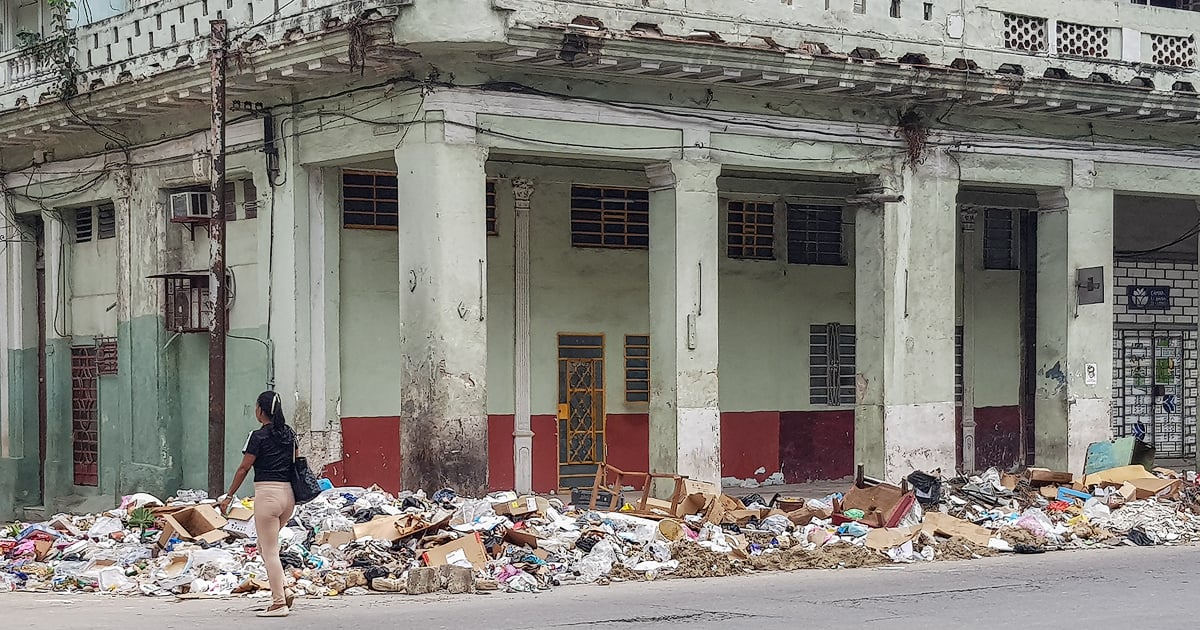
Those who feel disheartened by the lack of a visible intervention confuse the absence of a noticeable military operation with inaction. The U.S. has not required the deployment of troops to gradually dismantle Cuba; the country is already, as a result of its failed policies, immersed in a permanent systemic blackout, facing rising popular discontent manifesting in the streets, lacking financial liquidity, with collapsing infrastructure and no signs of legitimacy in power.
The U.S. strategy seems to aim at finding a breaking point within the intermediate structures of the FAR, the MININT, or the military business sector, or for the dictatorship itself to move toward political and economic changes. Meanwhile, Raúl Guillermo Rodríguez Castro is presumed to be the figure either in front of or behind his grandfather.
However, amidst this prolonged machinery of judicial and geopolitical times, the most painful tragedy emerges: as this process unfolds and the noose tightens, it is the Cuban people who continue to pay the direct human cost with their own lives. The population trapped on the island not only faces repression but also a humanitarian crisis that claims lives daily.
The outcome in Caracas imparted a fundamental lesson: U.S. justice proceeds with procedural timeliness and surgical intelligence that may often seem slow, but when it acts, it does so unambiguously. In the case of Cuba, the countdown clock did not start with public speeches nor will it stop due to a lack of oil; it began the day the regime’s permanence became an unacceptable threat to the security of the hemisphere and its neighbor. Today, the inevitable question being asked in the halls of power, the media, and among Cubans both on the island and abroad is whether the pressure on Havana will ultimately yield the same result as the equation in Caracas.
Related videos:
Filed under:
Opinion article: Las declaraciones y opiniones expresadas en este artículo son de exclusiva responsabilidad de su autor y no representan necesariamente el punto de vista de CiberCuba.