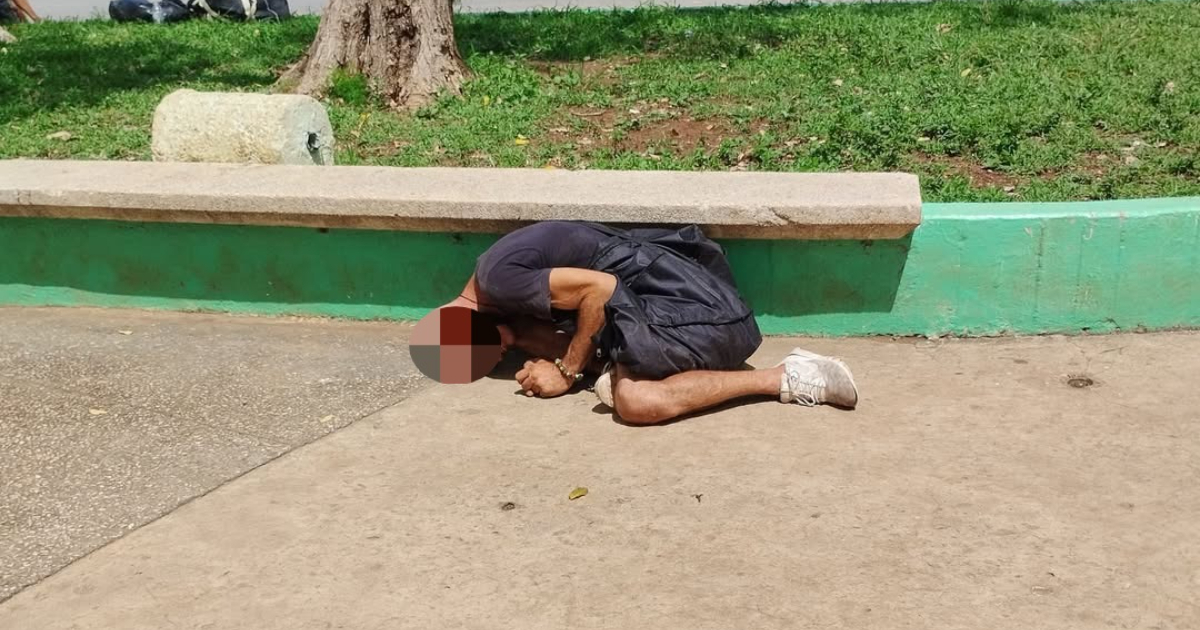
A Habanera lit up social media on Thursday with a post that encapsulates the desperation of many Cubans: she shared a photograph of a person lying on the ground in a fetal position, allegedly in the park at the intersection of 23rd and 14th Streets in Vedado, seemingly under the influence of synthetic drugs.
Jarocha Reyes Vega, the author of the publication, described the scene with a phrase that encapsulates the collective exhaustion: "In addition to stress, blackouts, lack of water, the cost of living, and poor living conditions, there is the drug pandemic... 'the little paper' or 'chemical' is gaining ground. What are the authorities doing about it? This is a problem that requires URGENT actions" (sic).
The image and text sparked dozens of reactions of indignation. One internet user summed up the sentiment of many: "How horrible, in broad daylight and in the park where children play and families stroll." Another was more blunt regarding official inaction: "The authorities don't see this. It doesn't harm them and they don't care." A third person pointed directly to complicity: "Unfortunately, they see and even know where it comes from and who sells it, but they turn a blind eye because they also fill their pockets with the suffering of others."
The phenomenon depicted in the publication is neither new nor isolated. "El químico" —a popular name used in Cuba for preparations containing synthetic cannabinoids, also known as "papelito"— can be marketed in small pieces of paper soaked with the substance, a form that facilitates its concealment and transport.
Cuban specialists have warned that some of these cannabinoids may be much more potent than THC. Consumption particularly affects adolescents and young people, although there are reports of cases in younger individuals.
The figures confirm the magnitude of the problem. According to official data cited by the AP agency, medical emergencies due to the consumption of these substances in Havana nearly doubled between 2024 and 2025, increasing from 467 to 886 cases. Cuban laboratories have identified at least 46 variants of synthetic cannabinoids in circulation on the island.
The regime has responded with police operations in several provinces. This month, joint forces from the Ministry of the Interior dismantled a network in Centro Habana with 13 arrests, six home searches, and the seizure of cocaine and 184 strips of synthetic cannabinoids.
This week, two operations in Guantánamo resulted in several arrests for marijuana and "chemicals." In August, a man was arrested in Matanzas with 30 packets of the substance and a large sum of cash. In Cuba, trafficking synthetic cannabinoids can lead to severe prison sentences: the basic type of drug trafficking carries a penalty of four to ten years, although the application of more serious circumstances has resulted in sentences of up to 15 years.
However, citizens question why the operations target the consequences without addressing the causes. The social crisis that drives young people toward drugs—prolonged blackouts, shortages of food and medicine, unemployment, lack of prospects—remains unaddressed by the state.
An internet user expressed it with bitterness in the comments of the viral post: "This is a problem that has come to stay [...]. With sadness and pain, we must acknowledge it, but there is no antidote for that poison —and I am not just referring to the drug."
Related videos:
Filed under: