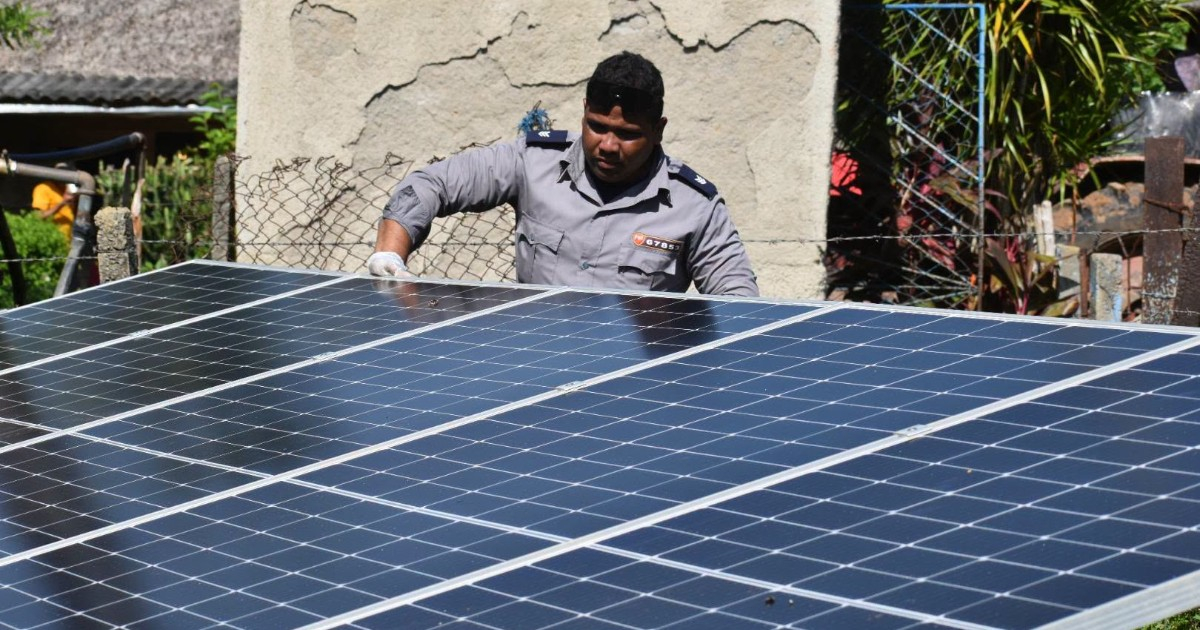
In response to the repeated thefts of solar panels and other components installed in water pumping systems, authorities in Jobabo, Las Tunas have begun to use a chemical marking method that remains invisible to the naked eye but can later be detected using ultraviolet light.
The measure was implemented at a photovoltaic installation in the settlement of Birama, as reported this Monday by journalist Yaidel Miguel Rodríguez Castro from Radio Cabaniguán.
According to the explanation, the equipment was treated with a security marking gel that adheres to the skin when a person comes into contact with the protected surfaces.
"It is a chemical that adheres to the skin, not visible to the naked eye; however, when exposed to ultraviolet light, the contact marks become visible," Rodríguez explained.
The objective, according to their publication, is to facilitate the identification of individuals who have handled the equipment in the event of new thefts.
The journalist also stated that this type of marking is found in photovoltaic systems installed in state institutions and entities, as well as in infrastructures deemed critical for energy generation and in transformer banks.
The measure raised doubts among some users. One commented that the thieves could simply wear gloves, to which Rodríguez replied: «There is the naivety, thinking that gloves are a barrier».
However, he did not provide additional technical details on how the product would perform under those circumstances.
Another internet user joked that it would now be necessary to "check everyone's hands," while one person suggested that the same protection system be offered to those who have installed solar panels in private homes.
There were also complaints related to the water service in Jobabo. "When will they start pumping water for Jobabo?" questioned a user in a post specifically about equipment intended for pumping systems.
The measure is being adopted in the context of repeated thefts of photovoltaic infrastructure in various provinces over the past few months.
In the province of Las Tunas itself, the theft of solar panels and cables has impacted water pumping stations and other essential facilities, including systems located in the municipality of Amancio.
One of the most recent cases occurred in Santiago de Cuba, where two solar panels were stolen from an ETECSA cabinet that provided energy support to nearly 900 users. The province had reported other similar incidents during May and June.
In Matanzas, three people were arrested for their alleged involvement in the theft of 28 solar panels intended for water pumping in Los Arabos. The authorities subsequently reported that they had recovered 21 units.
Concern has also reached domestic installations. In light of the increase in thefts, Cuban users have shared various methods to protect their solar panels, including metal structures and grids designed to make dismantling difficult without significantly blocking light entry.
Related videos:
Filed under: