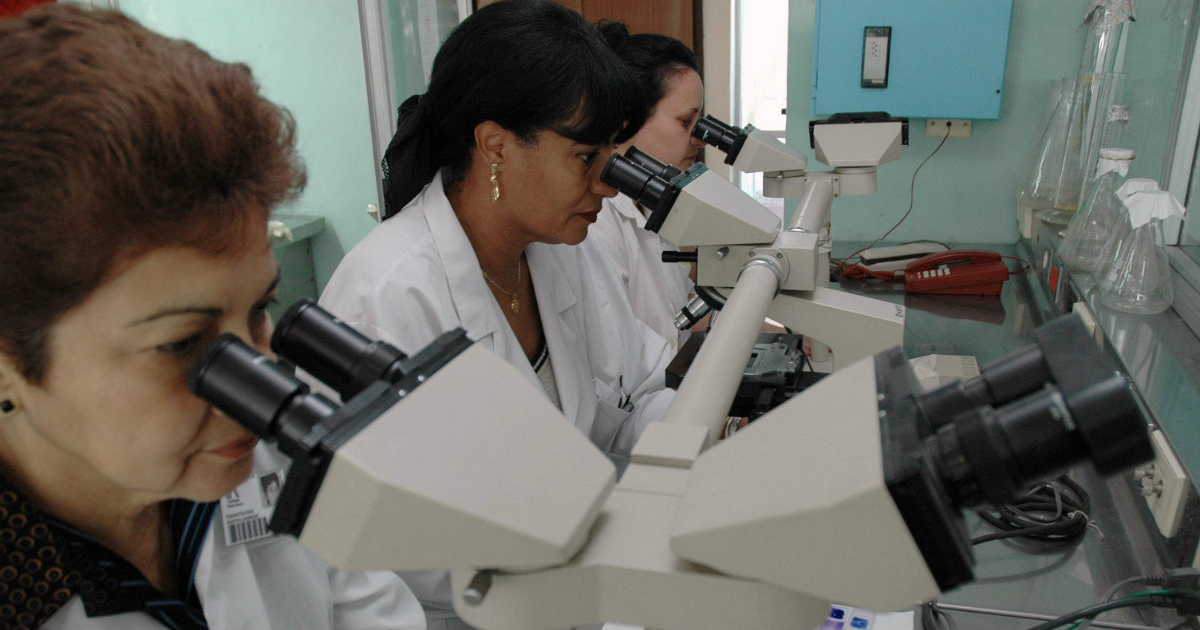
Cuban researchers analyzed liver samples from 559 individuals who died from COVID-19 and found a high presence of hepatocellular necrosis, as well as fibrosis and other alterations, in a study aimed at providing information to understand the damage caused by the disease and to guide the monitoring of patients with liver conditions.
The Minister of Science, Technology, and the Environment (CITMA), Armando Rodríguez Batista, shared the results and background of the research on Saturday in a Facebook post, based on the testimony of Doctor Licet González Fabián, a Second Degree Specialist in Pathological Anatomy at the Institute of Gastroenterology.
The study is part of a larger project developed during the pandemic and, according to Rodríguez, received an award from the Academy of Sciences of Cuba. Work derived from the nearly 800 autopsies conducted by the team was also recognized by that institution in 2022 and 2024.
According to the scientific article published in the journal Metabolism and Target Organ Damage, between 2020 and 2022, clinical data and histological samples of liver were obtained from 800 deceased due to COVID-19, within a total of 1,290 deaths related to the disease recorded in Havana during that period.
Starting from October 2021, specialists in liver pathology officially joined the team and 563 samples were subjected to detailed histopathological analysis. Four were excluded due to issues with sample quality or incomplete clinical information, resulting in a final cohort of 559 deceased.
The specific research on the liver was observational, descriptive, and cross-sectional, and included patients aged 19 years or older with confirmed SARS-CoV-2 infection by PCR who died during their hospitalization. The analyzed period covered October 2021 to December 2022.
Minimally invasive autopsies were performed at two designated centers: the “Dr. Luis Díaz Soto” Clinical Surgical Hospital and the “Salvador Allende” Clinical Surgical Hospital. Subsequently, the samples were processed in the central laboratory of the Pathological Anatomy Institute of Gastroenterology in Havana.
The results showed that 486 out of 559 deceased individuals, equivalent to 87%, exhibited hepatocellular necrosis, meaning the death of the main liver cells. In 285 cases, or 51% of the total, confluent necrosis was specifically observed.
Among other findings, 271 patients, or 48.5%, exhibited hepatic fibrosis; 237, or 42.4%, had steatotic liver disease; and 29, or 5.2%, had cirrhosis. Cellular apoptosis, hyperplasia and hypertrophy of Kupffer cells, and sinusoidal congestion were also common.
The statistical analysis identified steatotic liver disease and cirrhosis as independent predictors associated with a higher likelihood of hepatocellular necrosis within the studied population.
The researchers were cautious about interpreting the results. The study describes associations observed in deceased individuals and does not, on its own, demonstrate a causal relationship between each liver alteration and death from COVID-19.
González explained that the interest in this research continues even after the most critical stage of the pandemic because the findings can assist in monitoring individuals who suffered severe forms of the disease.
"COVID-19 is not over in scientific terms," stated the specialist, who noted that the information obtained can be useful for gastroenterologists and hepatologists who treat patients with a history of liver disease or those who experienced severe cases of COVID-19.
The scientific article itself concludes that the results support the importance of monitoring liver function in patients with preexisting liver diseases during and after SARS-CoV-2 infection.
Concerns about potential long-term consequences of the disease had already led to research in Cuba.
In January 2021, a team of more than 40 specialists began to study possible kidney sequelae in COVID-19 recovered patients, including individuals who had experienced asymptomatic, mild, severe, and critical cases.
Cases of patients with persistent effects after overcoming the infection were also documented.
In February of that year, the Cuban nurse Yaquelín Collado Rodríguez described the aftereffects she was still experiencing nearly nine months after being discharged, after spending 59 days hospitalized, 37 of which were in intensive care.
Related videos:
Filed under: