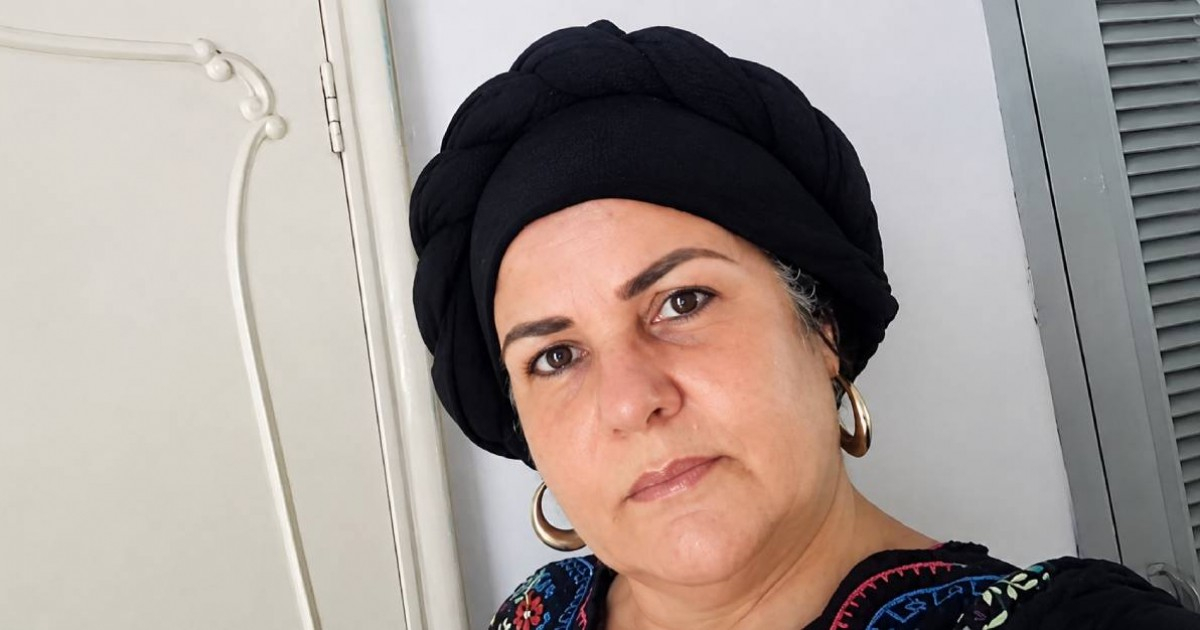
The Cuban host, actress, and presenter Laritza Camacho published a powerful reflection on the censorship of images in Cuba on her Facebook profile, in which she dismantles the official argument that photographing the reality of the country is tantamount to playing into the hands of the "enemy."
"If you post a photo that could give the 'enemy' something to talk about, you can be judged," Camacho wrote, before asking what kind of images are being referred to exactly.
"Of a destroyed hospital? Of a ruined cemetery? Of young people lost to chemical consumption? Of people searching through garbage? The photo of the astronomical price of an onion? Of ATMs going unused while we talk about banking and digital payments?" the host listed, directly addressing the crises that the regime prefers to keep out of focus.
The core of his argument is a question that the Cuban government does not have a comfortable answer to: who is the real enemy?
"Doesn't it resemble the enemy more those who create the problem, fail to resolve it, and still try to cover it up as if a finger could block out the sun?" wrote Camacho, reversing the logic with which authorities justify the persecution of those who document reality.
The presenter warns that removing the images does not erase the events they depict: "The photo may be gone, but the young people with the chemical will still be there, just like all the disasters mentioned and so many more."
His conclusion is straightforward: “Let’s not censor the photo and forget about the ‘enemy.’ Instead, let's face the problem head-on, and whether there’s a photo or not, we will resolve it. The issue, my friends, has never been the photo, nor the photographer.”
The publication comes in the context of a multidimensional crisis documented in Cuba: hospitals with collapsed roofs and unusable restrooms, food shortages with skyrocketing prices, chronic blackouts, and an epidemic of synthetic cannabinoids among young people aged 16 to 40, whose medical emergencies in Havana doubled between 2024 and 2025.
The legal framework that supports this censorship is extensive. The Decree-Law 35 and the Social Communication Law provide for penalties for disseminating content deemed offensive or that affects public order. Resolution 9/2025, in effect since May 2025, regulates the temporary suspension and cancellation of the registration of serial publications and websites. The regulation allows for cancelation without prior notification in cases considered serious violations of ethics and morality or other acts incompatible with the "principles of our socialist society."
In addition, Decree-Law 35 establishes restrictions on the use of telecommunications services to disseminate certain content and includes administrative measures, including service interruption, without prejudice to any criminal liability that may apply when the actions constitute a crime.
Camacho, known for her work on Mediodía en TV and Radio Ciudad de La Habana, has been raising her voice with increasing strength for months. In July, she stated: "I am against the Cuban government because the Cuban government is against Cuba." At the beginning of September, she wrote that Cuba is a country "free from everything that would make us a... free country," using irony to denounce the lack of freedoms. And on the 9th of that same month, she concluded a prayer with the phrase: "Here we can't even shout the prayer", depicting the climate of repression and self-censorship that exists on the island.
Related videos:
Filed under: