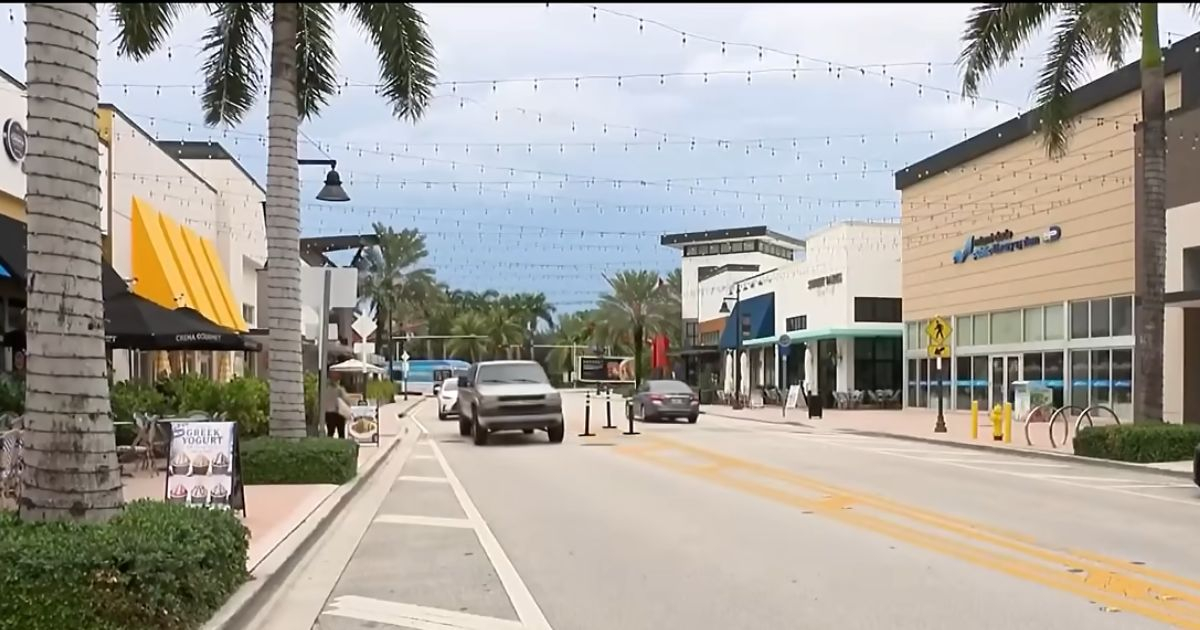
Weeks after merchants in Doral began to raise concerns about empty storefronts and significant revenue losses, the fear of immigration raids continues to disrupt consumption and the operation of small businesses in Miami-Dade, creating a double impact: customers who prefer to stay home and workers who leave their jobs for fear of being detained.
The testimonies gathered by CBS News Miami and Univision 23 show that restaurants, food stands, and other small businesses continue to feel the impact of the heightened operations by Immigration and Customs Enforcement (ICE).
Reports from Homestead and other areas of the county also describe reduced commercial activity when news about the presence of immigration agents spreads.
The available figures are, for now, estimates from the merchants themselves and not official statistics on the economic activity of Miami-Dade. Nevertheless, some testimonies illustrate the severity of the impact they claim to be experiencing.
Katia Ríos, from Pipo Burgers, stated that the business sales dropped by about 70%.
"People are afraid to go out. It's affecting us," she stated while describing how they spend hours with few customers.
More than a week ago, merchants in Doral were already warning about significant drops in sales and employee resignations linked to the fear generated by immigration operations.
Another example is Miguel Ángel Flores, owner of a food truck. According to his testimony to Univision, before the intensification of the operations, he sold between 150 and 200 food items a day; now he claims that at times he sells only about 30.
"I am afraid to go out on the street, but I have to go out to work," said Flores. His drop in sales, like those reported by other owners, reflects his own estimates rather than data audited or collected by a public agency.
The situation is not limited to customers either. Some small businesses have lost workers who, even with work permits or pending asylum applications, fear being detained during an encounter with immigration authorities.
Angélica Yépez, co-owner of a restaurant, told CBS News Miami that she ended up with only one employee after six workers left their positions out of fear of detention, despite having applied for political asylum.
Univision documented similar cases: owners reported having lost a significant part of their staff in just a few days, while other establishments have seen a decrease in the number of customers. Even a karate school reported that its enrollment dropped to about half in three weeks.
The impact is particularly felt in businesses that rely on daily customer traffic —restaurants, food trucks, cafes, and personal services—. In Doral, analysis of local commerce also highlights sectors such as beauty salons, small shops, and service businesses, although there are no official figures to determine how much their revenues have specifically decreased.
The phenomenon does not stop at the borders of Doral either. In Homestead, CBS News Miami has been gathering testimonies from restaurant workers since July, who claimed that the presence or rumors of ICE operations were significantly decreasing the number of customers arriving.
"Our business has been affected because fewer people are going out to eat," explained Marta Rodea, an employee at Lucky Meat Cafeteria.
Another worker recalled that on July 4th, the establishment was practically empty after information circulated about ICE presence in a nearby area.
A report published this weekend described similar situations in other communities in Miami-Dade: residents reducing their outings, changing their routines, or avoiding going to work and shops.
Changes in behavior have also been observed in Little Haiti following the loss of certain immigration protections.
Christi Fraga: Doral cannot stop ICE
The mayor of Doral, Christi Fraga, has acknowledged that fear is having consequences on the local economy, but insists that a city does not have the authority to prevent the actions of a federal agency.
"This is a federal law. We cannot stop federal ICE agents from entering cities and carrying out their operations, whether we agree with how they are being conducted or not," he stated to CBS News Miami.
Fraga has questioned, however, cases of individuals seeking protection in the United States who later found themselves at risk of deportation. In a previous interview, he specifically mentioned the case of Cubans who escaped from the island.
"How is someone going to be sent back to Cuba? Even Cuba is not accepting some, and they are ending up in Africa. What is happening?" questioned the mayor, who also mentioned Haitian asylum seekers who fear returning to their country.
Fraga has also acknowledged that there are abuses within the immigration system and stated that the United States has the right to take action against individuals who pose a threat. His questioning has particularly focused on the scope of the measures concerning immigrants with pending cases or those who claim to have sought refuge from governments such as the Cuban one.
The pressure for the 287(g) agreement is increasing
The deterioration of the relationship between residents and merchants has also increased the pressure for Doral to break its 287(g) agreement with ICE, which grants certain immigration collaboration powers to local police agencies.
On September 22, former legislators and activists gathered in front of City Hall to demand the cancellation of the agreement. Among them was former federal representative Joe García and the mayor of South Miami, Javier Fernández, whose city did not sign an equivalent agreement.
Fraga later stated that she signed the agreement under pressure from Florida state authorities, after receiving warnings about potential consequences for officials and police departments that did not cooperate.
It also states that the Doral Police do not participate in federal raids nor share information about their residents with ICE.
The mayor has not yet announced the termination of the agreement and stated that she is awaiting a decision from the Attorney General of Florida before determining her next steps.
The government defends the operations
The Trump administration maintains that the operations are part of the enforcement of immigration laws and of the strategy promised by the president during his campaign.
On September 11, the official in charge of border policy at the White House, Tom Homan, defended ICE's actions when asked about the fear generated in Doral.
"Those who supported President Trump voted for him to enforce immigration laws and secure the border," Homan stated.
The government maintains that federal authorities have the power to detain and deport individuals who do not have the legal right to remain in the United States.
The administration has also advocated for an expansion of detention and deportation capacity as a central aspect of its immigration policy.
Related videos:
Filed under: