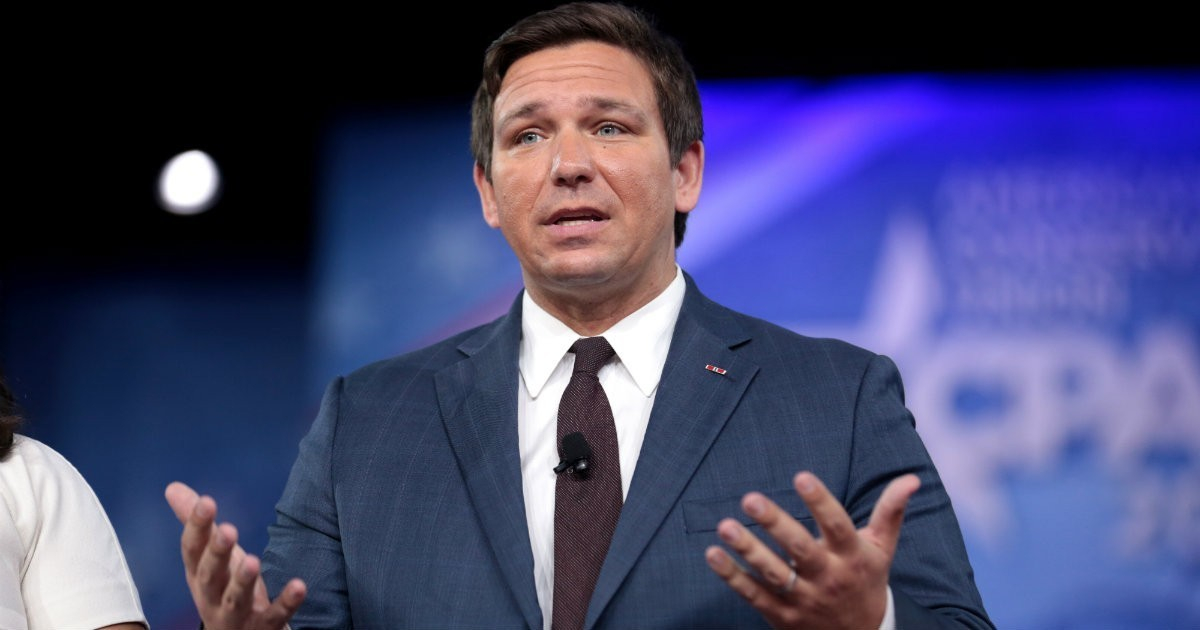
Governor Ron DeSantis and the Florida Cabinet approved on Tuesday the designation of over 90 groups as terrorist organizations, including Tren de Aragua, the Council on American-Islamic Relations (CAIR), the Muslim Brotherhood, and Antifa, in a decision that is already facing a legal battle.
The voting took place under the mechanism established by the state law HB 1471, which came into effect on July 1 and allows Florida to establish its own designations.
According to CBS Miami, the governor and Cabinet members approved the designations with little discussion and without receiving public testimony.
The list includes over 90 organizations that are already classified as foreign terrorist organizations by the federal government, and in addition to those mentioned, it also includes the Sinaloa Cartel, the Gulf Cartel, other Mexican criminal groups, and the Islamic Revolutionary Guard Corps of Iran.
The case of the Tren de Aragua is different from that of CAIR: the Venezuelan criminal organization is already on the federal list of foreign terrorist organizations, while CAIR, an American organization that identifies itself as a defender of civil rights for Muslims, is not included on that federal list.
The decision from Florida is already being challenged. CAIR and CAIR-Florida filed a lawsuit in the United States District Court for the Northern District of Florida in Tallahassee, arguing that the mechanism violates the First Amendment and the due process clause of the Fourteenth Amendment.
The lawyers from CAIR also announced that they would request a preliminary injunction to try to prevent the designation from taking effect.
The organization rejects its involvement in terrorist activities and asserts that the measure threatens its work of defense and community representation.
According to NBC Miami, the affected organizations also have mechanisms to appeal the designations, while the federal litigation regarding the constitutionality of the new framework continues.
The appointments approved this week are scheduled to come into effect on November 5, unless a court ruling changes that timeline.
The conflict between Florida and CAIR dates back several months. In December 2025, DeSantis had already signed an executive order designating CAIR and the Muslim Brotherhood as terrorist organizations.
However, in March of this year, federal judge Mark Walker issued a preliminary order that blocked parts of that measure, considering that it infringed upon the constitutional rights of CAIR.
The state's response came through legislative means. In April, DeSantis signed HB 1471, which established a specific state procedure for identifying and designating terrorist organizations, subject to the approval of the governor and the Cabinet.
When the law comes into effect in July, DeSantis announced his intention to include CAIR, the Muslim Brotherhood, Antifa, and over 90 foreign organizations.
Among these were since then the Aragua Train, the Sinaloa Cartel, the Gulf Cartel, and the Islamic Revolutionary Guard of Iran, all of which are already recognized at the federal level.
The procedure was defined with greater precision in September when Florida approved a regulation to establish its own independent list.
The rules stipulate that the state's Secretary of Homeland Security must submit each proposal in writing, the affected organization has seven days to object, and the designation takes effect 30 days after its publication.
The regulations also specify that mere membership in a designated organization or the provision of legal assistance is not sufficient on its own to initiate a criminal process.
HB 1471 also includes consequences for certain entities and institutions associated with designated organizations.
Among other provisions, it restricts the use of public funds for programs that promote them and establishes sanctions within the state university system for behaviors that the law defines as support or promotion of these groups.
Related videos:
Filed under: