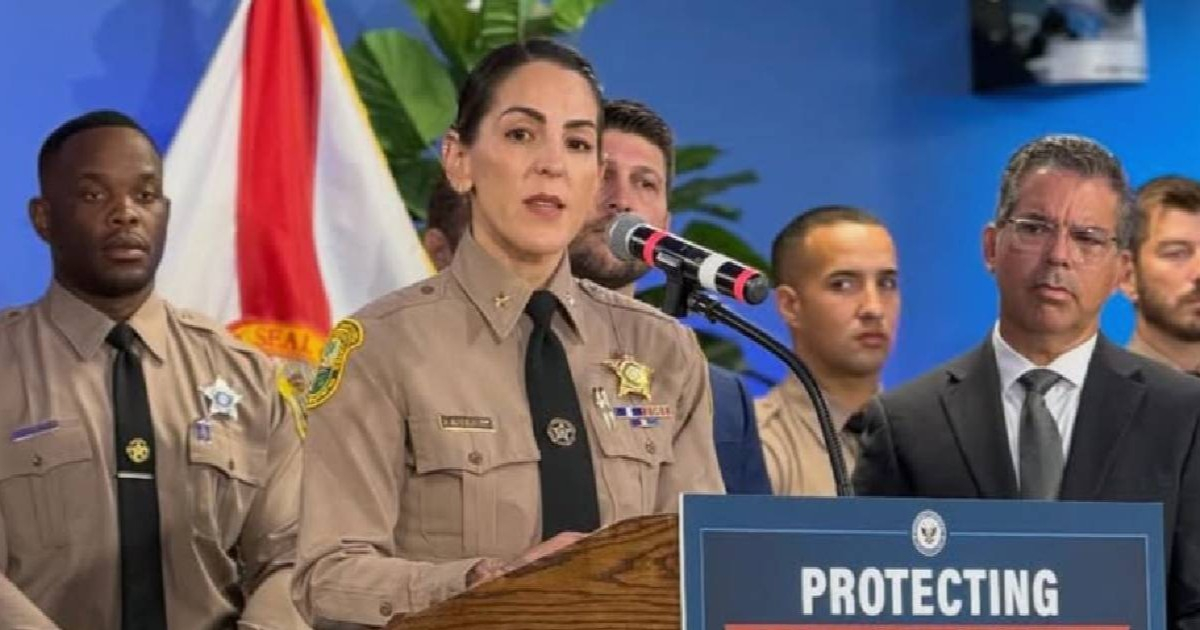
The Miami-Dade Sheriff, Rosie Cordero-Stutz, joined on Monday a group of constitutional officials from the county who publicly support Amendment 3, the proposal that would increase the homestead property tax exemption, despite warnings that its approval would cost the county approximately 445 million dollars in annual revenue.
Alongside Cordero-Stutz, the election supervisor Alina García, the tax collector Dariel Fernández, and the property appraiser Tomás Regalado expressed their support for the measure.
The four are elected Cuban-American officials who took office in January 2025.
The Amendment 3 would raise the homestead exemption —currently set at $50,000— to $150,000 in 2027 and to $250,000 in 2028, applicable only to non-school taxes.
The governor Ron DeSantis promoted the proposal, which the Florida Legislature approved in a special session in June of this year with a predominantly Republican vote.
García defended the support, arguing that the amendment includes safeguards for essential services.
"The most important thing is that he says public safety always comes first, so this will not affect public safety," he affirmed. He also called for fiscal responsibility: "We must learn to live within our means."
Cordero-Stutz has taken a position that distances her from the Florida Sheriff’s Association and other state law enforcement organizations, which oppose the measure on the grounds that it would cut security budgets.
Among the most prominent critics is the Polk County Sheriff, Grady Judd, who directly questioned voters: “This state has nearly 24 million people. Do you want less security? Do you want less protection?”
The spokesperson for the campaign "Vote No on Amendment 3," Edie Ousley, was more emphatic: "Public safety will be the most affected, services and infrastructure will be cut. This is, plain and simple, a tax shift, not a tax relief."
According to the analysis by the Florida Association of Counties, Broward would lose more than 300 million in the second year of the measure's implementation. At the state level, projected losses amount to 3.6 billion in the fiscal year 2027-2028 and 6.4 billion in 2028-2029.
The debate also has a direct impact on tenants. A analysis warns that rents could rise if the amendment is approved, as rental property owners would see an increase in their tax burden and could pass that cost on to the tenants.
The Tax Foundation projects that the rental home tax could increase by about $1,081 annually by 2028. This is particularly relevant in Miami, where the median rent was around $2,957 per month in July of this year.
For homeowners with homestead exemptions, the estimated savings in Miami-Dade would be around $1,500 annually.
The amendment will be on the ballot on November 3, 2026 and requires 60% of the votes to be incorporated into the Florida Constitution.
A survey by St. Pete Polls conducted in mid-September recorded only 44.9% support among likely voters, with nearly 25% undecided, placing the proposal below the threshold necessary for its approval according to current polls.
Related videos:
Filed under: