The Cuban writer, translator, and linguist Rodolfo Alpízar Castillo published a report on the visible increase in the consumption of "the chemical" —the popular name for synthetic cannabinoids— in the Santos Suárez neighborhood, Diez de Octubre municipality, Havana.
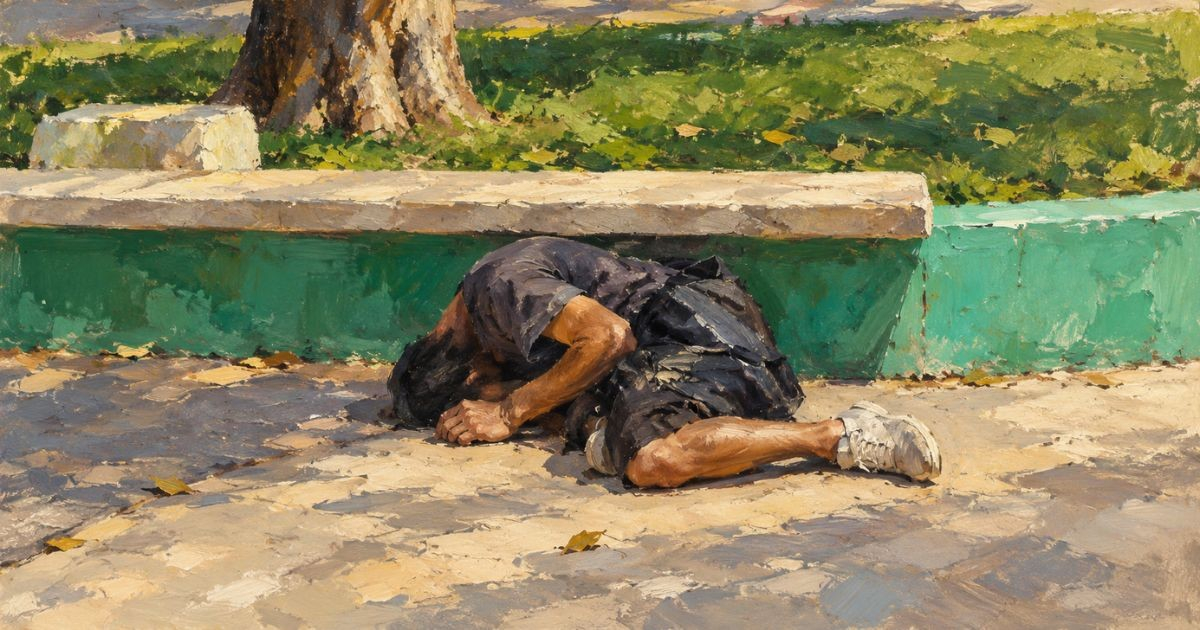
The intellectual recounts two scenes witnessed on consecutive days. On Wednesday the 30th, mid-morning, at Juan Delgado and Lacret: "A young man on the sidewalk, in a fetal position. Multiple spectators. One word: chemical." The following day, at the end of the afternoon, at Lacret and Juan Bruno Zayas: "A young man sitting leaned against the wall of the punch bowl, arms resting on his thighs, body slumped forward. Evidence that he has urinated. One word: chemical."
Alpízar also reports cases in other areas of the same neighborhood: acquaintances informed him that at night there are people under the effects of drugs on Durege and General Lee, and he himself witnessed another case on Flores Street, near Heredia High School. "Isn't that enough?" he questioned. "The problem is spreading. How long do we have to wait?" he concludes in his post.
The report is not an isolated case. At the end of September, a resident of Havana expressed her outrage on Facebook after photographing a person curled up in a fetal position in the park at 23 and 14, in Vedado. “In addition to stress, blackouts, lack of water, the cost of living, and poor living conditions, we are facing the pandemic of DRUGS… 'the little paper' or 'chemical' is gaining ground. What are the authorities doing about this? This is a problem that requires URGENT action,” she wrote. Among the comments generated, one user pointed out: “The authorities do not look at this. It does not harm them nor do they care.”
The figures support the alarm. According to official data cited by the AP agency in a report on synthetic drug use in Cuba, medical emergencies related to synthetic cannabinoids in Havana nearly doubled between 2024 and 2025, rising from 467 to 886 cases. Cuban laboratories have identified at least 46 variants of these substances in circulation.
The drug is distributed in strips of paper soaked with the substance —hence the name "papelito"—, with a price that hovers around 250 Cuban pesos per dose (about $0.50), making it especially accessible for young people aged 14 to 25. Experts warn that it can be 50 to 100 times more potent than marijuana and that in many cases it is mixed with fentanyl, formaldehyde, benzodiazepines, and veterinary anesthetics.
The regime has responded with scattered operations. In September, the MININT dismantled a network in Central Havana with 13 detainees and seized cocaine along with 184 strips of synthetic cannabinoids. That same month, two anti-drug operations in Guantánamo resulted in several arrests; in one case, minors were residing in the house. In August, a man was arrested in Matanzas with 30 small packets and a large sum of cash. Sentences for trafficking in synthetic cannabinoids range from four to 15 years in prison.
Citizens, however, question whether these actions address the consequences without tackling the causes. The social crisis driving young people towards drugs—blackouts, food and medicine shortages, unemployment, a lack of prospects—has no visible state response. An internet user bitterly summed it up: "This is an evil that has come to stay [...]. With sadness and pain, we must acknowledge it, but there is no antidote for that poison—and I’m not just referring to drugs."
Related videos:
Filed under: