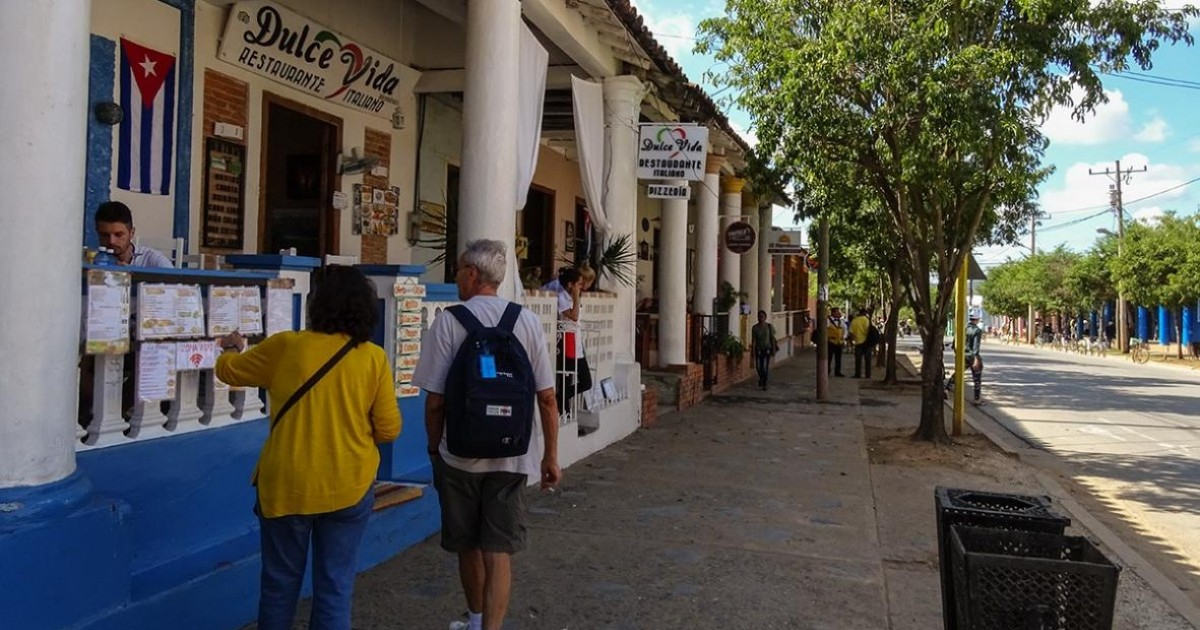
Empty streets, closed businesses —or open only to maintain their licenses— and workers in tourism forced to seek sustenance in agriculture. Viñales, one of Cuba's main tourist destinations, is undergoing a crisis marked by the absence of international visitors and a collapse in private sector activity.
That is the scenario described in a report by EFE published this Saturday in the famous mogote valley, declared a World Heritage Site by UNESCO and for years a major reference for nature tourism on the island. According to the agency, their team spent an entire day exploring the town without encountering a single international tourist.
"Viñales is deserted," summarized Lázaro Mena, owner of the adventure sports project Mogote Adventure, who claims he has gone over six months without income.
The situation is particularly serious due to the local economy's dependence on tourism. The municipality, located in the province of Pinar del Río, about 180 kilometers from Havana, has around 28,000 inhabitants, and it is estimated that nearly 80% of its population depends directly or indirectly on this activity.
Unlike other tourist areas in Cuba, where large hotels and complexes managed by state enterprises or foreign chains predominate, much of the offering in Viñales relies on private homes, private restaurants, excursions, and services provided by self-employed workers.
As a result, the disappearance of visitors directly impacts hundreds of small businesses and families that have relied on tourism as one of their main sources of income for years. Some establishments remain closed; others continue to operate with virtually no customers to avoid losing their licenses, while former workers in the sector have had to seek alternatives outside of tourism.
Cuba received only 450,353 international tourists between January and August 2026, a decrease of 64.4% compared to the same period in 2025, according to official figures. The Prime Minister Manuel Marrero Cruz himself acknowledged before the National Assembly in July that 73% of the country's hotel facilities remained closed, with 25,000 workers in the sector on standby and seven international chains absent from the island.
Yolexis Romero, a worker at the private bar Tapas 3J with eleven years of experience, describes a strategy of resistance that is not about prosperity but pure survival: "We haven't adapted to the crisis yet. We are surviving little by little and have had to shift to other businesses, keeping this one open mainly to avoid losing our market presence."
Romero sells whatever he can at the entrance of his house—he calls them "garage sales"—because "there's no tourism."
For others, even that was not possible. Elieser Duarte, a 41-year-old former head chef, lost his job at a local restaurant when "the tourism crisis hit" and had to move to a modest wooden house with a palm-thatched roof on the outskirts of the center to, in his own words, go "to fight in the fields, to plant and do what I can, like a magician."
The water crisis and power outages lasting up to 30 hours worsen the situation. Viñales experienced over six months without regular drinking water in 2026, with the main aqueduct pump broken down while authorities promised to restore the service. Fuel shortages eliminated taxis and buses, and the road to Pinar del Río deteriorated to the point of becoming impassable in sections.
The regime attributes the collapse to the U.S. embargo and the sanctions imposed by the Trump administration, while its official rhetoric insists that the hotels "remain open and operating normally." Entrepreneurs in Viñales, with no tourists and lacking basic services, are preparing for what they anticipate will be a "difficult" high season in November.
Related videos:
Filed under: