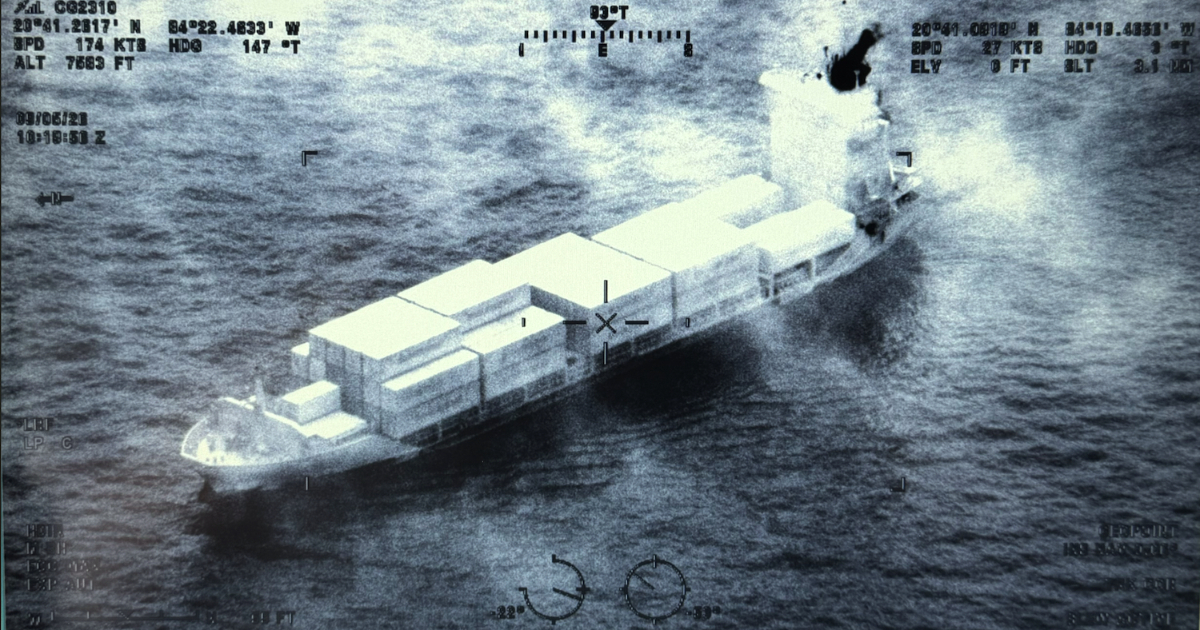
The ship M/V Grace, intercepted in September by the U.S. Coast Guard while heading to Cuba with hidden fuel, is believed to have loaded that fuel in Panama, according to maritime tracking data analyzed by the Miami Herald.
The information provides new details about the origin of the cargo and the previous movements of the vessel, whose interception was reported this Friday by CiberCuba.
The Coast Guard did not publicly specify where the fuel had been loaded, how much was being transported, or what type it was. However, data from the specialized portal VesselFinder indicates that the Grace left loaded from Panama on August 31.
Jorge Piñón, energy expert from the University of Texas at Austin who monitors oil shipments to Cuba, analyzed the draft of the ship —the depth reached by its hull underwater, which allows one to estimate whether it is sailing loaded or empty— and concluded that the vessel left Panama with a load.
According to data cited by journalist Nora Gámez from the Miami Herald, the Grace was intercepted by the U.S. Coast Guard on September 5, while sailing between Cuba and Mexico.
The Grace would have already brought fuel to Mariel
Maritime records indicate that it would not have been the ship's first trip with fuel to Cuba.
The Grace arrived on July 18 at the port of Mariel, west of Havana and near an important power plant. According to Piñón's analysis, the ship had previously departed from Panama fully loaded and discharged its cargo in Cuban territory.
The vessel left Mariel on July 22 and arrived empty at the Mexican port of Progreso on August 10.
She then traveled back to Panama, from where she departed loaded on August 31, just a few days before being detained by U.S. authorities.
The investigation by the Miami Herald indicates that that first trip to Mariel may have caught the attention of U.S. authorities.
Tracking data also reveals another prior movement of the Grace: in May, the ship departed from Mariel heading to Venezuela.
A ship registered in Comoros and owned by a Latvian company
El Grace navigates under the flag of Comoros and was acquired by Arkos Capital, a company based in Riga, Latvia. According to the report, it is the only vessel owned by that company.
After intercepting it, the Coast Guard escorted the vessel to Progreso, Mexico, where an inspection by the Mexican Navy confirmed the presence of large quantities of fuel stored in its ballast tanks.
These compartments are designed to hold water and regulate the stability of the vessel, not to transport hydrocarbons. Several containers were also detected that, according to authorities, likely contained fuel.
The Coast Guard linked the practices observed on the Grace with those used by the so-called "dark fleet," consisting of vessels that employ mechanisms to conceal their ownership, movements, or the nature of their cargoes.
The Grace is the second ship detained this year by the U.S. Coast Guard while transporting fuel to Cuba. The previous case was that of the Jaira Provider, intercepted during the summer with approximately 220,000 gallons of diesel and which had also previously passed through Panama.
These restrictions are occurring during the worst energy crisis in Cuba in decades.
The regime acknowledged that the island stopped receiving oil in January, following the capture of Nicolás Maduro by U.S. forces.
Pressure intensified when Trump signed an executive order threatening tariffs on countries that supply crude oil to Cuba, leading Mexico to suspend shipments from the state-owned oil company Pemex.
In May, the Minister of Energy and Mines, Vicente de la O Levy, admitted that the country had run out of diesel and fuel oil.
The government announced austerity measures that included cuts to public transportation, a four-day work week for state employees, a reduction in school hours, and the suspension of non-urgent surgeries.
Paradoxically, while the regime cannot receive oil, the Cuban private sector can import fuel from the United States under an exception authorized by the Trump administration itself in February.
According to the Cuba-U.S. Commerce and Economy Council, U.S. companies exported 157 million dollars in fuel to private Cuban entities between January and July of this year, making Washington the island's primary fuel supplier.
Related videos:
Filed under: