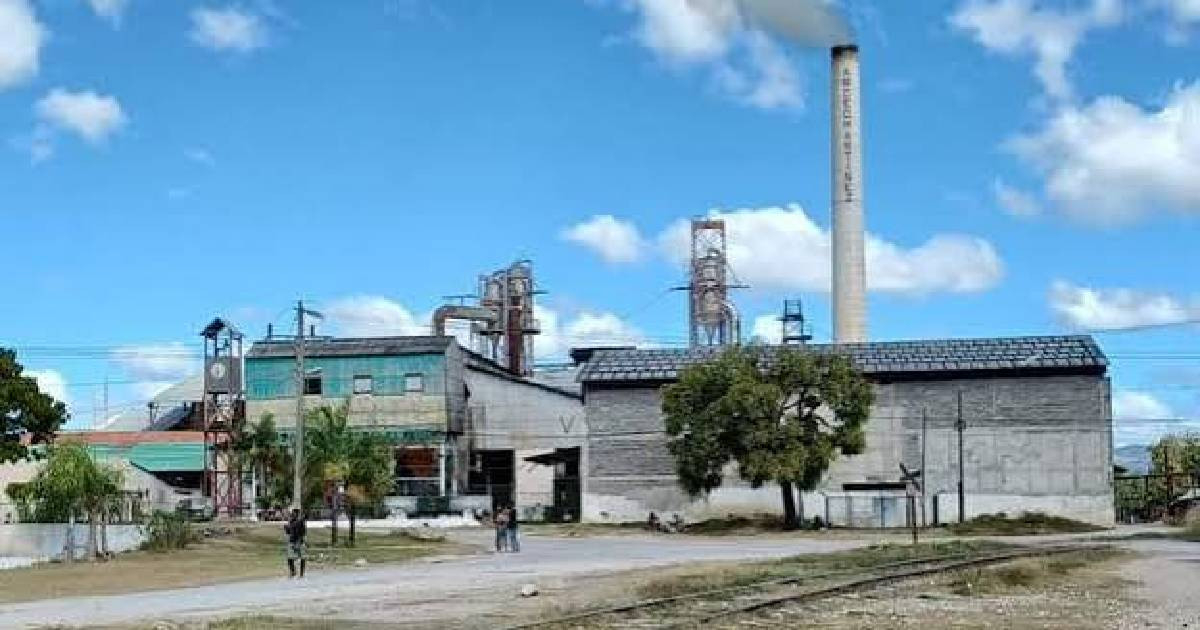
The Argeo Martínez sugar mill, the only active mill in Guantánamo, will begin the 2026-2027 harvest with a strategy divided into two stages, initially aimed at alcohol production and later for the manufacture of raw sugar for the provincial market.
Thus reported on Wednesday the official newspaper Venceremos, following a review of the preparations chaired by Yoel Pérez García, first secretary of the Communist Party in the eastern province.
Between October and December, the mill will process 17,000 tons of sugarcane to obtain molasses for alcohol production. The first phase is expected to last 36 days and will involve the participation of 510 workers, along with the use of harvesters, trucks with trailers, loaders, and collection centers. The goal is to obtain 2,300 hectoliters of alcohol.
The arrangement includes an agreement with Cuba Ron S.A., a company that will ensure the supply of necessary oil for the operations of the mill in exchange for receiving cane alcohol as raw material for its productions.
Juan Carlos Martínez Azahares, director of the Guantánamo Sugar Agroindustrial Company, presented the mechanism as part of the "new role of the socialist state enterprise," with greater powers and autonomy within the business system.
After the phase dedicated to alcohol production, Argeo Martínez will allocate 65,200 tons of sugar cane to the production of raw sugar between January and February. The goal is to exceed 3,000 tons for the provincial market, the source emphasized.
The campaign division indicates that the central will initially dedicate part of the available sugarcane to a production other than sugar, while the fuel for the operation will be secured through an exchange with another state-owned company.
The 2024-2025 sugar harvest in Guantánamo closed with just 2,900 tons of sugar, barely 38% of the target of 7,632 tons, representing a 26% decline compared to the previous campaign, according to the historical record of the harvest in the province.
At the national level, Cuba produces less sugar today than in 1899, following the 2024-2025 campaign that did not reach 150,000 metric tons.
The 2025-2026 campaign proved to be even more critical. The Melanio Hernández sugar mill, in Sancti Spíritus, halted its operations 22 days after starting due to a lack of fuel. The crisis also impacted alcohol production and other industries related to sugar cane.
The approach of producing molasses and alcohol before sugar is not a completely new concept. The Paquito Rosales mill, located in San Luis, Santiago de Cuba, implemented it during the 2024-2025 harvest and met its molasses plan with over 1,860 tons.
The difference in the case of Argeo Martínez is the explicit contract for oil in exchange for alcohol with Cuba Ron S.A., which the government presents as a progress towards business autonomy, but which actually reflects the State's inability to guarantee fuel for its own industries.
Related videos:
Filed under: