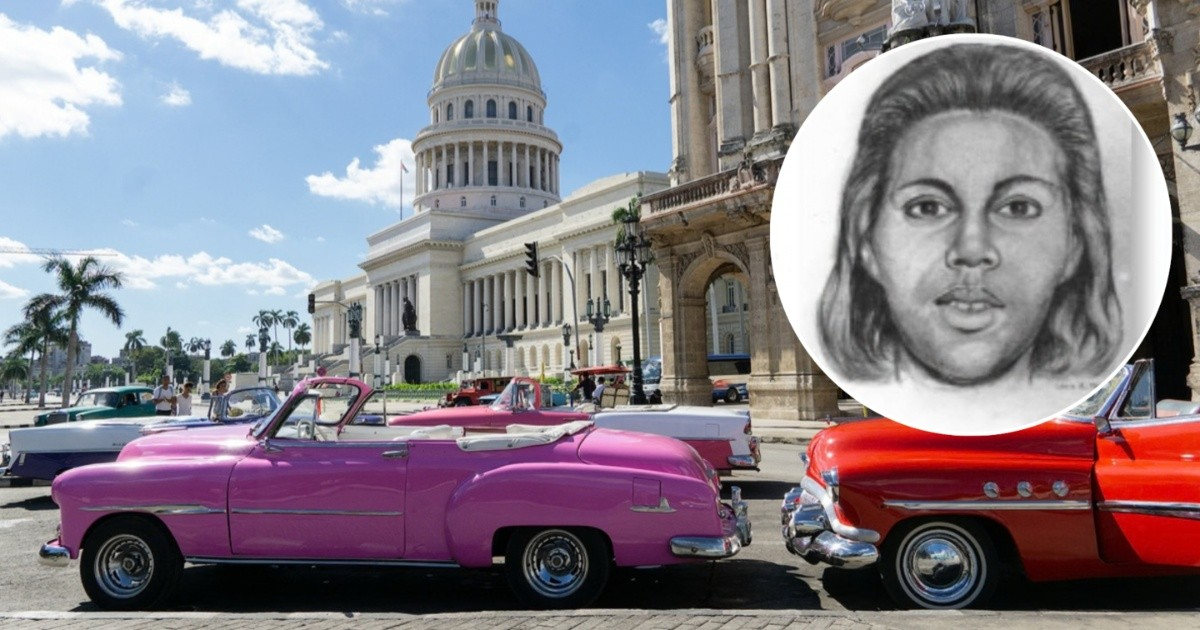
A specialized forensic genetic genealogy center in New Jersey has requested assistance in identifying a young woman whose remains were found 46 years ago, and whose DNA evidence points to Cuba and the Canary Islands.
The Ramapo College Investigative Genetic Genealogy Center (IGG Center), from Ramapo College of New Jersey, reached out to this editorial team to request the dissemination of the case among the Cuban community, hoping that someone may recognize the young woman or provide information that could help identify her.
The remains of the woman known as Montague Jane Doe —a provisional designation used in the United States for women whose identity is unknown— were found on June 24, 1980 near High Point State Park in Montague, Sussex County, New Jersey.
It is estimated that she was between 15 and 20 years old at the time of her death, stood approximately 1.55 meters tall, and had straight dark brown hair with some blonde streaks.
Advanced DNA tests conducted by the IGG Center, in collaboration with the Cold Cases Unit of the New Jersey State Police and the Astrea Forensics laboratory, revealed that the young woman was of Spanish descent, with ancestral ties to Cuba and the Canary Islands, specifically the region of La Palma.
Julian Rebelo, investigative genetic genealogist at the IGG Center, explained in his statement that "the matches in the DNA databases are not yet close enough to determine their identity at this time."
The researcher added that "if someone from her community sees the poster, we hope they come forward to identify her."
The IGG Center is asking anyone who may be a genetic relative of the young woman to upload their DNA sample to one of the three accessible databases: GEDmatch, FamilyTreeDNA, or DNA Justice.
The outreach campaign intensified during Latin American Heritage Month, which is celebrated in the United States from September 15 to October 15.
The genetic link with Cuba and La Palma is no coincidence: there is a long history of migration between the Canary Islands and Cuba dating back to the 17th century, which is why many Cuban families have Canarian ancestors, especially from that region.
This connection allows the DNA profiles of individuals of Cuban descent to show Canary Island markers and vice versa, which both guides and complicates genealogical research.
The IGG Center, described by the institution itself as the first of its kind in the world, was established in December 2022 and combines DNA testing with traditional genealogical research to identify human remains and generate leads in unresolved cases.
By 2026, the center had resolved at least 43 cases at the national level, although the Montague Jane Doe case remains among the ongoing cases.
Those who have information or wish to contribute their DNA can contact the IGG Center at 201-684-6616 or visit the website ramapo.edu/IGG.
Any Cuban or descendant of Canarians who suspects they may have a family connection to this young woman could be key to solving a case that has gone unanswered for nearly half a century.
Related videos:
Filed under: