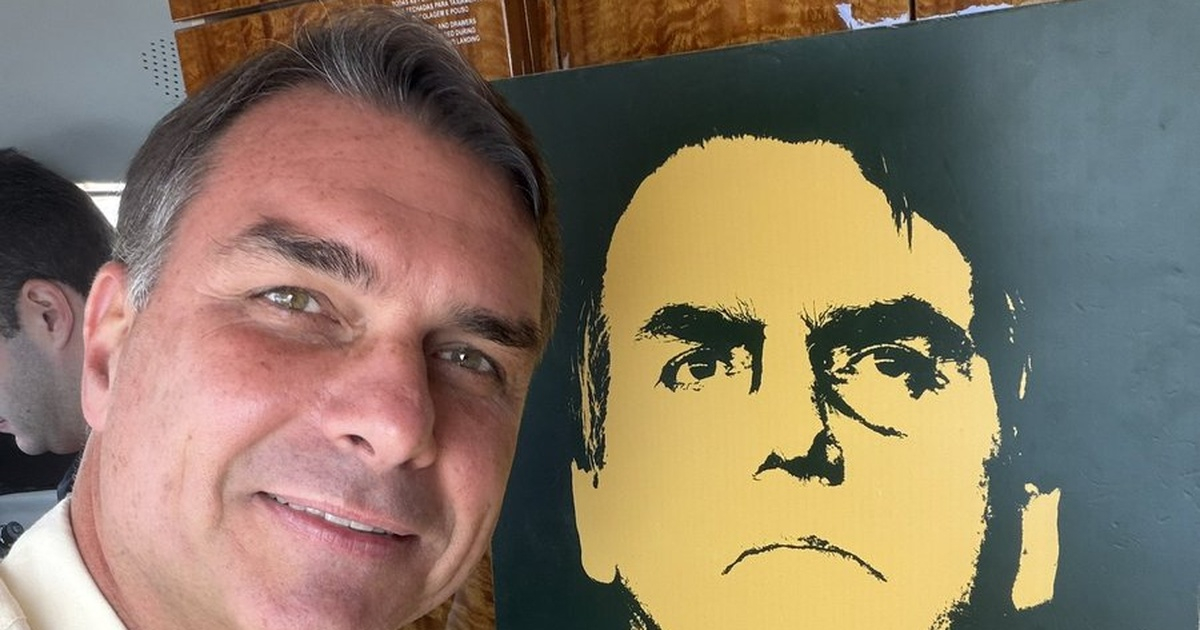
Amid the growing discontent among the population and the civic protests, the sanctions and pressure from the United States, the critical stance of most Latin American governments, the resolutions and demands of the European Parliament, the economic crisis, and the loss of credibility even among its own supporters, the Castro-communist regime now faces a significant political setback at the regional level. The results from October 4 in Brazil bring Flávio Bolsonaro to the runoff on October 25 with better chances than his opponent, Luiz Inácio Lula da Silva, a historical friend of Havana.
With the counting nearly finished, the senator from the Liberal Party secured 47.03% of valid votes, approximately 56.1 million, compared to Lula's 45.16%, around 53.9 million. The difference of just over two percentage points is the closest in a recent first round, and pre-election runoff polls indicated a technical tie. Nevertheless, Flávio Bolsonaro is starting with an advantage and favorable momentum: the remaining candidates, totaling about 9.3 million votes, were almost entirely from the right and center-right.
The alliances reinforce that scenario. Romeu Zema, from Novo, announced that wherever Lula's PT is, he will be against it. The União Brasil–PP federation, a key player in the centrão, has indicated support for Flávio Bolsonaro; formalization is expected this week, in exchange for a position in a potential government and guarantees for the presidency of the Senate.
The PSD opted for neutrality and released its directories, although Ronaldo Caiado is operating in an anti-PT tone. Augusto Cury and Renan Santos do not support anyone, but they also do not cast their votes for Lula. Tarcísio de Freitas, re-elected in São Paulo, is free to campaign nationally. Lula, on the other hand, arrives at the runoff without significant new endorsements.
The Congress no longer waits for October 25. In the Senate, the PL increases its seats from 15 to 28, the largest single-party bloc since 1988, after winning 19 of the 54 contested vacancies. Michelle Bolsonaro and Carlos Bolsonaro enter the upper house. The PT remains at nine. The PSD, which had 14, falls to five.
In the Chamber of Deputies, the PL elects 121 out of 513, the best result for a party since the re-democratization. The PT ends up with 70; its federation with PCdoB and PV totals 88. União Brasil and PP, together, are around 87. The party that will organize the legislature set to take office in 2027 is the PL. While this is not enough for a constitutional amendment or an impeachment in the Supreme Court, it is sufficient to open committees, influence the Senate's agenda, and shape priorities.
In the state governorships, the map is also shifting. The PL already has five mandates, including the entire South: Paraná, with Sergio Moro; Rio Grande do Sul, with Luciano Zucco; and Santa Catarina, with Jorginho Mello, in addition to Rondônia and Roraima. The PSD adds four; the Republicans have three, including São Paulo and Minas Gerais; the PT has three, all in the Northeast. Seven races will go to a runoff. Whoever governs Brasília starting in January will also face a Congress that is hostile to PT's foreign policy.
For Havana, the damage is tangible. For years, Brazil was the great South American supporter: credits, food, doctors, oil products, votes in forums, and a narrative of integration that Castroism used as proof that it was not isolated. If Flávio Bolsonaro wins, that support will come to an end. A Bolsonaro government will not uphold the discourse of "cooperation" nor the complicit silence regarding repression. It will align itself with Washington and with the governments that already treat the dictatorship for what it is.
The regional environment was already unfavorable. Mexico, under Claudia Sheinbaum, remains the significant support that he has left in a large country. Venezuela and Nicaragua are partners of the same nature, not backers with substantial weight. In Uruguay, the margin is narrow and conditional. The rest of the region, from Argentina to various Andean and Central American governments, has shifted to the right or to a cautious distance. Losing Brazil is not just losing one more ally: it is losing the last platform on a continental scale.
The loss of external support coincides with internal deterioration. Power outages, shortages, emigration, overcrowded prisons, and a leadership that no longer convinces even a large part of its own base. Each neighboring election that punishes the model reduces the maneuvering room for GAESA and the Communist Party.
The moment is so unfavorable for the dictatorship, both domestically and internationally, that the rational course of action would be to open serious negotiations with the Cuban opposition and with the United States for an urgent, orderly, and verifiable transition towards democratization. Free elections, the release of all political prisoners, dismantling the repressive apparatus, separation of powers, and clear rules for all.
Clinging to power, as if the international landscape and internal wear and tear could be reversed by decree, or because they are hoping for a miracle, is the most irrational thing that the Castro family and the leadership of the Communist Party can do. The news coming from Brazil is heightening insomnia in the Cuban capital.
Related videos:
Filed under:
Opinion article: Las declaraciones y opiniones expresadas en este artículo son de exclusiva responsabilidad de su autor y no representan necesariamente el punto de vista de CiberCuba.