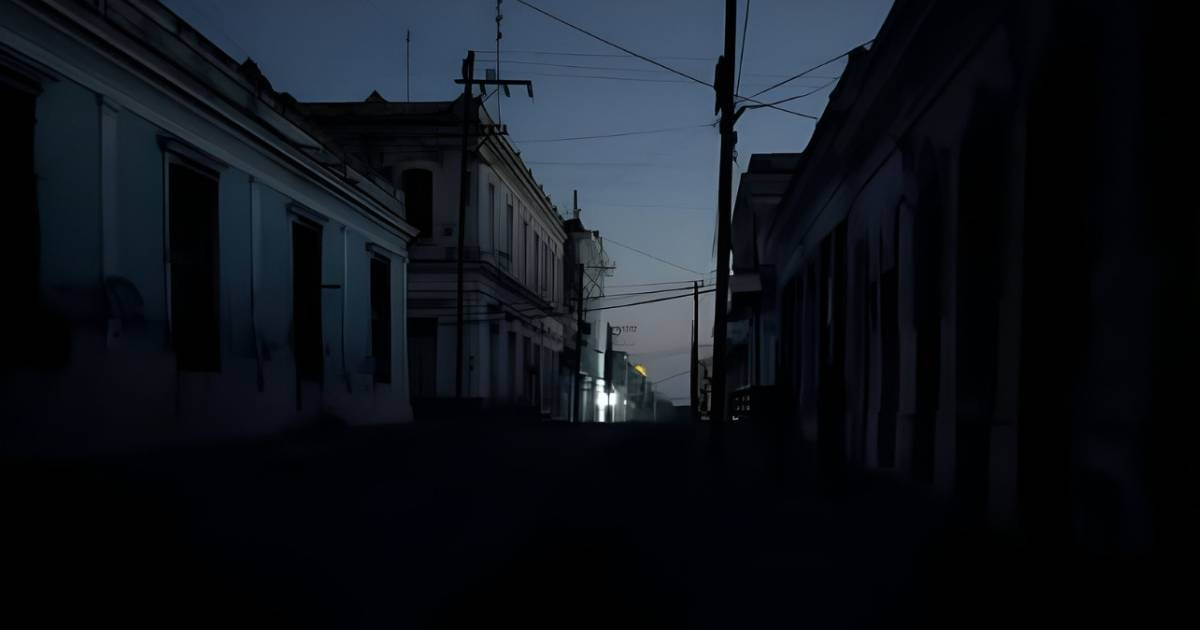
The Electric Union (UNE) forecasts a deficit of 1,827 MW during peak demand hours this Tuesday, with an estimated impact of 1,857 MW, according to the official report from the National Electroenergetic System (SEN) published this morning.
The figure represents a decrease compared to previous weeks, when the deficit consistently remained above 2,000 MW, but it does not imply any real relief for the population: power outages continue to be close to or exceed 20 hours daily in much of the country.
At six in the morning, the availability of the SEN was only 1,223 MW against a demand of 2,464 MW, with 1,231 MW already out of service. By noon, an impact of 1,350 MW was anticipated, and during the nighttime peak, the expected demand rises to 3,050 MW.
On Monday, the electricity service was interrupted for a full 24 hours, including throughout the entire night. The highest actual impact for that day was 1,798 MW, recorded at 7:50 PM.
Concerning the offline units, the UNE reports that unit 2 of the CTE Felton and units 3 and 6 of the CTE Renté are out of service due to faults. Currently undergoing maintenance are unit 3 of the CTE Santa Cruz, unit 5 of the CTE Nuevitas, and unit 5 of the CTE Renté. The limitations in thermal generation amount to 513 MW. This pattern of faults in the same power plants —Felton, Renté, Santa Cruz, and Nuevitas— has consistently occurred for weeks.
The photovoltaic solar parks contributed 4,742 MWh on Monday, with a maximum output of 737 MW during the daytime. However, solar generation only covers daylight hours and does not address the nighttime deficit, which is when demand peaks.
The decline in the deficit in recent days contrasts sharply with the extent of the accumulated crisis. In September, at least 23 out of 28 days recorded interruptions exceeding 2,000 MW, with an average of approximately 2,093 MW. The first days of October showed no respite either: on October 1, the maximum impact was 2,059 MW, on October 2 it reached 2,130 MW, and on October 3 it hit 1,996 MW.
According to a report from Infobae, power outages in Cuba can last up to 20 hours a day. In Holguín, circuits were documented with interruptions of 31 hours and 37 minutes, and even 55 hours and 29 minutes on October 2.
Cuba has experienced at least eight total nationwide blackouts so far in 2026, the most recent one on September 18, when the national electrical system completely collapsed. The electrical crisis, a result of decades of deterioration of the energy infrastructure under the dictatorship, shows no signs of a structural resolution in the short term.
Related videos:
Filed under: